75 years in cask: what a 1951 armagnac represents
A vintage armagnac bears the year of its harvest, and that year alone. In this bottle, everything therefore comes from grapes picked in the autumn of 1951, distilled during the winter, then left in cask without ever joining a blend. This is what distinguishes it from a VSOP, an XO or a hors d'âge: these age-statement armagnacs marry several years to obtain a consistent style, and the age shown is that of the youngest brandy in the blend.
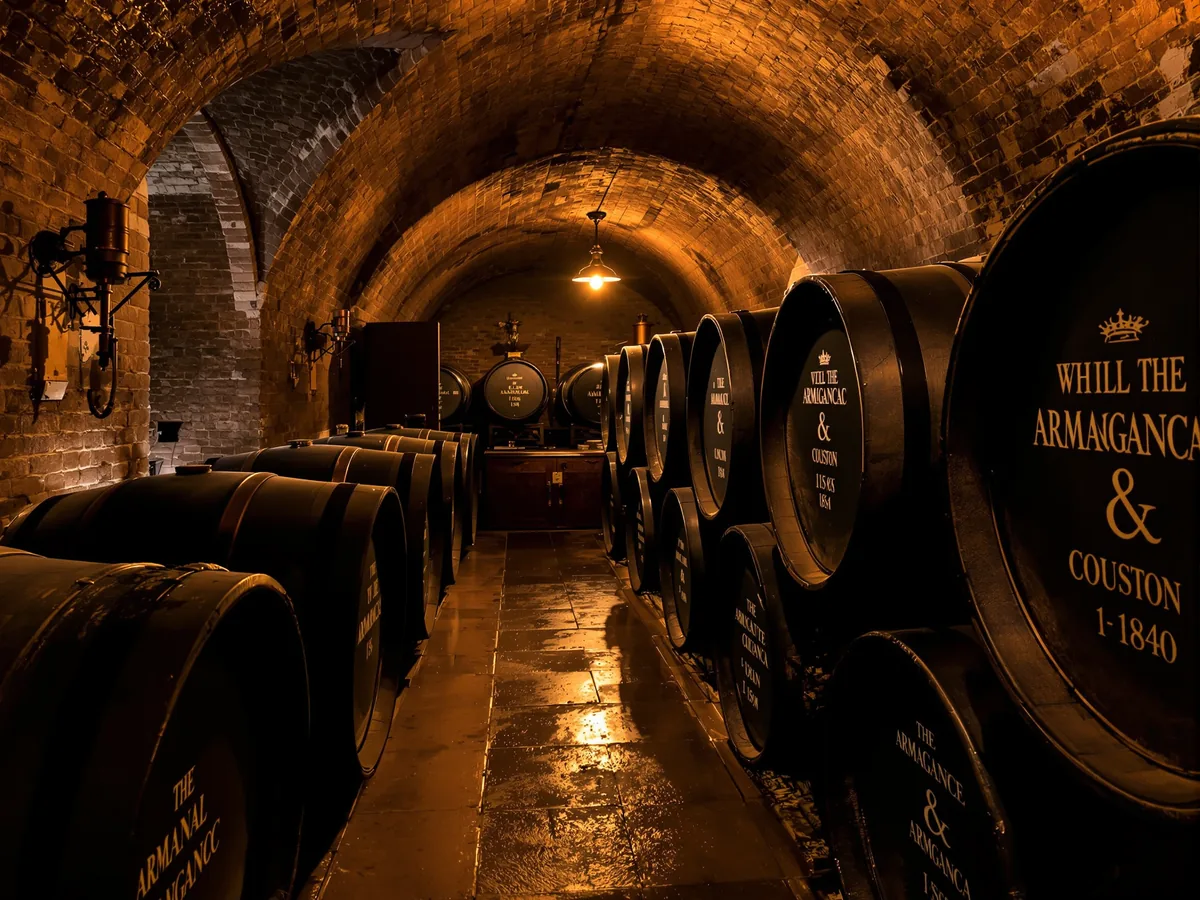
Seventy-five years later, what remains of such a harvest amounts to a few bottles. Keeping a lot for so long means agreeing not to sell it for three generations, watching over its development in the cellar and choosing, one day, the right moment to bottle it. The Jean Cavé house made this choice for some of its old vintages, including this one.
1951: the Europe of coal and steel
On 18 April 1951, six countries, including France, signed in Paris the treaty establishing the European Coal and Steel Community, the ECSC, the first of the European communities (source: Wikipedia, article "Communauté européenne du charbon et de l'acier"). The following summer, the Swiss rider Hugo Koblet won the Tour de France (source: Wikipedia, article "Tour de France 1951"). In the vineyards of the Gers, the autumn harvest took place as every year, before the winter distillation. We found no source from the houses on the quality of the 1951 harvest in Armagnac: we therefore do not characterise it.
Jean Cavé's 1951, from Lannepax
It was in 1883 that Jean Cavé, a winegrower, set up in Lannepax, in the Gers, as a distiller and cellar master, surrounded by his wife and two sons. The Jean Cavé house now spans four generations; Henri Cavé carries on armagnac's continuous distillation and watches over a collection of old vintages among the most remarkable in the appellation, right down to the 1900 demijohns in his paradis.
Here is what the product sheet for this 1951 states:
- Bas-Armagnac AOP appellation, from the 1951 harvest exclusively;
- no blending: the brandy comes from the family's collection of old vintages;
- aged in Gascon oak casks, in the house's cellars;
- bottled brut de fût, with no added water; the exact strength is shown on the label;
- 70 cl bottle, accompanied by a wooden box.
Brut de fût, single cask: two terms not to be confused
A brut de fût armagnac is bottled at its natural strength, just as it comes out of the cask, without reduction by adding water. The single cask designation, more common in whisky, means something else: all the bottles come from one and the same cask. An armagnac can be one without being the other. For this 1951, the house claims brut de fût and the absence of blending; it does not mention single cask, and we do not assert it.
A very old brut de fût does not necessarily have a high strength: over the decades, the alcohol evaporates through the wood, this is the angels' share, and the natural strength slowly falls. Each lot therefore has its own, which only the label gives with certainty.
From vine to still
Like every armagnac, this 1951 was first a wine: a dry, low-alcohol and lively white, made from the appellation's grape varieties. There are four main ones. Ugni blanc, the most widespread, gives acidic wines, perfect for distillation. Baco, a hybrid born in Gascony, brings roundness to long-ageing brandies. Folle blanche, a historic grape variety of the region, is renowned for its floral finesse. Colombard completes the palette. This distilling wine is nothing like a great Bordeaux growth: light and acidic, it would not be worth much at the table, but that is precisely what makes it a good base for the still. The Cavé house does not specify the grape varieties of this 1951, and we do not guess them.
This wine is then distilled only once, continuously, in the armagnac still, whereas cognac is distilled twice. The distillate, clear and still fiery, goes into oak casks. It is there, in the cellar, that everything happens: the wood gives it its colour, its tannins and its bouquet, the air rounds it out, and time does the rest. Bottling stops this ageing; an armagnac does not improve in the bottle as a wine does.
Three terroirs, one Gascon spirit
The armagnac appellation, in the South West of France, is divided into three areas: Bas-Armagnac to the west, Ténarèze in the centre, Haut-Armagnac to the east and south. Lannepax belongs to Bas-Armagnac, whose tawny sands are reputed to give fine and fruity brandies. Ténarèze, with its more clay-limestone soils, is often associated with more structured armagnacs.
Our shop brings together several producers from these terroirs for more recent years: Château de Laubade, in Sorbets, Château de Millet, near Eauze, Dartigalongue, in Nogaro since 1838, Armagnac Delord, the Cavés' neighbour in Lannepax, Castarède, founded in 1832, Baron de Sigognac, at Château de Bordeneuve, or Domaine de Pellehaut, in Ténarèze. Each estate, each château has its own style, and comparing them is one of the great pleasures of armagnac. A folle blanche Pellehaut, a Laubade armagnac or a younger Dartigalongue, tasted after this 1951 vintage, shows what ageing in cask changes in the colour, the nose and the length. This is also what distinguishes the region from its Charente neighbour: whereas cognac relies mainly on blends, armagnac has kept a genuine tradition of vintages, carried by winegrowers and family houses.
Tasting a 75 year old armagnac
Jean Cavé does not publish a tasting note for its 1951. The house does, however, describe its oldest vintages as having a mahogany hue and woody, vanilla and cocoa notes. More broadly, armagnacs of this age often evoke prune, candied orange, spices, walnut, leather or coffee, sometimes with the note of rancio that very long ageing brings; on the palate, they are generally full and long. These are reference points, not a description of this particular bottle.
To enjoy it:
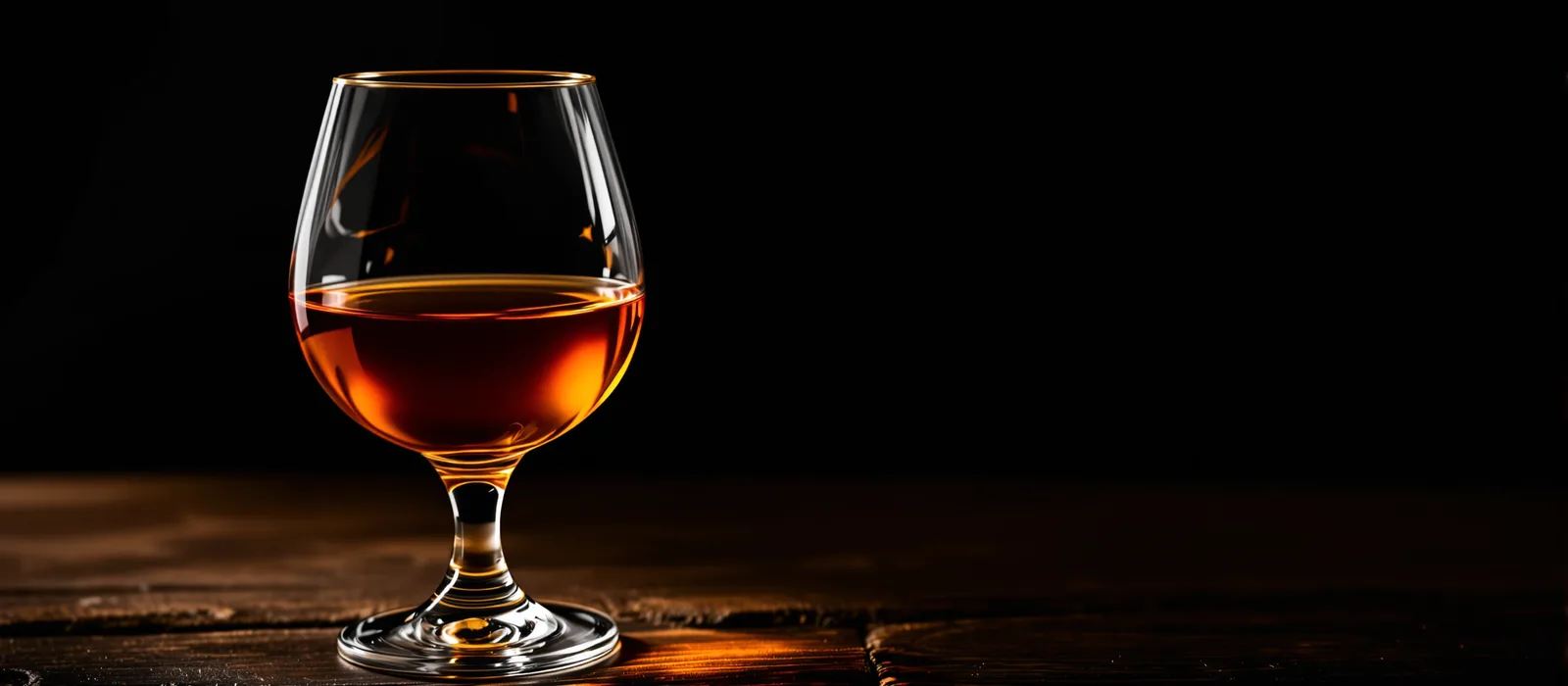
- choose a tulip glass, which concentrates the aromas;
- serve a small measure, at room temperature;
- let it breathe for about ten minutes;
- observe the colour, breathe it in, then taste in small sips;
- come back to the empty glass a little later: its fragrance lingers there.
As a digestif, after a festive meal, it is enough on its own. If you insist on a pairing, a square of dark chocolate or a few walnuts will do.
A gift for a 75th birthday
In 2026, people born in 1951 celebrate their 75th birthday, and couples married that year their 75th wedding anniversary. A 1951 armagnac has aged throughout all those years: it is a personal gift, to open with the family on the day of the celebration or to keep for another occasion, since it will no longer change in the bottle. Its wooden box makes it ready to give, among the rarest gift ideas in our cellar.
For a collection of dates, the 1951 takes its place between the 1950 armagnac and the 1952 armagnac.
Store the bottle upright, away from light and heat, so that the alcohol does not touch the cork. Unopened, it keeps for decades; once opened, it can be enjoyed over several months.
Frequently asked questions about 1951 armagnac
How much does a 1951 armagnac cost?
It depends on the age and rarity of the lot. The price is shown on the product page, with the house and the bottle size.
Where can I buy a 1951 armagnac online?
At Plaisirs de Gascogne, an online shop specialising in the sale of vintage armagnacs: the bottles come from the houses of the South West, payment is secure, shipping careful and delivery available in France and across Europe. Our customer service will advise you before you buy.
What are the characteristics of the 1951 armagnac?
A Bas-Armagnac AOP from a single harvest, without blending, bottled brut de fût, in 70 cl with a wooden box.
Who are the producers of 1951 armagnac?
In our selection, the Jean Cavé house, in Lannepax, in the Gers.
Can a 1951 armagnac be given to anyone?
To any adult. The French Public Health Code prohibits the sale of alcoholic beverages to minors, and proof of legal age may be required from the buyer. For a 75th birthday, the question hardly arises: it is a gift for grown-ups, to be enjoyed in moderation.
Does a 1951 armagnac still age in the bottle?
No. An armagnac only ages in cask; once bottled, it stays as it was when it went into the glass. All that matters, then, is the harvest year and the time spent in the cellar.
Find all our vintage armagnacs, year by year.
Please enjoy responsibly. Excessive alcohol consumption is harmful to health.



 Jean Cavé
113 bottles
 Armagnac Delord
92 bottles
 Château de Millet
83 bottles
 Dartigalongue
76 bottles
 Baron de Sigognac
69 bottles
 Armagnac Castarède
63 bottles
 Clés des Ducs
48 bottles
 Château de Laubade
43 bottles
 Domaine de Pellehaut
28 bottles
 Château de Bordeneuve
17 bottles
 Charles de Granville
13 bottles
 Domaine de Danis
7 bottles