Why choose an armagnac from 1939
The year is the identity card of a dated armagnac: the year shown is that of the harvest, and the bottle contains only this harvest. Age-statement armagnacs, from VSOP to hors d'âge, are by contrast blends of several harvests. Choosing a 1939 therefore means choosing a single year, kept intact in a house's cellar.
At nearly nine decades old, these lots have become very rare. Each of our three bottles comes from a family that kept its brandy away from any blend, then decided, much later, to bottle it under its year.
1939, the outbreak of war
On 1 September 1939, Germany invaded Poland; on 3 September, the United Kingdom and then France declared war on it (source: Wikipedia, article "Seconde Guerre mondiale"). In the countryside, many men were mobilised just as the grape harvest was beginning. In Gascony, the wine from this harvest was nevertheless distilled the following winter. In the absence of a source from the houses on the quality of this wine, we refrain from judging it.
Our three 1939 armagnacs
- Armagnac Castarède: the house, founded in 1832 and still family-run, is led by Florence Castarède, the sixth generation, from Château de Maniban. Its 1939, at 40% ABV, spent 81 years in oak casks before being bottled in 2020; it is presented in a case;
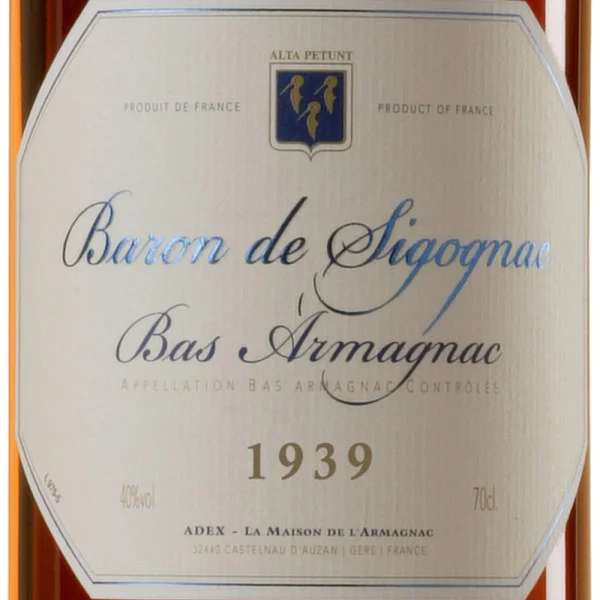
- Baron de Sigognac: a 1939 at 40% ABV, from ugni blanc and baco, aged at Château de Bordeneuve, in Castelnau d'Auzan. The house states that it prepares its vintages to order only. No tasting note has been published for this year;
- Jean Cavé: a 1939 Bas-Armagnac AOP, without any blending, bottled brut de fût, with no added water; its strength is shown on the label. It is delivered in a wooden box.
Two armagnacs at 40% ABV, with a gentler profile, and a brut de fût: the choice depends on the taste of the person you are giving it to. A useful clarification for whisky lovers: none of these three bottles claims the single cask designation, which refers to one cask only. To explore unreduced brandies, see our brut de fût armagnacs.
Three Bas-Armagnac families
Castarède, based in Mauléon-d'Armagnac, presents itself as the oldest independent, family-run merchant house in the appellation. Its vines include ugni blanc, colombard, folle blanche and baco, and it distils in an Orthez-type armagnac still dating from 1942. Château de Bordeneuve, owned by the Guasch family since 1974, ages each Sigognac year separately, near Eauze. Finally, in Lannepax, the Cavé family has kept a collection of old armagnacs since 1883, right down to century-old demijohns.
These three houses share a terroir: Bas-Armagnac, the western area of the appellation, with its tawny sands reputed for fine brandies. Ténarèze and Haut-Armagnac complete the map. For other years, our cellar also offers Château de Laubade, Château de Millet, Dartigalongue, Delord or Domaine de Pellehaut: a younger Laubade or Millet armagnac lets you discover the style of a great château of the South West, before returning to this old vintage.
How it is made, from wine to cellar
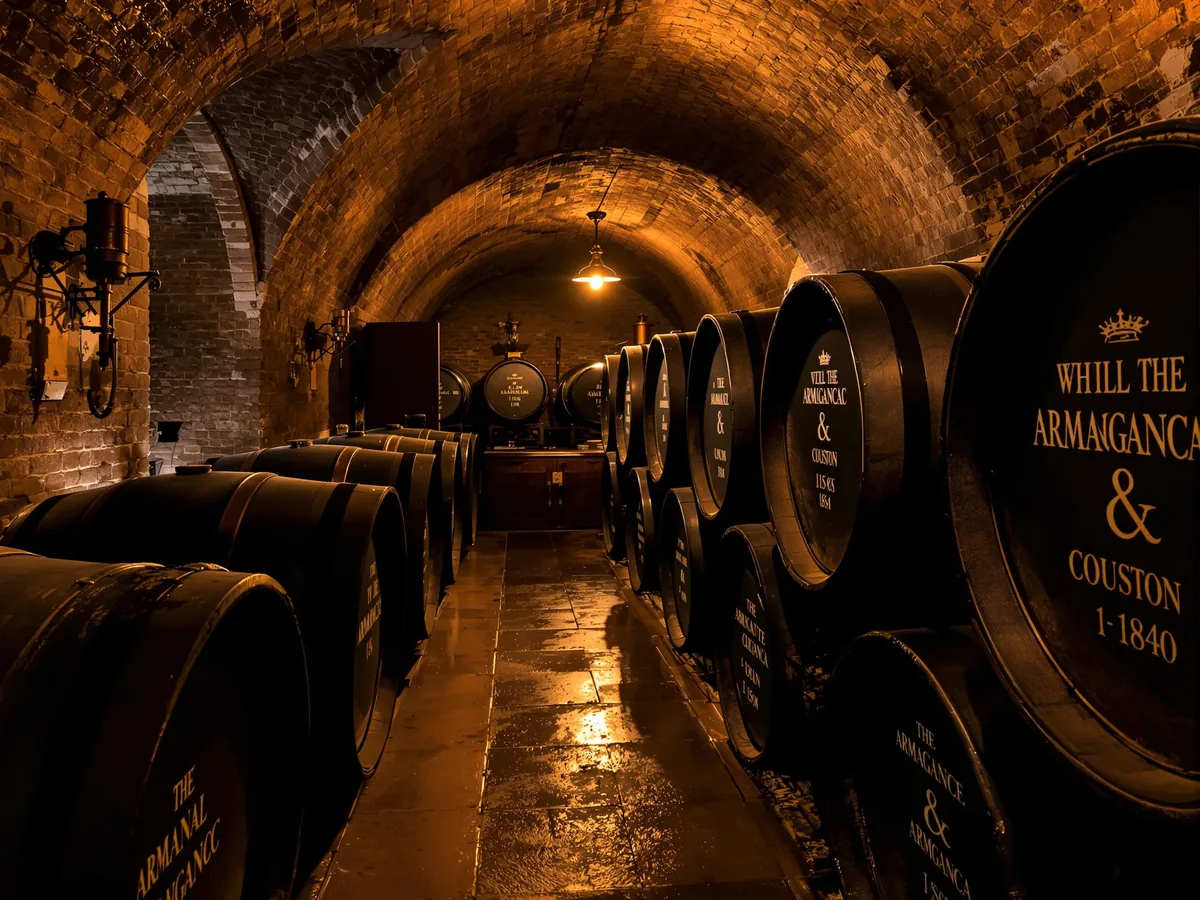
An armagnac is born from a dry white wine, made from the appellation's grape varieties: ugni blanc, baco, colombard and folle blanche. This distilling wine, light and lively, is nothing like a great table wine such as those of Bordeaux; yet it is what carries the whole personality of the future armagnac. Folle blanche, a historic grape variety of Gascony, gives a particularly fine wine. This wine is distilled only once, continuously, in the armagnac still, whereas cognac goes through the still twice. The distillate, clear as water, then goes into oak casks. Over the decades, it acquires its amber colour, its tannins, its aromas of wood and fruit, while its strength slowly falls. Bottling freezes this work: the bottle filled in 2020 thus sums up 81 years in cask.
Ugni blanc, baco, folle blanche: the wines of armagnac
Each grape variety brings its own note to the wine, and therefore to the brandy. Ugni blanc, the most widely planted, gives lively, low-alcohol wines, perfect for distillation. Baco, a hybrid created in Gascony by François Baco at the beginning of the 20th century, brings roundness and ages well in cask. Folle blanche, more delicate to grow, offers fine, floral wines. Colombard completes the palette with its lively aromas. On the hillsides of the Gers, between Bordeaux and Toulouse, each estate and each château works with these wines according to its terroir. Castarède grows all four; Bordeneuve relies on ugni blanc and baco.
Tasting an 87 year old armagnac
Between a young armagnac and an old armagnac, everything changes. The young one keeps the liveliness of the wine and the fruit; the old one gains in roundness, depth and woody notes. Old armagnacs of this age most often show a deep colour, between dark amber and mahogany. They frequently reveal notes of prune, candied fruit, vanilla, cocoa, coffee, sweet spices and rancio, that rich note of very old armagnacs. Start with the 40% ABV bottles before the brut de fût, if you have the chance to compare.
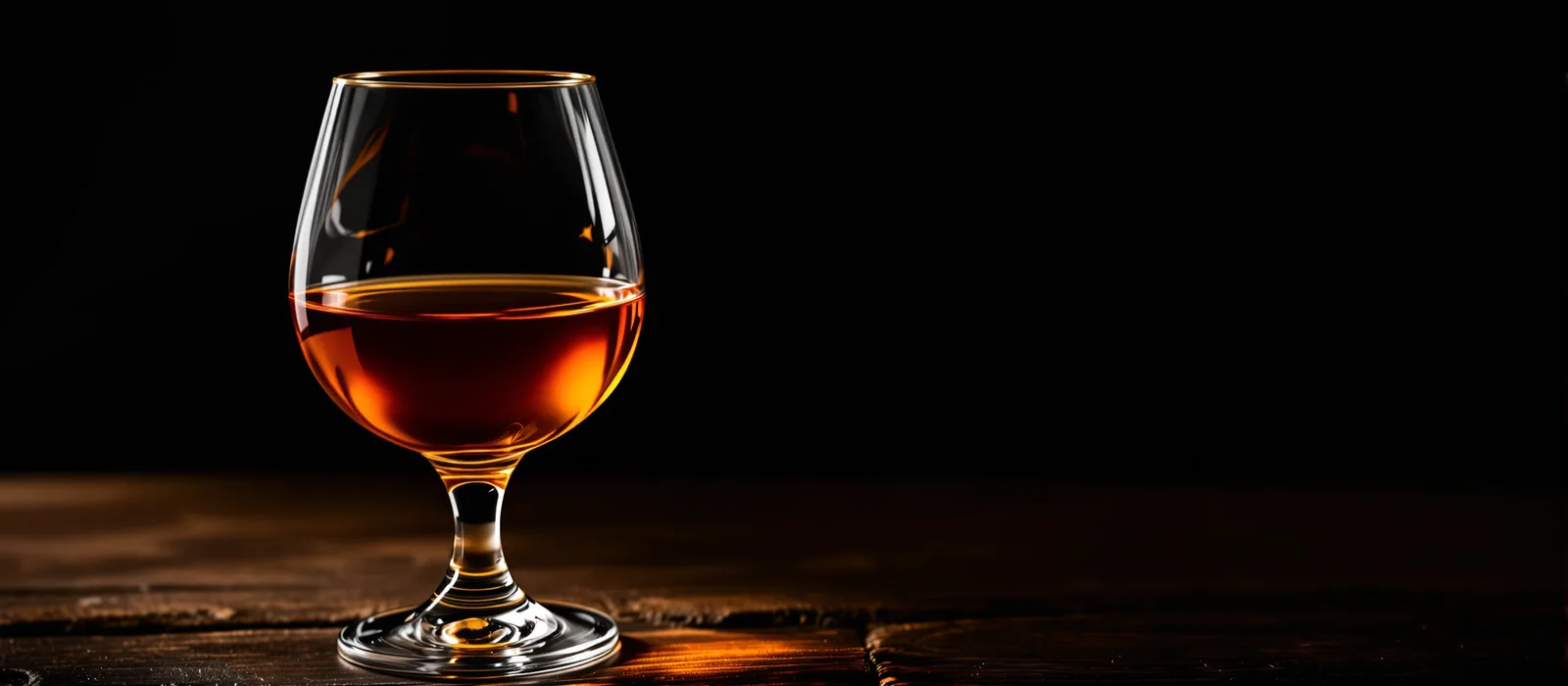
Serve a small measure in a tulip glass, at room temperature, and let it breathe for a few minutes. It is tasted in small sips, at the end of a meal, with nothing alongside.
A 1939 armagnac for an 87th birthday
In 2026, people born in 1939 celebrate their 87th birthday. An armagnac from their birth year is a meaningful gift, to open on the day itself or to keep for a future celebration. A case or a wooden box depending on the house: each bottle is ready to give. Collectors will pair it with a 1938 armagnac or a 1941 armagnac.
For a combined purchase, consider armagnacs from other houses in our shop, Dartigalongue or Pellehaut for example, to bring together different notes and styles.
Store the bottle upright, away from light and heat. Unopened, it keeps for a long time; once opened, it remains enjoyable for several months.
Frequently asked questions about 1939 armagnac
How much does a 1939 armagnac cost?
It varies according to the house, the strength and the presentation. Each product page shows the price, the bottle size and the house.
Where can I buy a 1939 armagnac?
In the Plaisirs de Gascogne shop, an online wine and spirits merchant dedicated to selling French armagnacs online, from the youngest to the oldest: secure payment, careful packaging, delivery in France and across Europe, and a customer service team to guide you in your choice.
Which houses offer a 1939 armagnac?
In our shop, three Bas-Armagnac houses: Armagnac Castarède, Baron de Sigognac and Jean Cavé.
What is the history of the 1939 armagnac?
That of a harvest gathered in the autumn of 1939, distilled the following winter, then kept in cask by families who chose to wait before bottling it.
Is a 1939 armagnac a good purchase?
For a birthday or a collection, yes: it is a rare date, and every bottle that still carries it is precious. Our online shop presents each product with its house, its strength and its bottle size; shipping is done in careful packaging. Also consider comparing: on the nose as on the palate, the three houses offer very different readings of the same wine.
How should I taste a 1939 armagnac?
Neat, as a digestif, in a tulip glass. An old distilled wine of this age reveals itself slowly: let the notes of dried fruit, wood and rancio come through before drawing your conclusions.
Find all our vintage armagnacs, year by year.
Please enjoy responsibly. Excessive alcohol consumption is harmful to health.



 Jean Cavé
113 bottles
Jean Cavé
113 bottles
 Armagnac Delord
92 bottles
Armagnac Delord
92 bottles
 Château de Millet
83 bottles
Château de Millet
83 bottles
 Dartigalongue
76 bottles
Dartigalongue
76 bottles
 Baron de Sigognac
69 bottles
Baron de Sigognac
69 bottles
 Armagnac Castarède
63 bottles
Armagnac Castarède
63 bottles
 Clés des Ducs
48 bottles
Clés des Ducs
48 bottles
 Château de Laubade
43 bottles
Château de Laubade
43 bottles
 Domaine de Pellehaut
28 bottles
Domaine de Pellehaut
28 bottles
 Château de Bordeneuve
17 bottles
Château de Bordeneuve
17 bottles
 Charles de Granville
13 bottles
Charles de Granville
13 bottles
 Roger Groult
7 bottles
Roger Groult
7 bottles