1961, a scorching summer in the South West
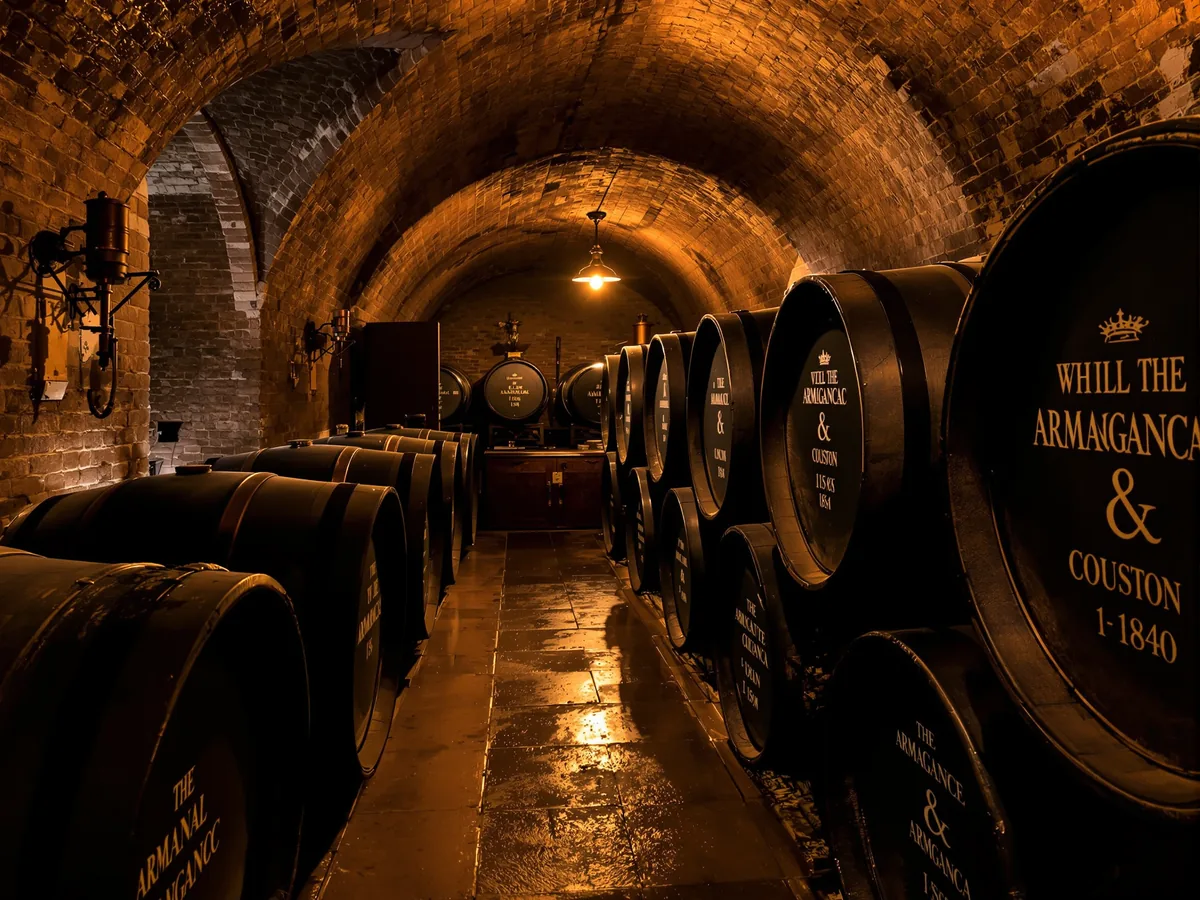
1961 is the year of the first manned space flight, with Yuri Gagarin, and of the building of the Berlin Wall. In the South West of France, the summer was exceptionally hot and dry. This heat produced grapes of a concentration and ripeness rarely achieved, an ideal base for a brandy built to age. More than sixty years later, the armagnacs from this historic vintage show a depth that only very long ageing in cask can build.
Two houses, two ways of reading 1961
Our 1961 selection is deliberately short: few casks from this year remain in the region's cellars, and each bottle was chosen for its personality.
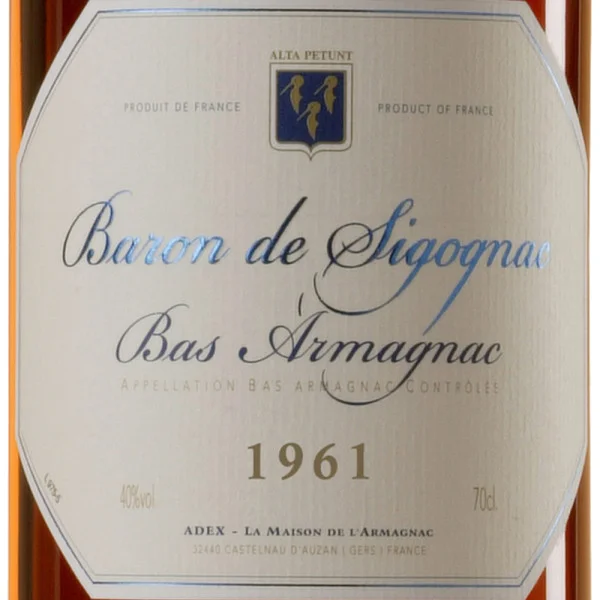
- Baron de Sigognac: a Bas-Armagnac from the 1961 harvest, aged at Château de Bordeneuve, in Castelnau d'Auzan. On this Bordeneuve estate, the Guasch family ages each year separately and keeps vintages going back to 1893. Ugni blanc and baco grapes, 40% ABV, in 70 cl. Its tasting notes: a powerful first nose, dominated by vanilla, with a peppery touch; a robust attack, carried by oak and tannins; a finish that can suggest roasted coffee.
- Jean Cavé: this house in Lannepax, established in 1883, has built one of the finest collections of old vintages in the appellation. Its 1961 is a brut de fût Bas-Armagnac (cask strength, not reduced), bottled without reduction, in 70 cl.
The first will appeal to those who like a structured, rich armagnac, the second to lovers of brandies bottled just as they come out of the cask. To understand this difference, our cask strength armagnac page explains this bottling method.
What a 1961 armagnac contains
A vintage blends nothing: everything in the bottle comes from the 1961 harvest. The white wine from that harvest, made from Gascon grape varieties such as ugni blanc, baco or folle blanche, was distilled the following winter in the armagnac still. The brandy, still clear and colourless, went into oak casks and only came out at the moment chosen by the cellar master. All that time, the oak gave it its colour, its tannins, its notes of vanilla and spice, while evaporation concentrated the fruit and the aromas.
That is the whole difference with an XO or a hors d'âge, which rely on a blend of brandies from several years. A 1961 vintage armagnac is the only way to capture this precise year in a glass, and it is also what sets it apart from an aged cognac or from a "vintage" in the broader English sense of the word.
The appellation in a few words
Armagnac is produced in Gascony, across three terroirs: Bas-Armagnac, with its tawny sands, Ténarèze, with its clay and limestone soils, and Haut-Armagnac. Our two 1961 bottles come from Bas-Armagnac, the terroir most renowned for old vintages, where folle blanche, ugni blanc and baco produce fine brandies capable of spanning the decades.
Giving 65 years of patience
In 2026, people born in 1961 celebrate their 65th birthday and couples married that year their blue sapphire (65th) wedding anniversary, known in France as the rosewood anniversary. Rosewood is a precious wood; the oak in which these brandies matured is a lovely echo of it. Giving an armagnac from the year of birth or marriage means giving a unique spirit that has lived through exactly the same era as the person being celebrated, from the vineyard to the cellar. Among the possible gifts for such an anniversary, few tell as much of a story.
Our advice for choosing well: think of the recipient's taste rather than the label alone. A lover of power will appreciate the brut de fût, while a palate that prefers roundness will go for a vintage reduced to 40% ABV. Both keep for a long time and can wait for the perfect occasion, slipped into a gift box or given just as they are.
Tasting a 1961 armagnac
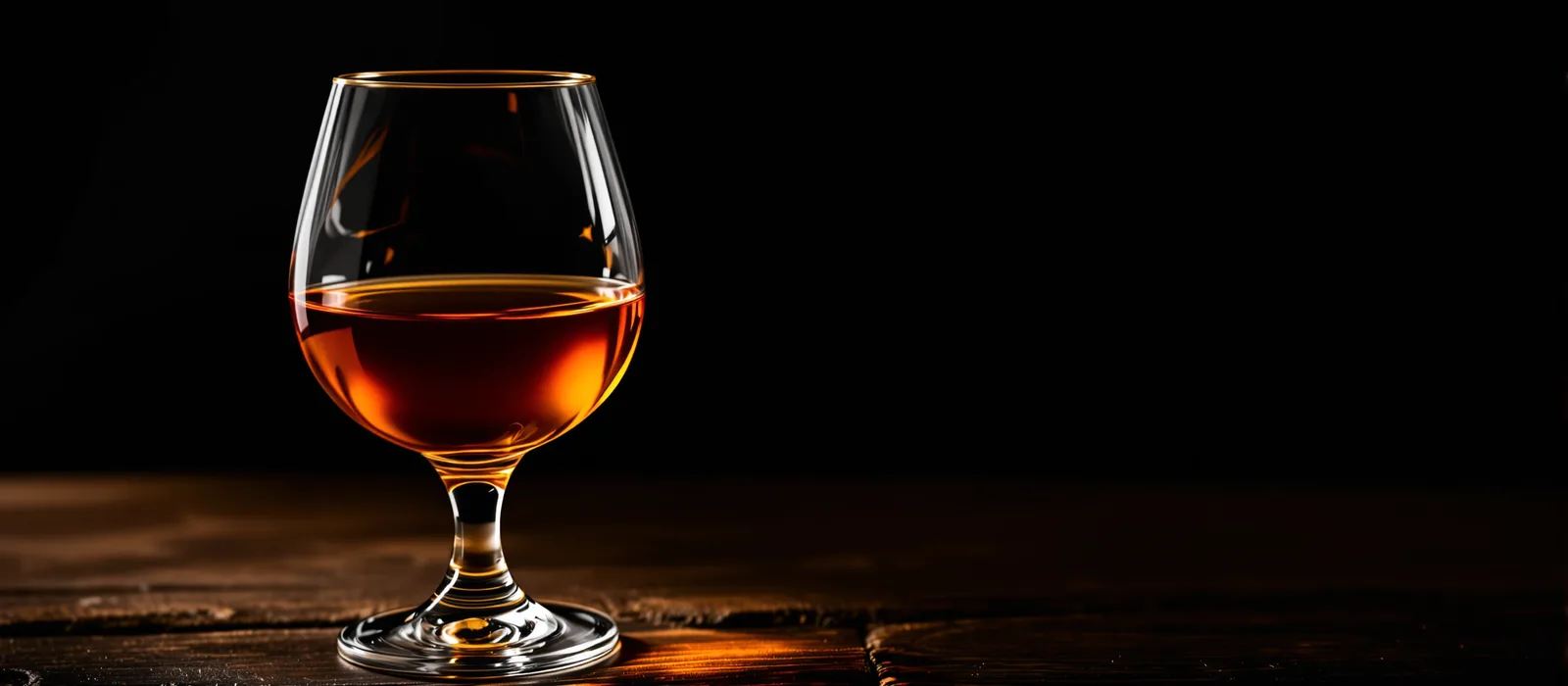
Leave aside overly wide balloon glasses: a tulip glass concentrates the aromas better. Pour a small amount, at room temperature, and let the armagnac open up for a few minutes. First look at the colour, often mahogany at this age. Then bring the glass gently to your nose: vanilla, prune, wax, spices, sometimes a touch of rancio. On the palate, take a tiny sip and hold it for a moment, before letting the long, complex finish unfold. A drop of water can soften a brut de fût, but most connoisseurs prefer it as it is: it is a special experience, to be enjoyed without hurrying.
As for storage, an unopened bottle keeps upright, somewhere cool and away from light: armagnac no longer evolves once bottled, and its quality remains intact. Once opened, it stays enjoyable for several months, with the cork tightly closed.
Frequently asked questions about 1961 armagnac
Which producers offer a 1961 armagnac?
We offer the 1961 vintage from Baron de Sigognac and the one from Jean Cavé, as a brut de fût. Each product page specifies the house, the strength and the bottle size.
How much does a 1961 armagnac cost?
It depends on the house, the rarity of the batch and the bottling method. The price of each bottle is shown on its product page.
Where can I buy a 1961 armagnac?
At Plaisirs de Gascogne, an online wine and spirits merchant specialising in vintage armagnacs: secure ordering and payment, careful delivery in France and across Europe, in packaging suited to shipping. Our customer service will answer your questions before you order.
What are the characteristics of a 1961 armagnac?
A brandy from a single harvest, from a hot, dry summer, aged for more than sixty years in cask: a dark colour, concentrated aromas, a broad palate and a lingering finish.
What do people think of this vintage?
1961 is considered an exceptional vintage in the South West, thanks to the ripeness of the grapes. Detailed reviews of each bottle can be found on its product page.
Still undecided? Browse all our vintage armagnacs, or discover a neighbouring vintage such as the 1963 armagnac or the 1966 armagnac.
Please enjoy responsibly. Excessive alcohol consumption is harmful to health.



 Jean Cavé
113 bottles
 Armagnac Delord
92 bottles
 Baron de Sigognac
90 bottles
 Château de Millet
83 bottles
 Sempé
82 bottles
 Dartigalongue
77 bottles
 Marcel Trépout
72 bottles
 Clés des Ducs
67 bottles
 Château de Monluc
64 bottles
 Armagnac Castarède
63 bottles
 Château de Laubade
42 bottles
 Château de Bordeneuve
32 bottles