Almost a hundred years, a single harvest
Choosing a vintage armagnac means choosing one year, and one only. All the armagnac comes solely from the harvest shown on the label, without the slightest addition from another harvest. VSOPs, XOs and hors d'âge follow a different logic: the cellar master blends armagnacs of several ages to maintain a style. A 1927 vintage does not seek consistency: it tells the story of a season.
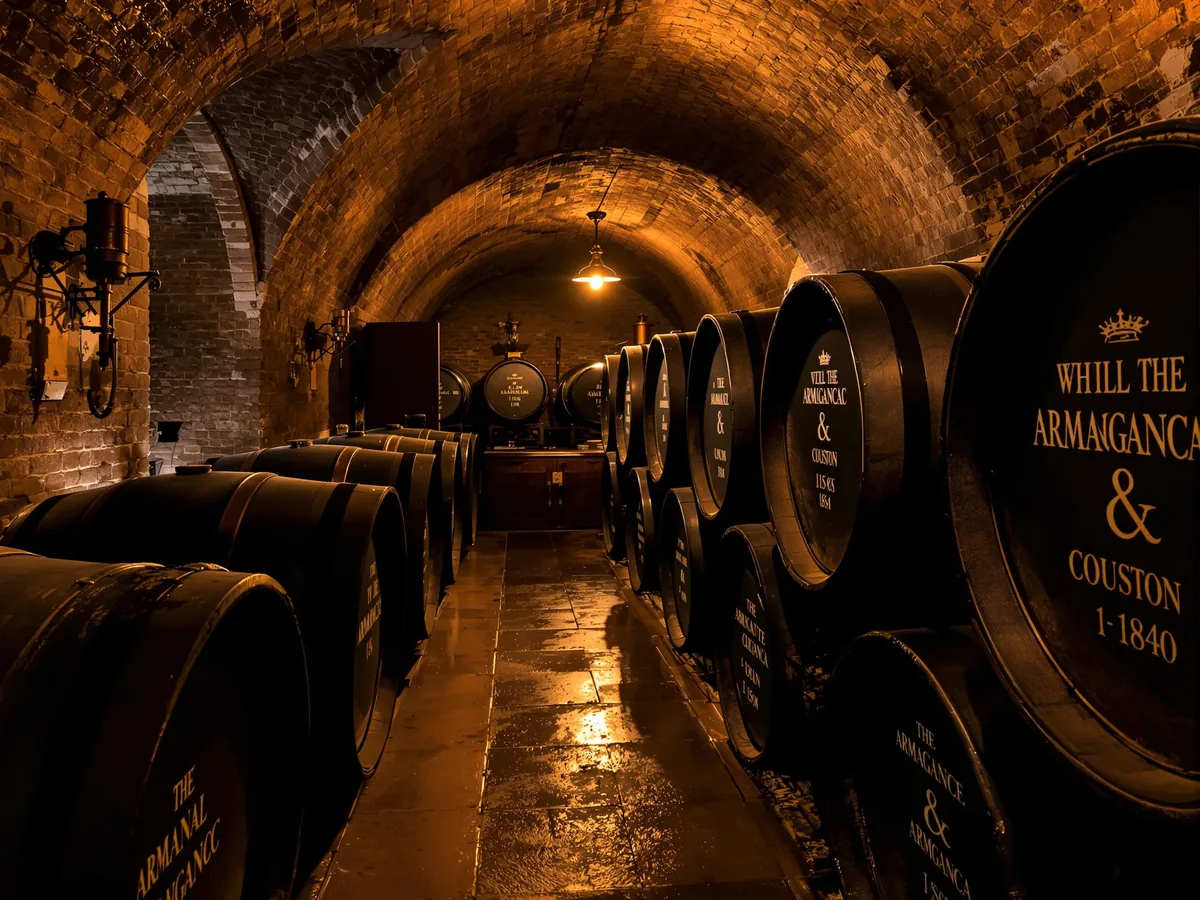
Nearly a century later, bottles from 1927 now come only from the reserves of a few families who knew how to wait. Yearly evaporation, the angels' share, has shrunk their casks a little more each winter: what remains is rare, and will never be replaced.
1927, the year of Lindbergh
On 20 and 21 May 1927, the American aviator Charles Lindbergh flew solo and non-stop from New York to Paris aboard the Spirit of St. Louis, landing at Le Bourget after more than thirty-three hours in the air (source: Wikipedia, article "Charles Lindbergh"). A few months later, in October, The Jazz Singer was released in the United States, often described as the first feature-length talking picture (source: Wikipedia, article "Le Chanteur de jazz"). Meanwhile in Gascony, the grapes were harvested, then distilled during the winter. We found no producer source on the quality of the 1927 harvest, so we say nothing about it.
The two 1927 armagnacs in our cellar
- Jean Cavé: a 1927 Bas-Armagnac AOP from the Cavé family's collection of old years, in Lannepax. No blending, and bottled brut de fût: the armagnac keeps its natural strength, written on the label. The 70 cl bottle comes in a wooden box;
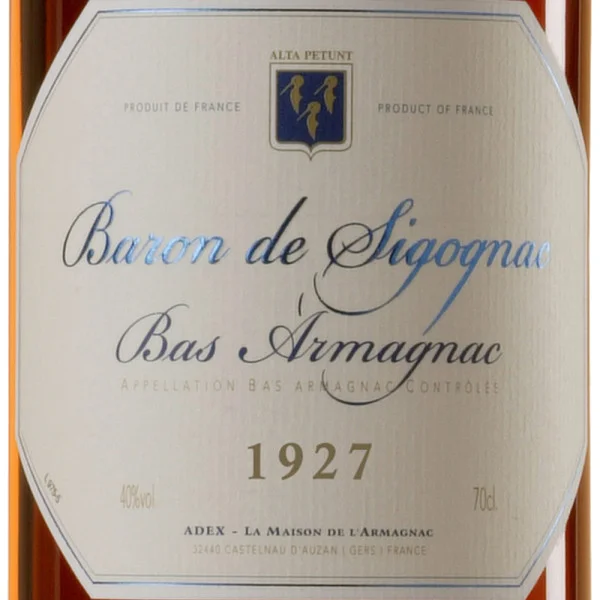
- Baron de Sigognac: a 1927 at 40% ABV, from ugni blanc and baco, aged at Château de Bordeneuve, in Castelnau d'Auzan. Each vintage ages separately there, and the bottles are prepared to order, with the bottling date on the back. The house does not publish a tasting note for 1927.
The Sigognac, reduced to 40% ABV, is the more approachable; the Jean Cavé, brut de fût, will suit those who love natural strengths. You will find others among our brut de fût armagnacs.
Preparing a centenary in 2027
In 2027, people born in 1927 will celebrate their hundredth birthday. An armagnac from their year is one of the rare gifts able to have lived through the same century as they have. Very old vintages go quickly and are never renewed: if you have a centenary in sight, it is wise to reserve the bottle in advance. Unopened and stored upright, away from light, it will wait unharmed for the day of the celebration.
This 1927 also makes a beautiful gift for the 99th birthday of a loved one in 2026, for the anniversary of a house founded that year, or for an aviation enthusiast. In a cellar, it slips in between our 1926 armagnac and our 1928 armagnac.
Two houses, two stories of patience
The house of Jean Cavé was born in 1883, when Jean Cavé set up in Lannepax, in the Gers, as a winegrower, distiller and cellar master. Four generations later, Henri Cavé carries on the armagnac tradition of continuous distillation and watches over one of the most remarkable collections of old vintages in the appellation. Some lots rest in glass demijohns, in the paradis of the cellar, so that they no longer evolve.
At Château de Bordeneuve, the Guasch family, owners since 1974, age the Baron de Sigognac armagnacs in confidential quantities. The estate keeps years dating back to 1893. Its style, according to the house, combines roundness and fruit, with age adding notes of toasted dried fruit, roasted coffee and dark chocolate: a house character, not a description of this 1927.
Other producers of the South West await you in our shop for more recent years: Château de Laubade, renowned for its vintages, Castarède, Delord, Dartigalongue, Château de Millet or Domaine de Pellehaut.
From vine to cellar, armagnac in a few steps
Armagnac begins with a dry wine made from the appellation's grape varieties: ugni blanc, baco, folle blanche and colombard. This wine is distilled just once, continuously, in the armagnac still, whereas cognac goes through the still twice. The colourless, lively distillate then goes into oak casks. Over the decades, it takes on its amber and then mahogany colour, its tannins and its aromas, while its strength slowly falls. Once bottled, it no longer evolves: the vintage indicates the harvest, the bottling date tells you the length of ageing.
The appellation is divided between Bas-Armagnac, Ténarèze and Haut-Armagnac. Our two 1927s come from Bas-Armagnac, whose tawny sands are reputed to give fine, fruity brandies.
From wine to armagnac, a Gascon affair
It is sometimes forgotten: armagnac is first of all a wine. A Gascon wine, light and acidic, hardly drunk at table but ideally suited to distillation. The quality of the wine therefore matters as much as that of the still: a good distilling wine gives a clean armagnac, capable of ageing for a century. That is also why houses that grow their own vines, such as the Cavé family or Château de Bordeneuve, attach so much importance to the base wine. In Gascony, wine and armagnac form one and the same culture, from vine to cellar.
Serving a 1927 armagnac
A tulip glass, a small measure, room temperature: that is all you need. Let the armagnac breathe for ten to fifteen minutes, warm the glass in the palm of your hand, then taste in small sips. Armagnacs of this age often suggest prune, dried fig, walnut, cocoa or sweet spices, sometimes with the note of rancio that comes with long ageing. Each bottle remains a discovery. Once opened, it will keep for several months, stoppered and upright.
Frequently asked questions about 1927 armagnac
What is the price of a 1927 armagnac?
It varies with the house and the type of bottling. The price of each bottle is shown on its product page, along with its size and strength.
Where can I buy a 1927 armagnac?
At Plaisirs de Gascogne, a specialist in vintage armagnac online: add the bottle to your basket, pay securely, and delivery is available in France or across Europe. Shipping is handled with care: each bottle travels protected, wedged in packaging suited to old bottles. Our customer service team, specialists too, will advise you if needed.
Which producers offer a 1927 armagnac?
In our selection, Jean Cavé and Baron de Sigognac, both in Bas-Armagnac.
What are the characteristics of the 1927 armagnac?
Two 70 cl bottles from a single harvest: a Baron de Sigognac at 40% ABV, from ugni blanc and baco, and a Jean Cavé brut de fût, unblended, in a wooden box.
How should I taste the 1927 armagnac?
As a digestif, at room temperature, in a tulip glass, after letting it open up for a few minutes.
What do reviews say about the 1927 armagnac?
Neither Jean Cavé nor Baron de Sigognac publishes a note on this vintage. We therefore quote no reviews, and invite you to discover each house on its own page for more about its region and its craft.
Can it be given for a birthday in 2027?
Yes, it is in fact the ideal occasion: next year, a 1927 armagnac will be exactly a hundred years old. Well stored, it will not change between now and then.
See all our vintage armagnacs, year by year.
Please enjoy responsibly. Excessive alcohol consumption is harmful to health.



 Jean Cavé
113 bottles
Jean Cavé
113 bottles
 Armagnac Delord
92 bottles
Armagnac Delord
92 bottles
 Château de Millet
79 bottles
Château de Millet
79 bottles
 Dartigalongue
76 bottles
Dartigalongue
76 bottles
 Baron de Sigognac
69 bottles
Baron de Sigognac
69 bottles
 Armagnac Castarède
63 bottles
Armagnac Castarède
63 bottles
 Clés des Ducs
48 bottles
Clés des Ducs
48 bottles
 Château de Laubade
43 bottles
Château de Laubade
43 bottles
 Domaine de Pellehaut
28 bottles
Domaine de Pellehaut
28 bottles
 Château de Bordeneuve
17 bottles
Château de Bordeneuve
17 bottles
 Charles de Granville
13 bottles
Charles de Granville
13 bottles
 Roger Groult
7 bottles
Roger Groult
7 bottles