Why a 1942 vintage is so rare
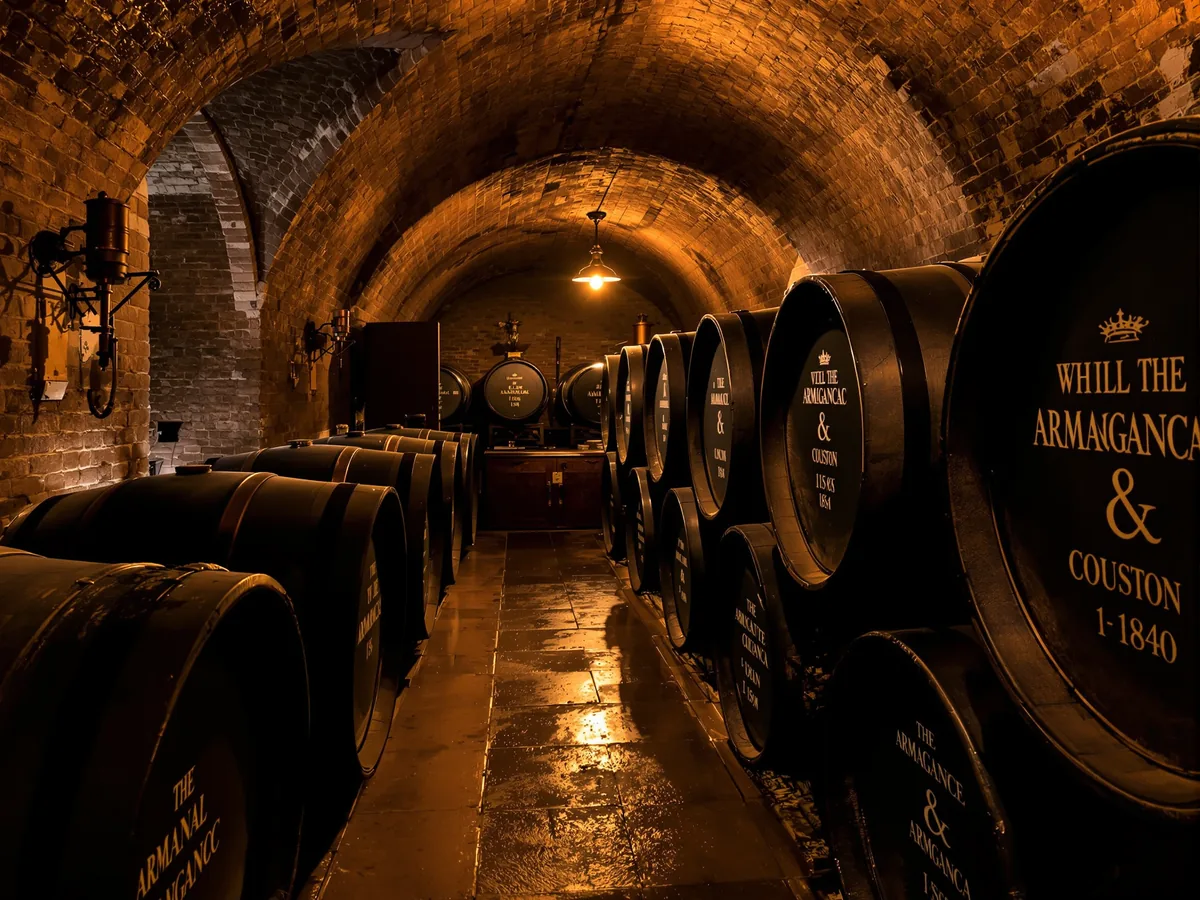
For a 1942 armagnac to reach us, a house had to let this brandy age without ever selling it or mixing it with other years, then decide, much later, to bottle it on its own, under its year. Many brandies from that period were drunk, blended or sold in bulk long ago. Those that remain amount to a few casks or a few demijohns, and the bottles drawn from them leave one by one.
A vintage, remember, contains only one harvest, the one written on the label. A VSOP, an XO or a hors d'âge are blends of several harvests, designed to keep the same style from one year to the next. The 1942, on the contrary, tells the story of a single year, seen through the work of one house.
1942, a year of war
In 1942, France was in its third year of war. Since 1940, the demarcation line had separated the occupied zone from the so-called free zone, which included the Gers; on 11 November 1942, the German army in turn invaded the free zone (source: Wikipedia, article "Zone libre"). In this context, the vines of the South West were nevertheless harvested, and the autumn wine went through the still the following winter. We have no producer source on the quality of this harvest, so we prefer to stick to what the houses say about their own bottles.
Our two 1942 armagnacs
Both bottles come from Bas-Armagnac and each has its own character:
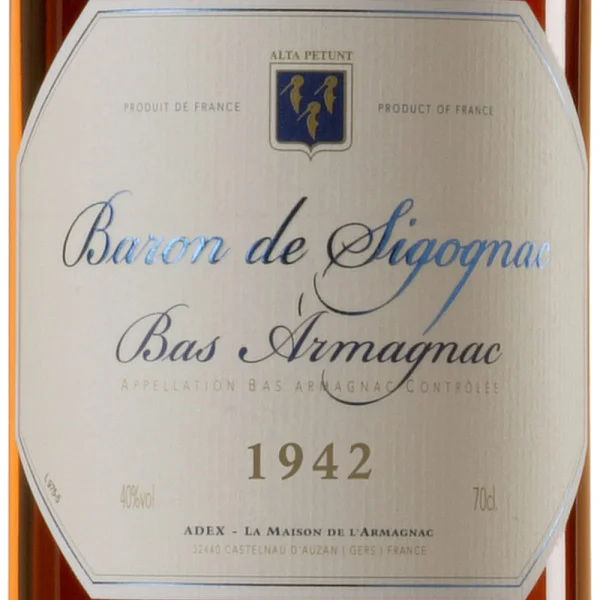
- Baron de Sigognac: a 1942 at 40% ABV, from ugni blanc and baco, kept at Château de Bordeneuve, in Castelnau d'Auzan, where each year ages separately and where vintages dating back to 1893 are kept. According to the house, it has a deep amber colour, a nose combining power and finesse, and a round, powerful palate, before a woody, spicy finish of prune;
- Jean Cavé: a 1942 at 42.4% ABV, drawn from the reserves of old vintages of this Lannepax family, in the tradition of distillers and cellar masters since 1883. The label bears the words Bas-Armagnac AOP; the brandy has never been blended and was bottled brut de fût (at cask strength), with no added water. It is presented in a wooden box.
The first, brought down to 40% ABV, is more supple; the second, at cask strength, keeps an intensity sought after by lovers of brut de fût armagnac.
Two families, two Gascon traditions
Behind every old vintage there is a house and several generations. In Lannepax, the Cavé family has been established since 1883 as distillers and cellar masters: over time it has built up a large collection of old armagnac, kept in its cellar, from which it draws a few chosen years, bottled without blending. At Château de Bordeneuve, on the sands of Bas-Armagnac near Eauze, the Guasch family looks after the Baron de Sigognac armagnacs, a small house where each year is aged separately.
Two houses, two ways of working: that is what makes it interesting to taste the same date from one and then the other. For more recent years, you can also discover the vintages of Castarède, Delord, Château de Millet, Château de Laubade, Dartigalongue or Domaine de Pellehaut.
From vine to cellar
Every armagnac begins with a wine: a dry white wine, made from one or more of the appellation's grape varieties, ugni blanc, baco blanc, folle blanche or colombard. This Gascon wine is distilled continuously in the armagnac still, a method specific to Gascony, then the brandy is aged in oak barrels. Year after year, the wood gives it its colour, its tannins and its bouquet, while part of the alcohol evaporates. Ageing stops at bottling: a well-kept 1942 stays just as the house bottled it.
Tasting an armagnac more than 80 years old
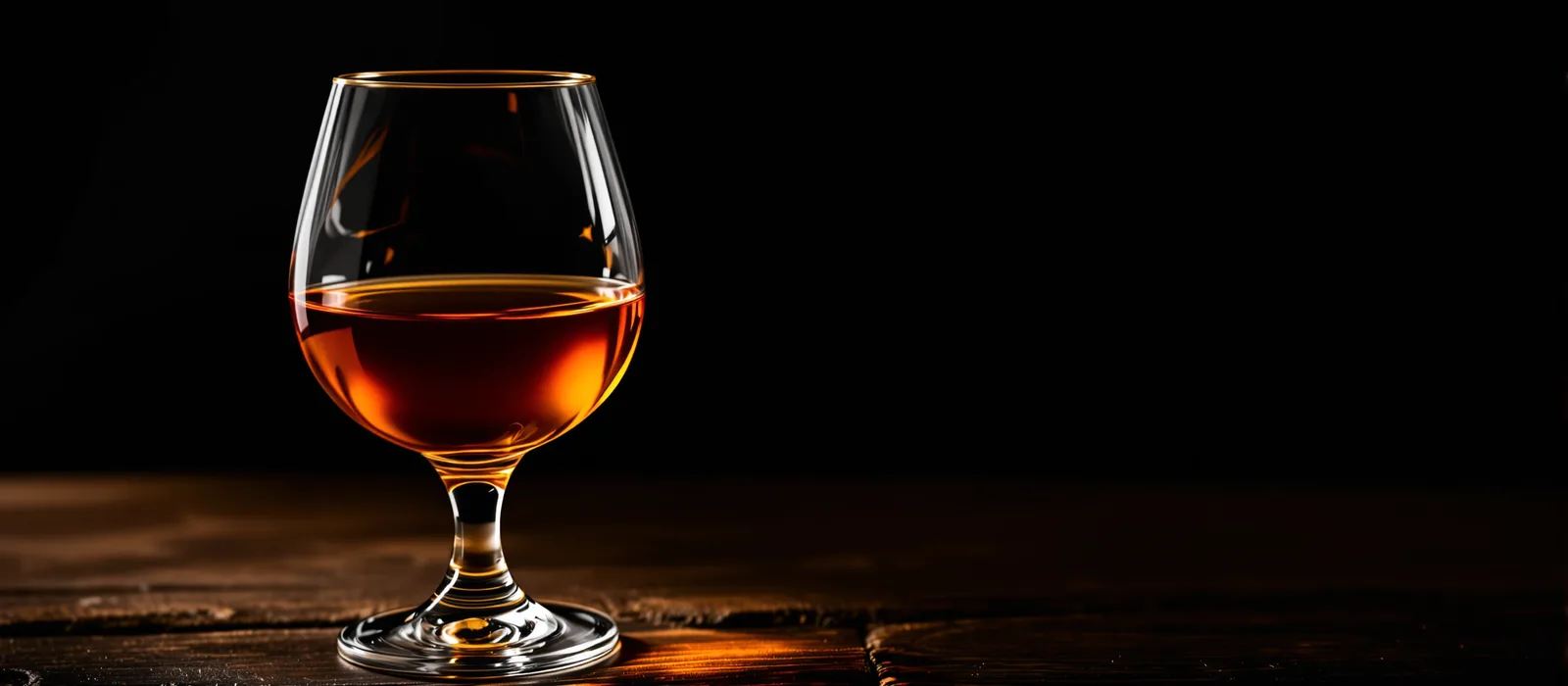
An armagnac of this age calls for a little ceremony. Pour a small amount into a tulip glass, at room temperature, and let it open up for several minutes. Very old armagnacs often suggest prune, candied fruit, vanilla, cocoa and sweet spices, sometimes honey or rancio. The Sigognac, according to its product sheet, finishes on prune and spices; the Jean Cavé brut de fût, slightly higher in strength, reveals itself in very small sips. Two great spirits, to compare side by side if you have the chance. Keep this moment for the end of the meal, with nothing alongside.
Giving a 1942 armagnac
In 2026, people born in 1942 celebrate their 84th birthday. Giving a bottle from their birth year is a rare gift, one to share with the family as much as to give. It also has its place at a wedding or a family gathering, when several generations come together. Finally, it is a collector's piece for the connoisseur who gathers old vintages, alongside a 1936 armagnac or a 1946 armagnac.
As for storage, one simple rule: keep the bottle upright, away from light and heat, so that the alcohol does not eat into the cork. Unopened, it will cross the years; once opened, it keeps for several months.
Frequently asked questions about 1942 armagnac
How much do 1942 armagnacs cost?
The price depends on the house, the strength and the rarity of the lot. Each product page on this page shows the house, the bottle size and the price: an exceptional bottle, whose price reflects its rarity.
Where can I buy a 1942 armagnac online?
Right here, at Plaisirs de Gascogne, an online wine and spirits shop focused on old vintages: the bottles come from the Gascon houses, payment is secure and shipping is handled with care, in France and across Europe. Our customer service can advise you before you buy.
Who are the producers of 1942 armagnac?
In our selection, two Bas-Armagnac houses: Baron de Sigognac and Jean Cavé, each with a wine distilled and then aged on site according to its own tradition.
What are the characteristics of the 1942 armagnac?
Two brandies from a single harvest, aged for many decades in wood: one reduced to 40% ABV, the other brut de fût at 42.4% ABV.
Discover all our vintage armagnacs, year by year.
Please enjoy responsibly. Excessive alcohol consumption is harmful to health.



 Jean Cavé
113 bottles
 Armagnac Delord
92 bottles
 Baron de Sigognac
90 bottles
 Château de Millet
83 bottles
 Sempé
82 bottles
 Dartigalongue
77 bottles
 Marcel Trépout
72 bottles
 Clés des Ducs
67 bottles
 Château de Monluc
64 bottles
 Armagnac Castarède
63 bottles
 Château de Laubade
42 bottles
 Château de Bordeneuve
32 bottles