Domaine de Pellehaut
the house

Domaine de Pellehaut

  • Location Montréal-du-Gers, Gers
  • Appellation Ténarèze

The Domaine de Pellehaut vineyard, perched on majestic hillsides at an altitude of over 180 m, stands out for its exceptional terroir, which enjoys optimum sunshine and natural protection from the Pyrenees mountains. This geographical location ensures moderate summer rainfall, which is essential for the vines.

The name "Pellehaut" has its origins in Roman and medieval pila. Mosaics discovered in Séviac, two kilometers from the estate, bear witness to the millennia-old presence of vines here, dating back to Roman times.

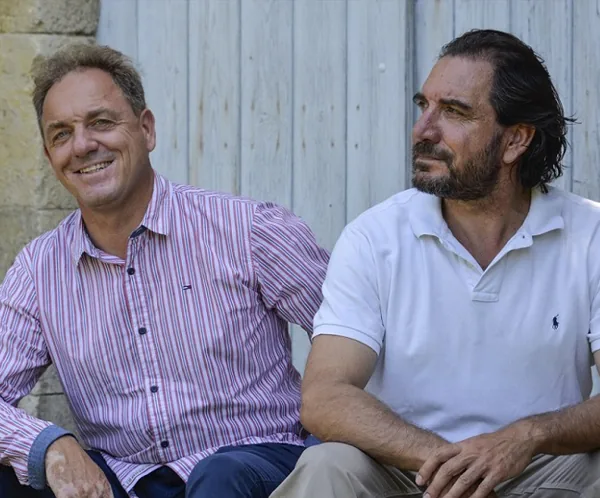
Run today by Martin and Mathieu BERAUT, two passionate brothers, the vineyard is at the heart of a farming operation that preserves the natural balance and traditional methods established by their predecessor, Gaston Béraut. This Gascony-style polyculture combines vineyards, cattle breeding and cereal crops, reflecting a rich family history spanning four centuries.

Over the years, the estate has undergone profound changes. In the 1950s, Gaston Béraut, armed with his knowledge of agronomy, took over the reins of the family estate. The estate subsequently doubled in size to 300 ha, including 50 ha dedicated to vines. This expansion diversified the terroir and ensured abundant water resources for vines and livestock. During this period, Gaston also initiated the distillation of his wines to produce Armagnac.

The winegrowing adventure intensified in the 1980s with the launch of Côtes de Gascogne wines. Since then, the estate has continued to evolve, thanks in particular to the involvement of Martin and Mathieu, whose childhood is intrinsically linked to the rows of vines at Pellehaut.

In the heart of the Armagnac region, Pellehaut is proud of its Ténarèze terroir. Compared to other regions such as Bas Armagnac, Ténarèze offers robust, powerful eaux-de-vie, a reflection of its clay soils. Traditional vinification and distillation, combined with the use of grape varieties such as ugni-blanc and folle blanche, give Pellehaut Armagnac an exceptional smoothness and finesse, recognized worldwide.

Grape varieties
Ugni Blanc and Folle Blanche
Distillation
Continuous-flow Armagnac still, wood-fired
Ageing
Ageing in medium-grain oak casks; Folle Blanche eaux-de-vie from 10 years
Awards
Gold medals at the Concours Général Agricole de Paris in 2007, 2010 and 2013; silver medal at the Concours Général Agricole 2024 and at the Talents de l'Armagnac 2023-2024
28 products

Domaine de Pellehaut vintages

17 vintages from 1973 to 2005, each linked to its bottle.

Our merchant's guide

Domaine de Pellehaut

Pellehaut brut de fût vintages in our shop

Our selection has one particular feature: it brings together only vintages bottled brut de fût, that is at cask strength, not reduced. Each bottle comes from a single harvest and keeps the natural strength it reached in the barrel. From one year to the next, that strength ranges from 40 to 51% vol.: a true reflection of the decades spent in the cellar, and a fine way to taste the Ténarèze just as it is.

Fifteen harvest years, from 1973 to 2001

  • The 1970s: 1973, 1974 and 1979;
  • The 1980s: 1982, 1983, 1986, 1987, 1988 and 1989;
  • The 1990s: 1990, 1992, 1994 and 1996;
  • The 2000s: 2000 and 2001, the youngest in the selection.

Plenty to choose from when giving the armagnac of a birth year or a wedding year to an enthusiast who loves forthright eaux-de-vie, just as they come out of the cellar. To compare with other houses, browse our vintage armagnacs or our full range of cask strength armagnacs.

Why choose an eau-de-vie that has not been reduced?

Most armagnacs, blends and vintages alike, are gradually brought down to their bottling strength by adding petites eaux, a mixture of distilled water and eau-de-vie. Here, that step is skipped: the spirit gains in intensity, texture and flavour, and each year expresses itself unfiltered. Enjoy it in small measures; a few drops of water can open it up if the strength seems high to you.

The Ténarèze, a terroir with character

Château de Pellehaut lies in Montréal-du-Gers, on the hillsides of the Ténarèze, one of the three zones of the appellation alongside Bas-Armagnac and Haut-Armagnac. The vines grow here at more than 180 metres above sea level, on clay-sand soils known as boulbènes. The Ténarèze produces eaux-de-vie that are more full-bodied and powerful than those from the sables fauves (tawny sands), and they need many years in cask to find their balance. That is exactly the story these old vintages tell.

This know-how is carried by the Béraut family, settled in Montréal-du-Gers for four centuries. In the 1950s, Gaston Béraut took over the family farm and began distilling his wines; his sons Martin and Mathieu run the château today, where the vines sit alongside cattle breeding and cereal crops, in true Gascon mixed farming. Winegrowers first and foremost, they also make Côtes de Gascogne wines.

Ugni blanc, folle blanche and a wood-fired still

Two white grape varieties dominate Pellehaut armagnac: ugni blanc, reserved for armagnacs sold from fifteen years of age, and folle blanche, the oldest variety of the appellation, which gives fine, complex eaux-de-vie. After vinification, the wines go through an armagnac still that runs continuously, in a single distillation, with a wood-fired boiler.

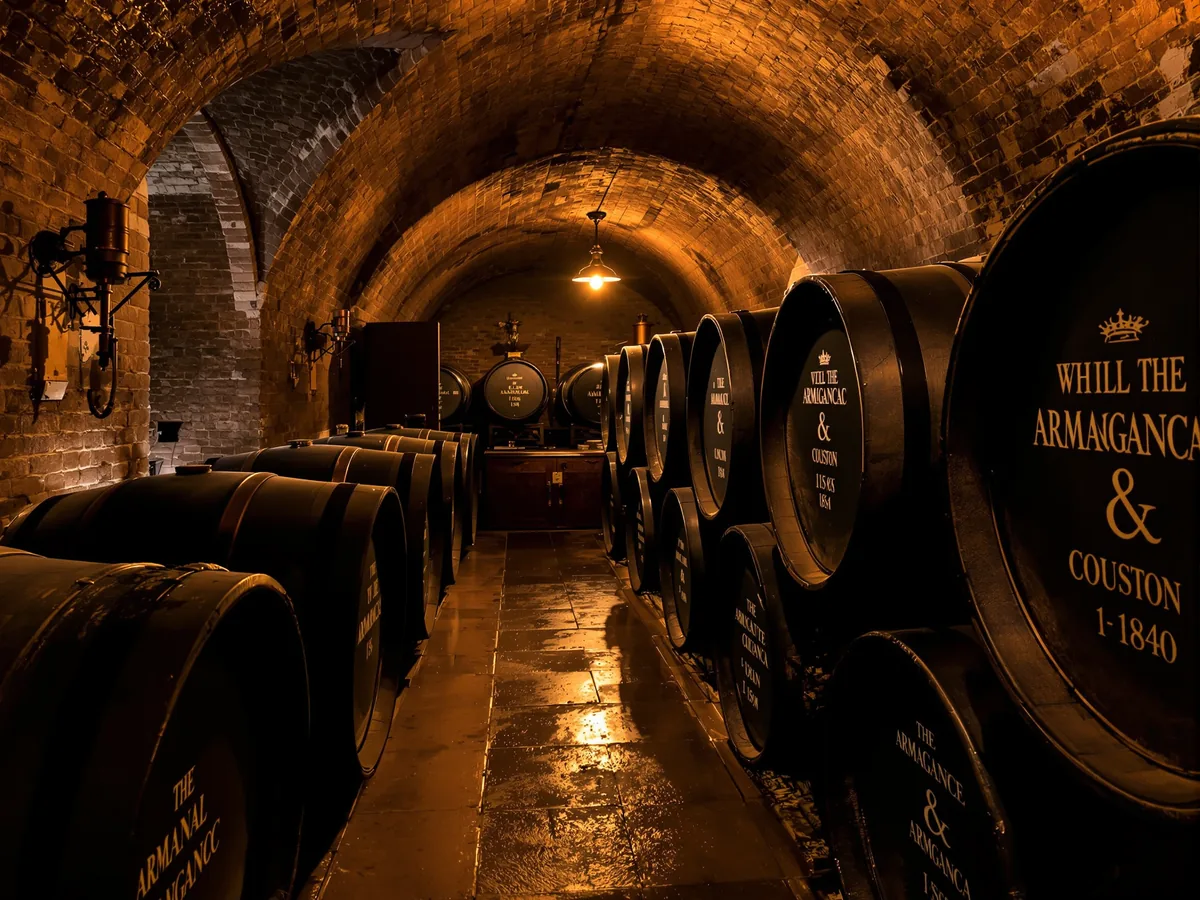
Ageing takes place in 400-litre casks, coarse-grained oak barrels made from the estate's own trees and from the Limousin forest; the folle blanche is also aged in Bordeaux and Burgundy barrels. The wood gives the eaux-de-vie their amber colour and notes of vanilla and spice.

The quality of this work has been recognised with gold medals at the Concours Général Agricole de Paris in 2007, 2010 and 2013, followed by a silver medal at the same competition in 2024.

How to choose your Domaine de Pellehaut armagnac

  • For a birthday or anniversary: the year to celebrate, from 1973 to 2001;
  • For lovers of intense spirits: a year with a high strength, such as 1996 or 2000;
  • For a gentler tasting: an older bottle whose natural strength has fallen to around 45% vol.;
  • To discover the Ténarèze: compare a Pellehaut with a Bas-Armagnac, for example from Château de Laubade.

Tasting an armagnac at natural strength

Serve it at room temperature, in a tulip glass, in small measures. Let it breathe for a few minutes: the alcohol softens and the nose opens onto prune, orange peel, vanilla or cocoa depending on age, sometimes with a fruity touch. On the palate, take a very small sip to accustom your palate, then another to appreciate the texture. A drop of water can reveal other notes, and a square of dark chocolate makes an excellent companion. An opened bottle should be stored upright, away from light.

Frequently asked questions about Domaine de Pellehaut

Where is Domaine de Pellehaut?

In Montréal-du-Gers, in the Gers, in the heart of the Ténarèze, in South West France.

What is the history of Pellehaut?

The Béraut family has been settled there for four centuries. Gaston Béraut started distilling in the 1950s; his sons Martin and Mathieu run the château today.

Which grape varieties go into Pellehaut armagnac?

Ugni blanc and folle blanche, distilled on site in a wood-fired continuous armagnac still.

How much does Pellehaut armagnac cost?

It varies with the year. Each product on this page shows its price and its strength, for easy comparison.

How can I buy armagnac online?

Choose your vintage on this page and add it to your basket. Payment is secure and shipping is carefully handled, in France and across Europe, in packaging designed for spirits. A question before you check out? Our team is happy to advise you.

Please enjoy responsibly. Excessive alcohol consumption is harmful to health.

Filter
Armagnac type
Stated age
Vintage
more... less
Size
Alcohol (ABV)
% vol. % vol.
Price
€ €

Armagnac specialist

A cellar devoted to the brandies of Gascony.

The year on the label

Authentic vintages, from 1888 to 2017.

Careful shipping

Bottles wedged and protected, tracked delivery in France and Europe.

Need advice?

A year, a budget, an occasion: write to us.
the cellar letter

The vintages
arriving in our cellar.

New houses, rare years found again, gift ideas: a few letters a year, no more.