2001, a 25 year old armagnac vintage
On the label of a vintage armagnac, the year is not just a reference point: it indicates the only harvest the brandy comes from. A 2001 armagnac therefore contains only wine from 2001, distilled in the winter after the harvest, then kept in cask until bottling. It has nothing to do with a VSOP or an XO, which blend brandies of several ages to keep a consistent style from one year to the next.
At 25 years old, an armagnac has already left behind the fire of youth without taking on the austerity of very old vintages. The wood has melted in, the fruit is still present: it is an ideal age to discover what each estate can do with the same year.
2001, the last year of the franc
On 15 January 2001, a new kind of online encyclopedia opened its pages: Wikipedia (source: Wikipedia, article "Wikipédia"). In France, 2001 was also the last year people paid in francs, as euro coins and notes came into circulation on 1 January 2002 (source: Wikipedia, article "Euro"). Meanwhile, in the Gers, winegrowers harvested as they did every autumn; the 2001 wines went through the still when winter came, and some of these brandies are still waiting, in cask, for the house to decide to bottle them.
Nine bottles, seven Gascon houses
Our 2001 armagnac selection covers Bas-Armagnac and Ténarèze, family houses and châteaux, reduced brandies and brut de fût:
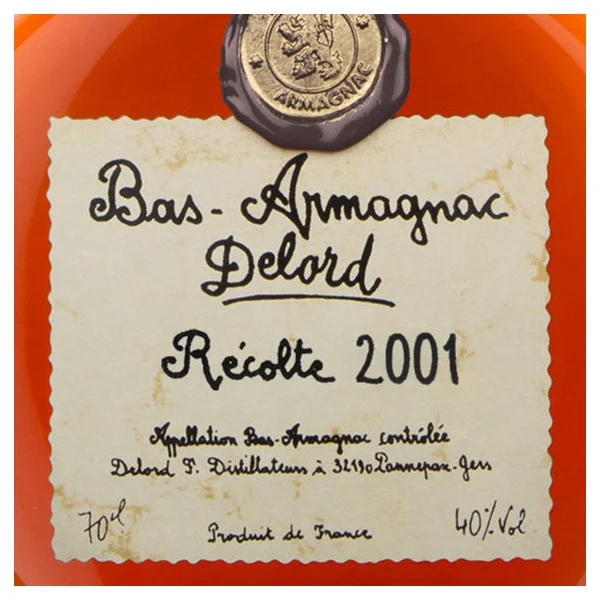
- Armagnac Delord, a house founded in 1893 in Lannepax: a 2001 at 40% ABV in 70 cl, aged in Gascon oak casks. The house describes notes of fig, mild tobacco and a hint of cocoa, with a supple palate of cooked fruit, chocolate and sweet spices;
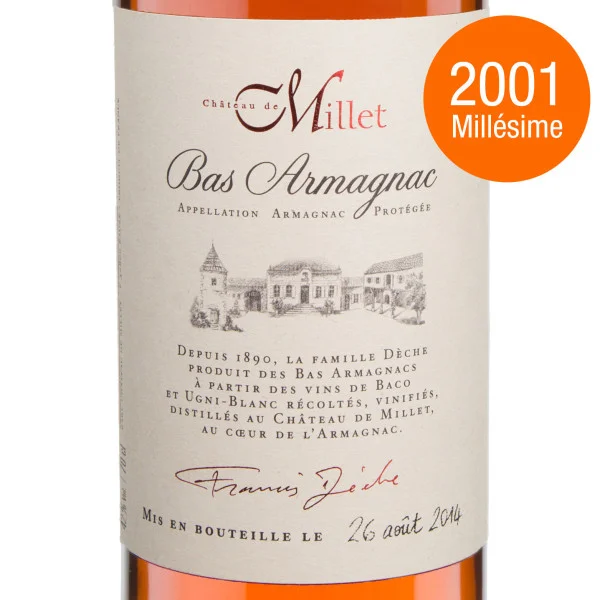
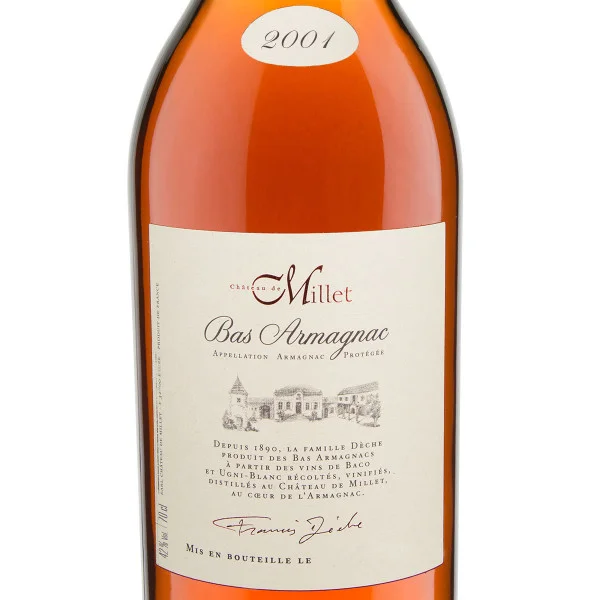
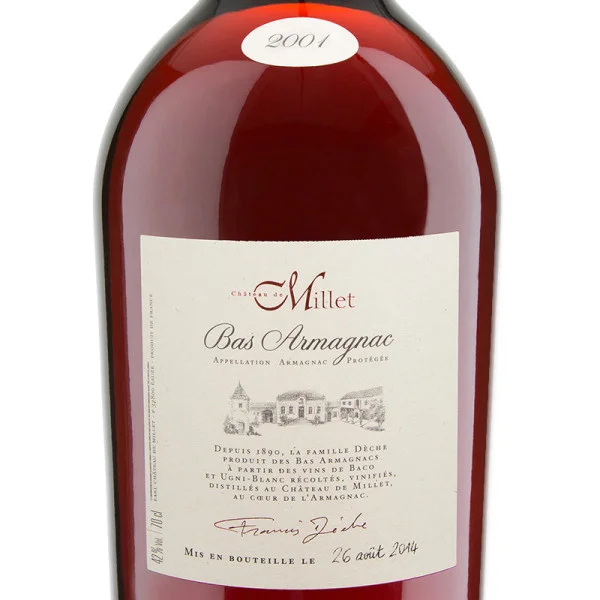
- Château de Millet, the Dèche family's estate in Eauze, with an HVE 3 certified vineyard: a Bas-Armagnac from baco and ugni blanc at 42% ABV, in 70 cl, in a 150 cl magnum and in a 250 cl Gascon pot. The estate does not publish a tasting note for 2001, and we do not invent one;
- Dartigalongue, in Nogaro since 1838: a 2001 at 42% ABV, with notes of caramel, sandalwood and raisin, round on the palate, with toasted almond and candied fruit;
- Clés des Ducs: a 2001 at 40% ABV, drawn from a collection of unblended vintages, with deliberately light oak ageing to preserve the fruit;
- Domaine de Pellehaut, in Montréal-du-Gers, in Ténarèze: a brut de fût (cask strength, not reduced) at 48.6% ABV, 100% folle blanche, aged in 400 litre casks, silver medal at the IWSC 2021;
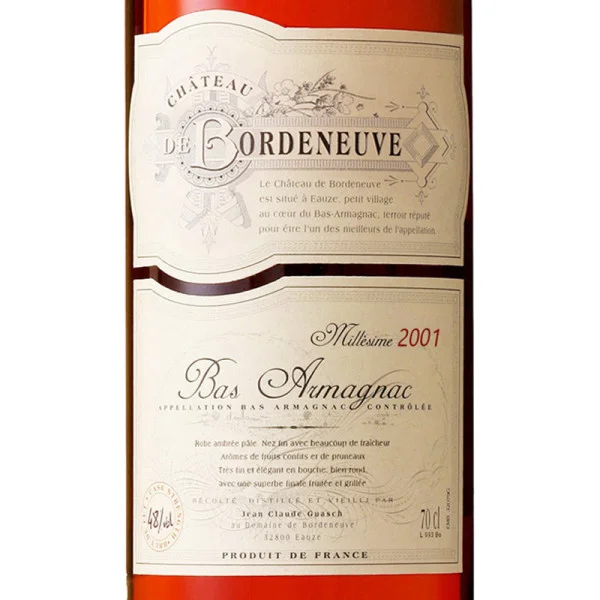
- Château de Bordeneuve, in Castelnau d'Auzan: a brut de fût at 49% ABV, from ugni blanc and baco, with a pale yellow colour with golden highlights and aromas of prune, exotic fruit and vanilla;
- Jean Cavé, in Lannepax since 1883: a Bas-Armagnac AOP brut de fût at 49% ABV, unblended, presented in a wooden box.
Three of these bottles have kept their natural strength: you will find them among our brut de fût armagnacs.
How a 2001 armagnac is made
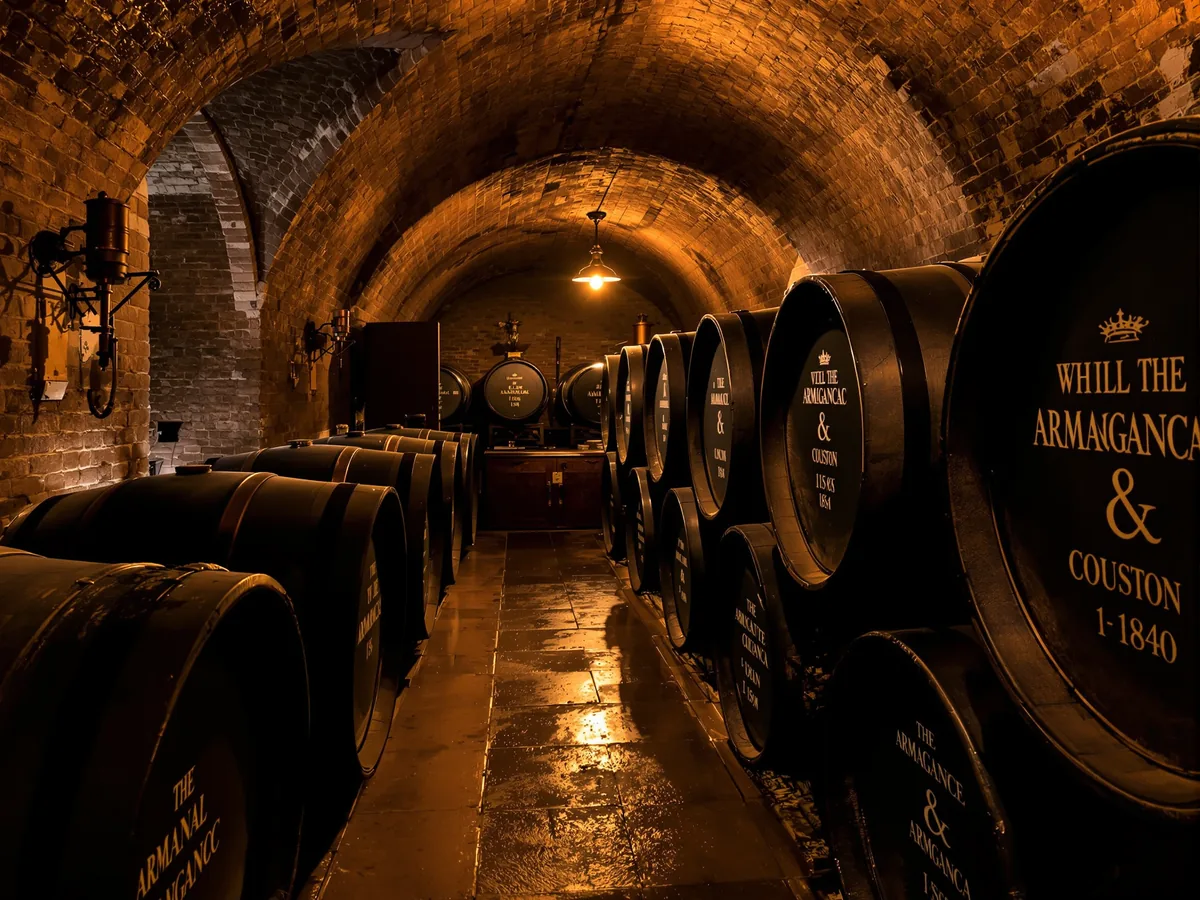
The starting point is a dry white wine, made from the grape varieties permitted by the appellation: ugni blanc, baco blanc, folle blanche, colombard. The Pellehaut 2001, for example, uses only folle blanche, a historic grape variety of Gascony. This wine is distilled in the armagnac still, continuously and in a single pass, sometimes over a wood-fired boiler, as at Pellehaut. The brandy comes out clear, then enters the cellar, in oak casks. Over twenty-five years, it takes on its colour and its aromas of vanilla and dried fruit, and loses part of its alcohol through evaporation.
Two choices made by the house then make the difference: reducing the brandy to 40 or 42% ABV by gradually adding water, or leaving it at cask strength. Once in the bottle, the armagnac no longer ages.
Tasting and food pairings
The reduced 2001s, such as the Delord or the Dartigalongue, open up easily: cooked fruit, caramel, chocolate notes. The brut de fût bottles, above 48% ABV, offer more power and a livelier palate; a drop of water can help them reveal themselves. Serve the armagnac at room temperature, in a tulip glass rather than a balloon glass, and take the time to nose it before the first sip.
As a digestif, on its own, it needs nothing else: this is where the work of distillation and terroir shows best. It also goes well with a square of dark chocolate or a dessert made with dried fruit. Some like it with a well-aged hard cheese, or alongside foie gras, the Gascon way.
Giving a 2001 armagnac for a 25th birthday
In 2026, those born in 2001 celebrate their 25th birthday, and couples married that year their silver wedding anniversary. A bottle from their year marks the moment without being a predictable gift. The 70 cl remains the simplest size to give; Millet's magnum or 250 cl Gascon pot suit a family celebration, when the bottle is meant to be passed around the table.
To keep it, store it upright, away from light and sources of heat. Unopened, it keeps for years; once opened, it stays enjoyable for several months.
Frequently asked questions about 2001 armagnac
How much does a 2001 armagnac cost?
It varies according to the house, the size and the strength: a brut de fût or a Gascon pot cannot be compared with a reduced 70 cl. Each product page shows the house, the size and the price.
Where can I buy a 2001 armagnac?
At Plaisirs de Gascogne, an online shop specialising in vintages: we receive the bottles directly from the estates, you pay online securely and we ship with care, in France and across Europe.
Which producers offer a 2001 armagnac?
In our selection: Delord, Château de Millet, Dartigalongue, Clés des Ducs, Domaine de Pellehaut, Château de Bordeneuve and Jean Cavé.
What goes well with a 2001 armagnac?
Dark chocolate, desserts with dried fruit, an aged cheese or foie gras. But an armagnac of this age is also very enjoyable on its own, at the end of a meal.
For a nearby year, see our 2000 armagnac, or browse all our vintage armagnacs, year by year.
Please enjoy responsibly. Excessive alcohol consumption is harmful to health.