What a bottle of 1924 contains
On a vintage armagnac, the year is not decorative: it guarantees that all the brandy comes solely from the 1924 harvest, and from no other. VSOPs, XOs and hors d'âge work the other way round, blending brandies of several ages to keep a consistent taste from one bottle to the next. A 1924 vintage will never be made again: once the lot is gone, the year disappears from the list.
That is also what makes these bottles so rare. For a 1924 armagnac to reach us, a house had to keep it for nearly a century, accepting each year the loss of part of the volume to evaporation.
1924, Paris hosts the Olympic Games
From 4 May to 27 July 1924, Paris hosted the Summer Olympic Games, a hundred years before those of 2024 (source: Wikipedia, article "Jeux olympiques d'été de 1924"). A few months earlier, Chamonix had hosted an international winter sports week, later recognised as the first Winter Olympic Games (source: Wikipedia, article "Jeux olympiques d'hiver de 1924"). In Gascony, the 1924 grapes were harvested in the autumn, and the wine distilled during the winter. Lacking a producer source on this harvest, we attribute no particular quality to it.
Our 1924 armagnacs
- Armagnac Castarède: a 1924 from a single year, unblended, at 40% ABV. According to the house, it spent 94 years in cask before being bottled in 2018. The 70 cl bottle comes in a gift case. Castarède presents it as an armagnac to enjoy as a digestif, to celebrate a birth, a wedding or an anniversary from 1924;
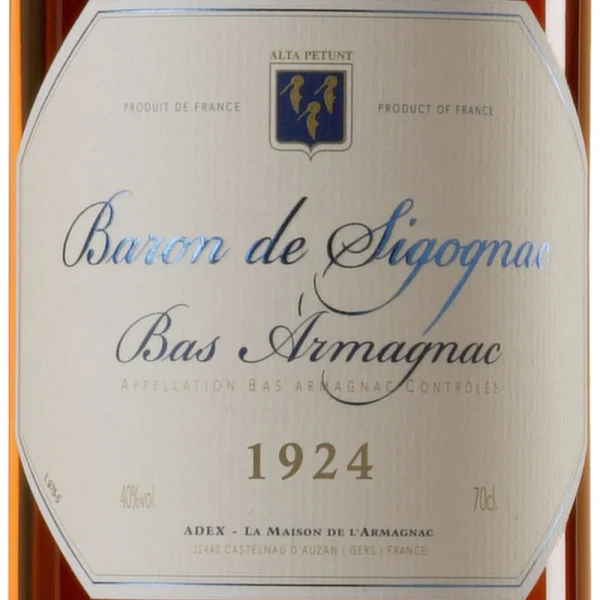
- Baron de Sigognac: a 1924 at 40% ABV, from ugni blanc and baco, kept at Château de Bordeneuve, in Castelnau d'Auzan, where each vintage ages separately. The house prepares its bottles only to order and notes the bottling date on the back; it does not publish a tasting note for 1924. Presented in a gift box.
Both bottles are reduced to 40% ABV. Neither house publishes an aromatic description for this vintage: we would rather tell you so than invent one.
If you are looking for an old armagnac left at its natural strength, without reduction, turn to our brut de fût armagnacs: a brut de fût keeps the strength of its cask, whereas our two 1924s have been reduced to 40% ABV for a gentler tasting. Brut de fût appeals to lovers of intensity; a reduced old armagnac charms those who seek roundness above all.
94 years in cask: what it means
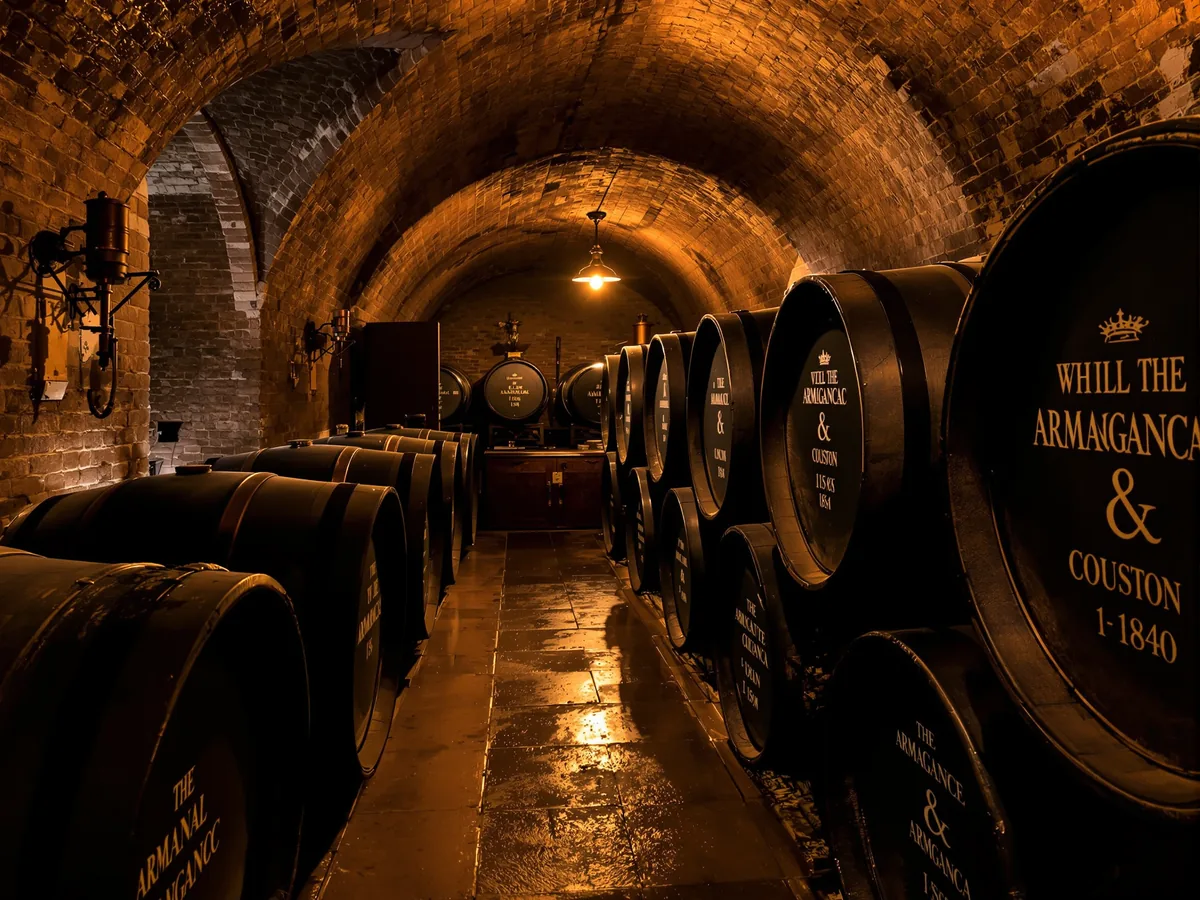
An armagnac ages only in cask. Once in the bottle, it stays just as it was when drawn from the barrel. The figure given by Castarède is therefore valuable: 94 years in cask, between the distillation of the 1924 harvest and bottling in 2018. It is an exceptional length of time, which explains the rarity of bottles like this, since every winter the volume falls a little further.
For the Sigognac, the bottling date is shown on the back of each bottle. It lets you know, bottle by bottle, how many years this 1924 spent in cask.
Castarède and Bordeneuve, two Bas-Armagnac houses
Founded in 1832, the house of Castarède is one of the oldest armagnac trading houses still family-owned and independent. It is run today by Florence Castarède, of the sixth generation, from Château de Maniban, in the heart of Bas-Armagnac. Its vineyard combines ugni blanc, colombard, folle blanche and, since 2015, baco; distillation takes place continuously in an armagnac still dating from 1942. Ageing begins in new casks, for structure, before continuing in older casks, which bring roundness and complexity. The house holds the Entreprise du Patrimoine Vivant label.
Château de Bordeneuve, in the commune of Castelnau-d'Auzan-Labarrère, has belonged to the Guasch family since 1974. The Baron de Sigognac armagnacs are aged there in small quantities, some fifty casks a year according to the house, and the estate keeps vintages dating back to 1893. The Sigognac style is described as round and fruity, with age bringing notes of toasted dried fruit, roasted coffee and dark chocolate.
Looking for a younger vintage? Our range covers many years, and other estates and châteaux in our shop offer them: Jean Cavé, Château de Laubade, Château de Millet, Delord, Dartigalongue, Domaine de Pellehaut.
Single cask or vintage?
The expression single cask often comes up for old armagnacs: it refers to a bottle drawn from a single cask. A vintage is not necessarily a single cask, since it may bring together several casks from the same year. For our two 1924s, neither Castarède nor Baron de Sigognac claims the single cask mention, so we do not use it for them. What they share lies elsewhere: a single harvest, with no blending of years.
Buying an old armagnac with peace of mind
In our shop, each product page details the house, the bottle size, the strength and the price of the bottle, with the information provided by the producer. Sales take place online: you add the armagnac to your basket, pay securely, and delivery follows, in France as in the rest of Europe. A question about a vintage? Our contact page and our customer service team are there to answer it. And for comparison, our cellar also offers other vintages from Clés des Ducs, Château de Laubade or Dartigalongue.
From harvest to glass
Armagnac is a wine brandy. The dry white wine it starts from is made from the appellation's grape varieties: ugni blanc, baco, folle blanche and colombard. During the winter following the harvest, it is distilled just once in the armagnac still, continuously, whereas cognac goes through the still twice. The colourless brandy then goes into cask. Over the years, the cask gives it its amber and then mahogany colour, its tannins and part of its aromas; the alcohol slowly evaporates, and the brandy grows rounder.
The appellation is divided into three terroirs: Bas-Armagnac, Ténarèze and Haut-Armagnac. Our two 1924s come from Bas-Armagnac, known for its tawny sands and its fine brandies.
Tasting a 102-year-old armagnac
Castarède recommends this 1924 as a digestif, and that is exactly how it is best enjoyed: at the end of a meal, at room temperature, in a tulip glass. Pour a little, let it breathe for ten minutes or so, warm the glass in your hand, then proceed in small sips. An old armagnac of this age often shows notes of prunes, walnut, cocoa, leather or sweet spices, and sometimes rancio. This rancio, a prized aroma of very long ageing, recalls walnut, dried mushroom or the forest floor; yet each bottle keeps its own personality.
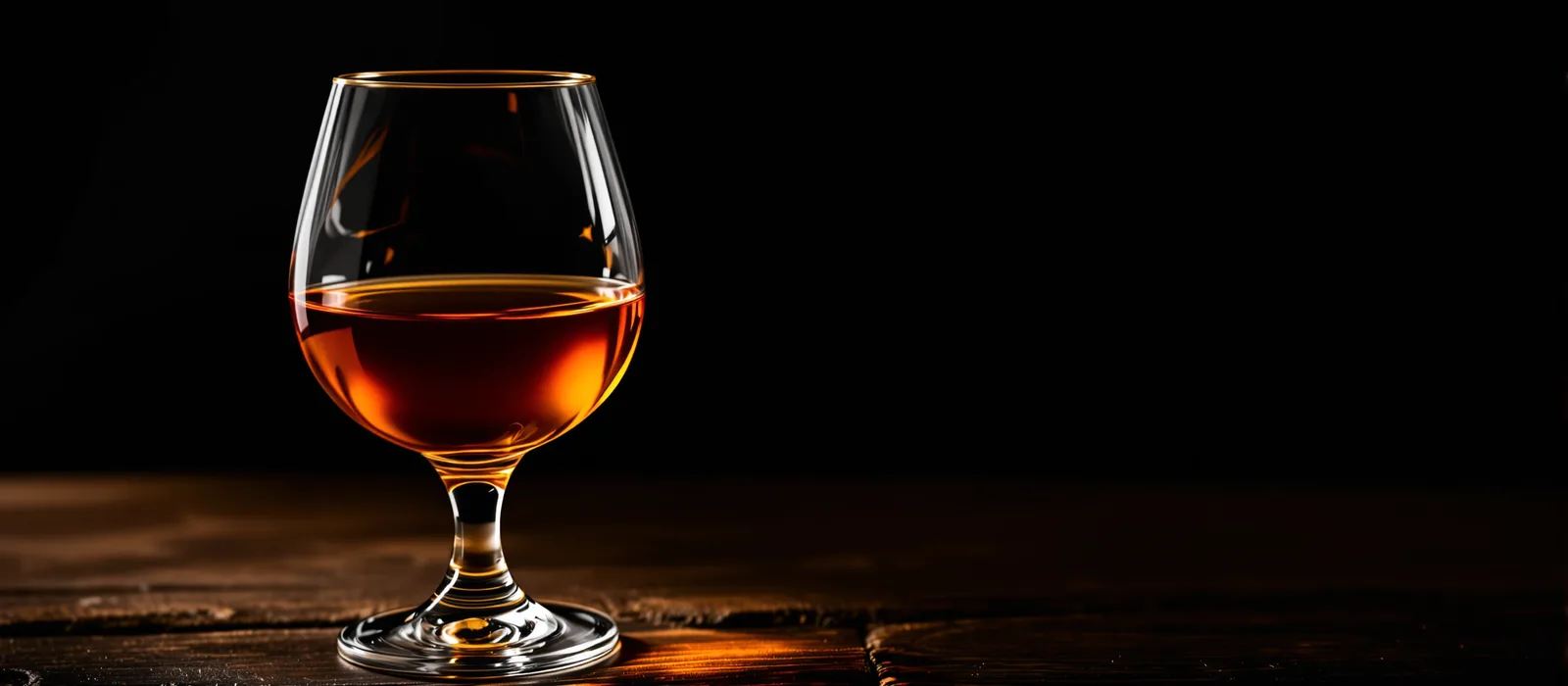
To the eye, a century-old armagnac generally shows a dark, mahogany colour, with amber or coppery glints; these glints are best seen in daylight, by tilting the glass. In Gascony, armagnac and prunes go hand in hand: prunes in armagnac are a tradition of the region, but they are made with a young armagnac. A 1924 is drunk on its own, at most accompanied by a few Agen prunes or a square of dark chocolate, served on the side.
Store the bottle upright, away from light and temperature changes. Unopened, it will keep for years; opened, it stays enjoyable for several months.
A gift for a 102nd birthday, or for history
A 1924 armagnac honours the 102nd birthday of someone born that year, or a founding event: a company, a grandparents' wedding, the creation of a sports club. For a sports lover, the year of the Paris Games adds one more nod. In a collection, it slots in between our 1923 armagnac and our 1925 armagnac.
Frequently asked questions about 1924 armagnac
What is the price of a 1924 armagnac?
It depends on the house and the length of ageing. The price of each bottle is shown on its product page, along with its size and strength.
Where can I buy a 1924 armagnac?
In our Plaisirs de Gascogne online shop, a cellar specialising in vintage armagnac: add to basket, secure payment, then careful shipping in France and across Europe. Each shipment leaves in protective packaging, and our customer service team helps you choose. Shipping times are detailed in our CGV, our general terms and conditions of sale.
How long has the 1924 armagnac aged?
For the Castarède, 94 years in cask, with bottling in 2018, according to the house. For the Sigognac, the bottling date is written on the back of the bottle.
Which producers offer a 1924 armagnac?
In our selection, Castarède and Baron de Sigognac, two Bas-Armagnac houses.
What do reviews say about the 1924 armagnac?
Neither house publishes a note for this vintage, so we quote no reviews. We recommend it for its rarity and the reputation of its producers.
Discover all our vintage armagnacs, year by year.
Please enjoy responsibly. Excessive alcohol consumption is harmful to health.