A century-old armagnac
Celebrating a hundred years with a bottle of the same age is a gift few spirits make possible. A vintage armagnac can, on one condition: that a house has kept the 1926 armagnac for a century, without selling it or mixing it with other harvests. A vintage guarantees a single harvest, the one on the label, whereas a VSOP, an XO or a hors d'âge blend several years.
Bottles from 1926 are therefore extremely rare. Those we offer come from the reserves of two families who have made the keeping of old years part of their heritage.
1926, a hundred years ago
On 6 August 1926, the American Gertrude Ederle became the first woman to swim across the English Channel (source: Wikipedia, article "Gertrude Ederle"). In France, Raymond Poincaré returned that summer to head the government, in the midst of the franc crisis (source: Wikipedia, article "Raymond Poincaré"). In Gascony, the wine from the autumn harvest was distilled the following winter, and a small part of this old armagnac then spent the century in the cellar. We found no producer source on the quality of this harvest, so we do not characterise it.
Our two 1926 armagnacs
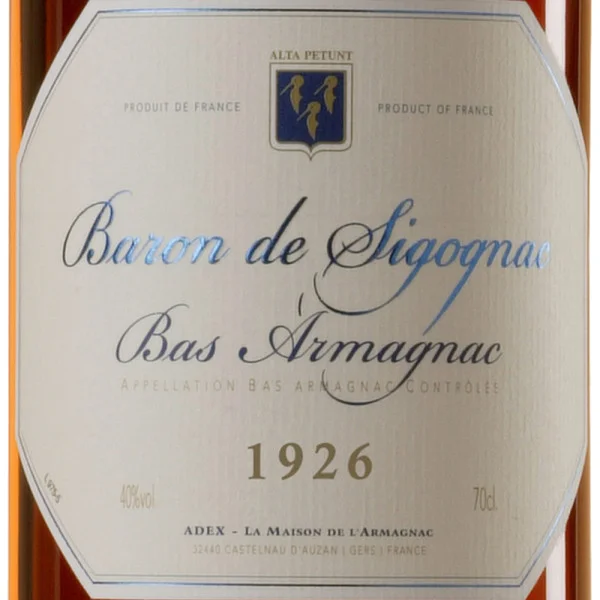
- Baron de Sigognac: a 1926 at 40% ABV, from ugni blanc and baco, kept at Château de Bordeneuve, in Castelnau d'Auzan. Each year ages separately there, and the estate keeps harvests dating back to 1893. The house does not publish a tasting commentary for 1926, and we do not invent one;
- Jean Cavé: a 1926 Bas-Armagnac AOP sold as brut de fût, that is, bottled without added water, and without any blending. It comes from the reserves of the Cavé family, in Lannepax since 1883, and is presented in a wooden box. The exact strength is shown on the label.
To compare with other armagnacs left at their natural strength, see our brut de fût armagnacs.
Two families, a century of patience
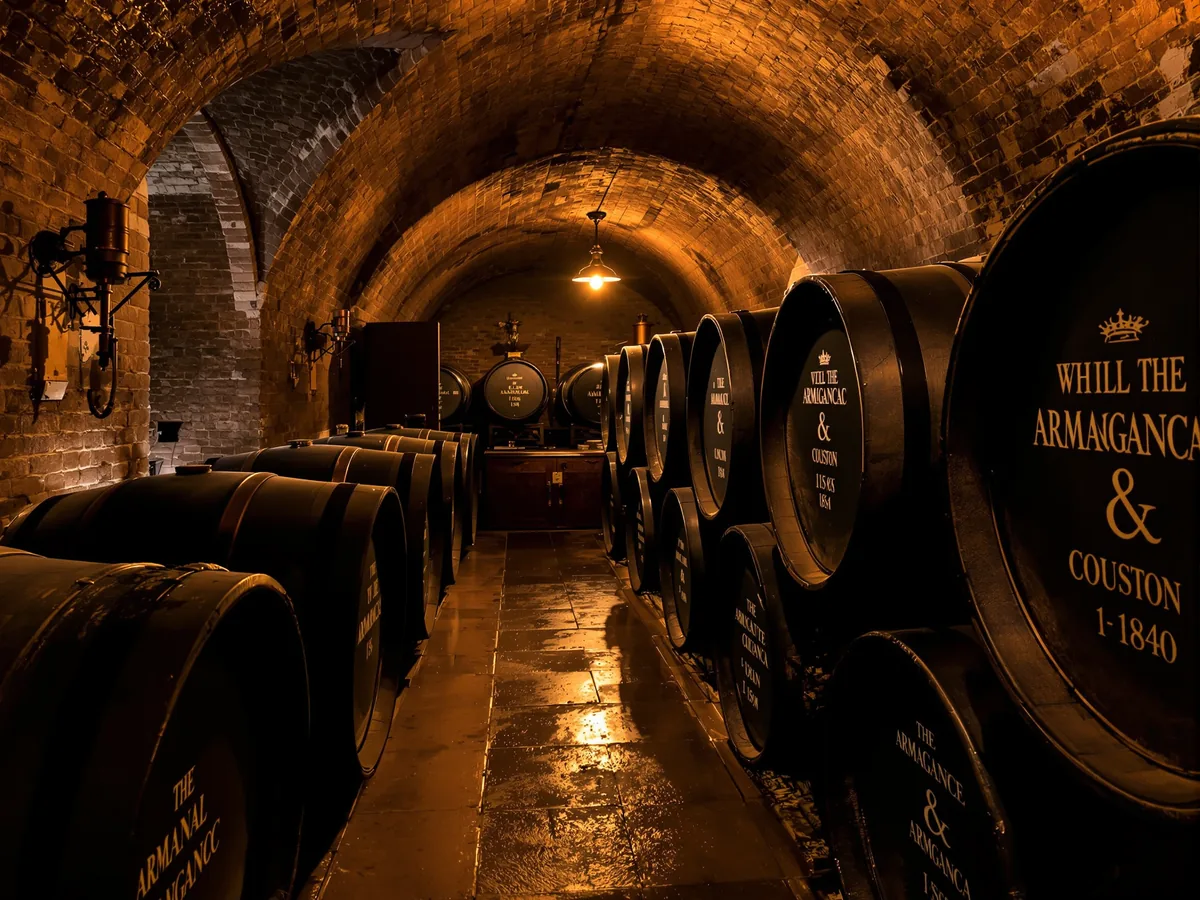
In Lannepax, in the Gers, Jean Cavé set up in 1883 as a winegrower, distiller and cellar master. Four generations later, the house owns one of the finest collections of old armagnac in the appellation, with old demijohns kept in its paradis. Near Eauze, Château de Bordeneuve ages the Baron de Sigognac armagnacs in small quantities, on the tawny sands of Bas-Armagnac, in a style renowned for its roundness and fruit. Two traditions, one shared idea: letting time do its work.
For more recent years, other estates and châteaux of the South West are waiting to be discovered with us: Château de Laubade, Château de Millet, Dartigalongue, Delord, Castarède or Domaine de Pellehaut.
One terroir, one wine, one still
Our two 1926s come from Bas-Armagnac, one of the three terroirs of the appellation along with Ténarèze and Haut-Armagnac. Its tawny sands are reputed to give fine and fruity armagnacs. It is also in this corner of Gascony that our two houses keep their oldest reserves, in the hushed world of the cellar.
How a dated armagnac is made
Armagnac begins in the vineyard, with a dry white wine made from the appellation's grape varieties: ugni blanc, baco blanc, folle blanche and colombard. Each grape variety leaves its mark on the wine, and therefore on the armagnac: folle blanche, a historic grape variety of Gascony, is renowned for its floral finesse. The wine is distilled continuously, in a single pass, in the armagnac still, whereas cognac is distilled twice; the distillate is then aged in oak casks, in the estate's cellar. The wood brings colour, tannins and aromas; the alcohol falls slowly through evaporation. When the house judges the armagnac to have reached maturity, it bottles it: after that, it no longer ages.
Tasting a hundred year old armagnac
A century-old armagnac often takes on a very dark mahogany colour. Very old armagnacs frequently reveal prune, dried fruit, walnut, honey, vanilla, cocoa and sweet spices, with the note of rancio that very long ageing brings; the palate can be velvety and very long. Each bottle remains unique, a discovery.
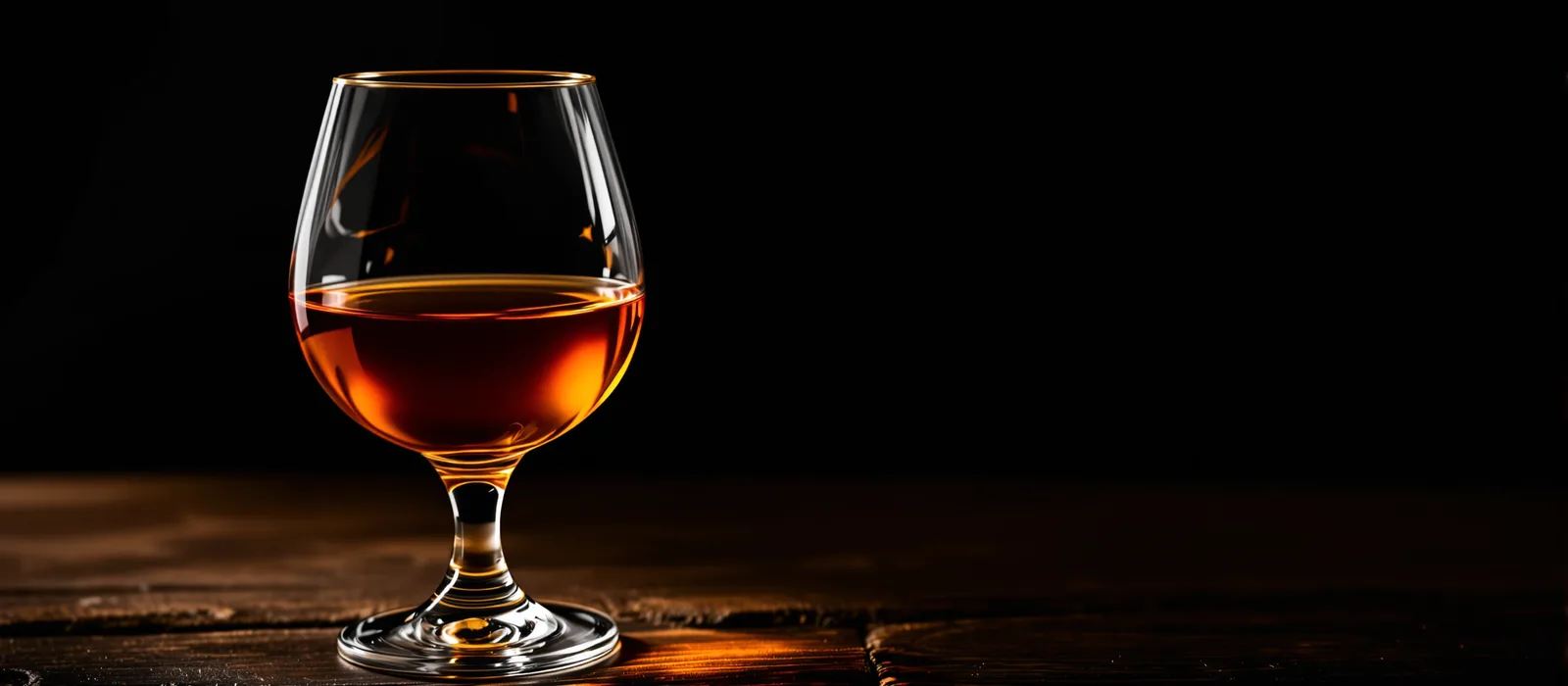
An exceptional elixir like this is served in a small measure, in a tulip glass, at room temperature. Let it breathe for a long while before tasting, then take your time. It is not opened every day: save it for the birthday, surrounded by those who matter.
Giving a 1926 armagnac
In 2026, people born in 1926 celebrate their hundredth birthday. Giving them an armagnac from their year means giving them a brandy that has lived through the same century as they have, to share with the family. For the connoisseur, a 1926 takes its place in a cellar of great vintages, between the 1888 armagnac and the 1936 armagnac.
Keep the bottle upright, away from light and heat, so that the alcohol does not touch the cork; a cellar or a dark cupboard is ideal. Unopened, it will keep for decades more; once opened, for several months.
Frequently asked questions about 1926 armagnac
How much does a 1926 armagnac cost?
It depends on the house, the strength and the rarity of the lot: for a century-old vintage, supply is limited to a few bottles. Each product page shows the house, the bottle size and the price.
Where can I buy a 1926 armagnac online?
In our Plaisirs de Gascogne shop, dedicated to vintage armagnacs: bottles from the Gascon houses, secure payment for your purchase, careful delivery in France and across Europe, and a customer service team ready to listen.
Who are the producers of 1926 armagnac?
In our selection, Baron de Sigognac and Jean Cavé, two Bas-Armagnac houses.
What is the history of the 1926 armagnac?
That of a wine harvested in 1926, distilled the following winter, then aged in cask by families who kept it for a century before bottling it.
Discover all our vintage armagnacs, year by year.
Please enjoy responsibly. Excessive alcohol consumption is harmful to health.



 Jean Cavé
113 bottles
 Armagnac Delord
92 bottles
 Baron de Sigognac
90 bottles
 Château de Millet
83 bottles
 Sempé
82 bottles
 Dartigalongue
77 bottles
 Marcel Trépout
72 bottles
 Clés des Ducs
67 bottles
 Château de Monluc
64 bottles
 Armagnac Castarède
63 bottles
 Château de Laubade
42 bottles
 Château de Bordeneuve
32 bottles