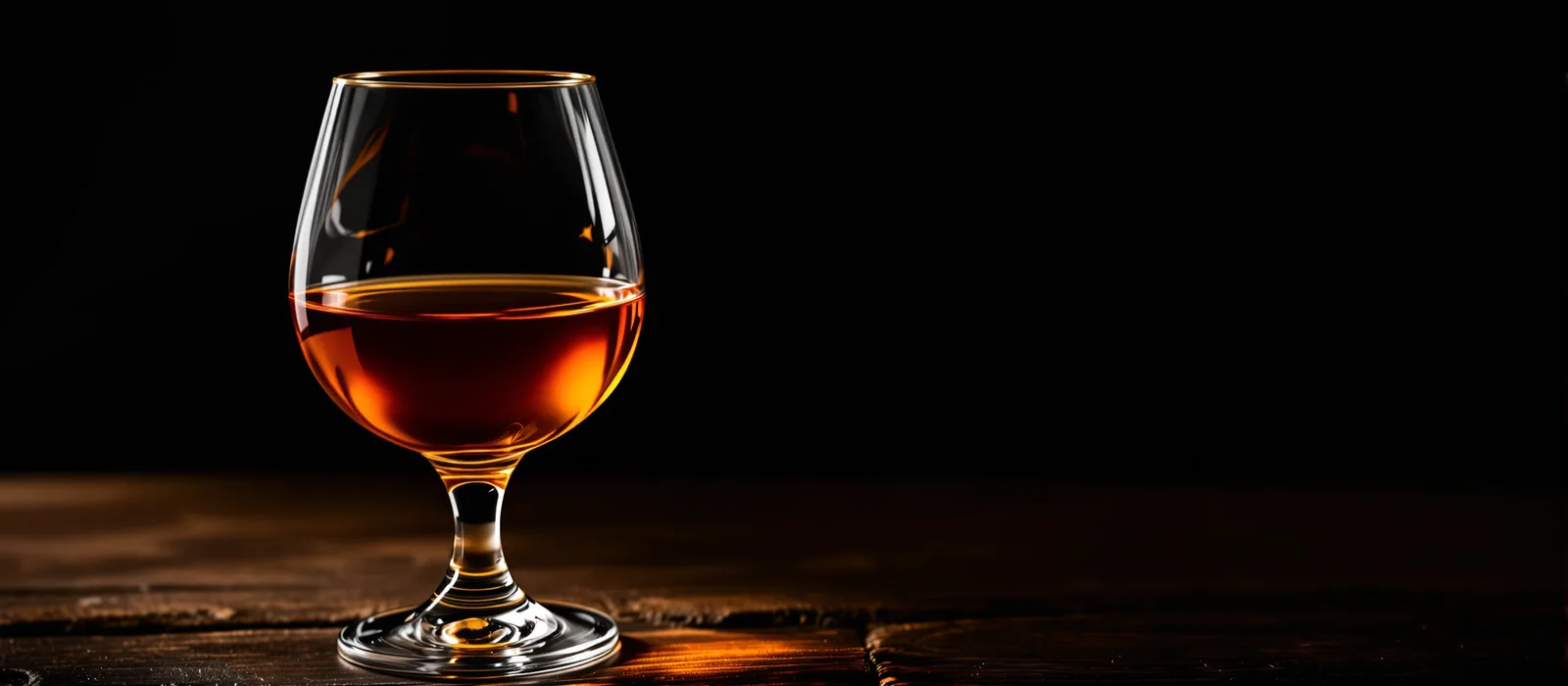
Brut de fût: armagnac at its natural strength
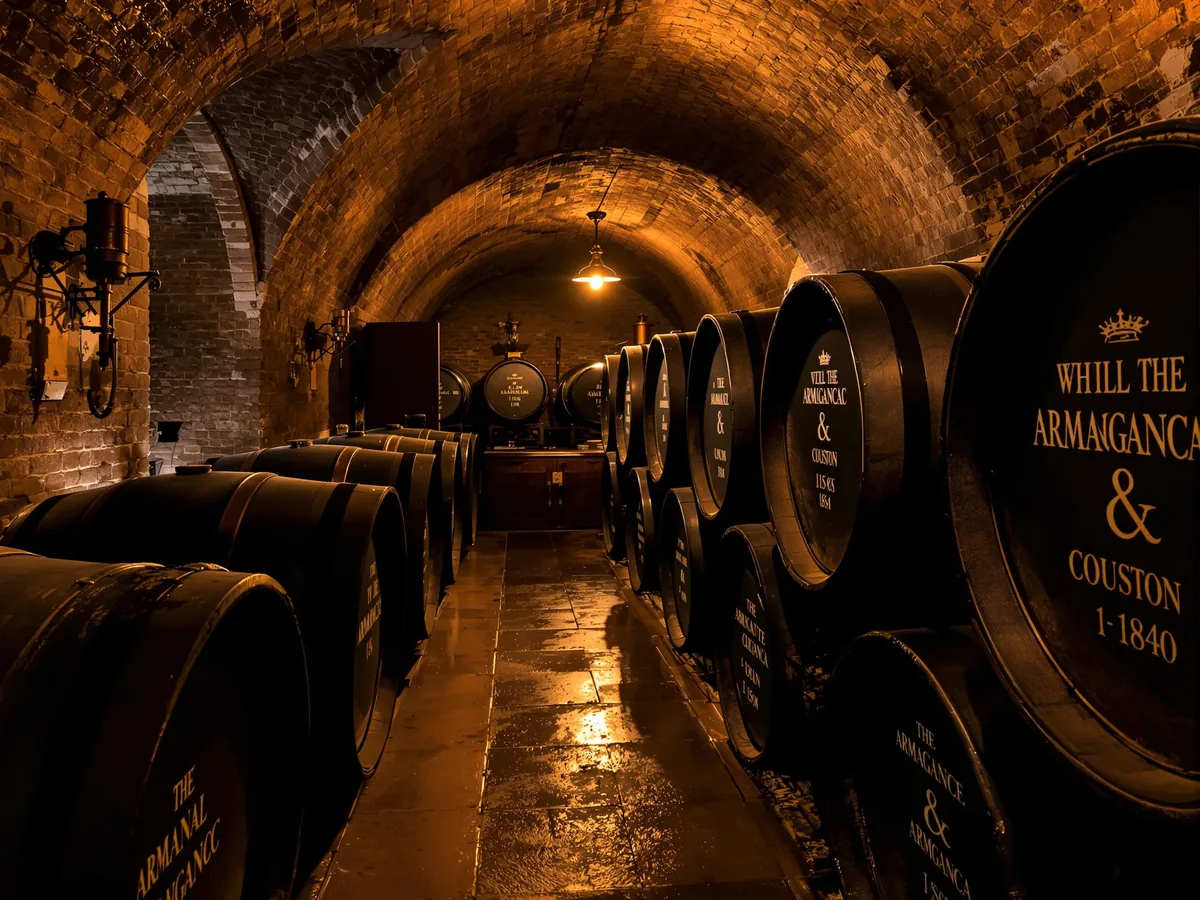
As it leaves the still, the eau-de-vie is colourless and between 52 and 72 % ABV, most often between 52 and 60 %, according to the Bureau National Interprofessionnel de l'Armagnac. It then goes into oak casks, in 400-litre pièces (barrels), where it takes on its amber colour, its aromas of vanilla and prune, then the famous rancio. During this long ageing, part of the alcohol evaporates naturally: this is the angels' share, about half a degree per year.
Most armagnacs are then reduced, that is, brought down to around 40 % with water before bottling. A cask strength armagnac skips this step: no added water, no diluted spirit; the strength on the label is the one time has set. English speakers call it cask strength, as for whisky. Some estates go further: Château de Laubade states that its 2000 vintage has undergone no chill filtration.
What sets a brut de fût apart from other armagnacs
- Alcoholic strength: in our selection, it ranges from 44.5 % for Castarède's Favorite decanter to 59 % for the same house's 6-year-old;
- Origin: most often the eau-de-vie of a single harvest, sometimes a single, numbered cask in a limited series (single cask);
- Taste: more aromatic concentration on the palate, a more intense flavour, a longer finish, to be tamed;
- Age: it is not tied to a VSOP or XO designation, which refer to blends. For those, see our VSOP armagnacs and our XO armagnacs.
Unlike cognac, which is distilled twice, armagnac most often goes through the continuous armagnac still only once; this copper still was patented in 1818. It therefore keeps much of the fruit of the wine and of the terroir, which a brut de fût delivers undiminished, from Bas-Armagnac to Ténarèze and Haut-Armagnac.
Our cask strength armagnacs, estate by estate
Jean Cavé, the vintage collection
Established in Lannepax since 1883, the house of Jean Cavé has built up one of the richest collections of old eaux-de-vie in the appellation, a family story spanning four generations. It supplies most of this page: more than 90 brut de fût references, from 1888 to 2004, to find a year of birth, marriage or meeting. The 1888 armagnac is the oldest and rarest piece.
Château de Bordeneuve, Pellehaut and Danis
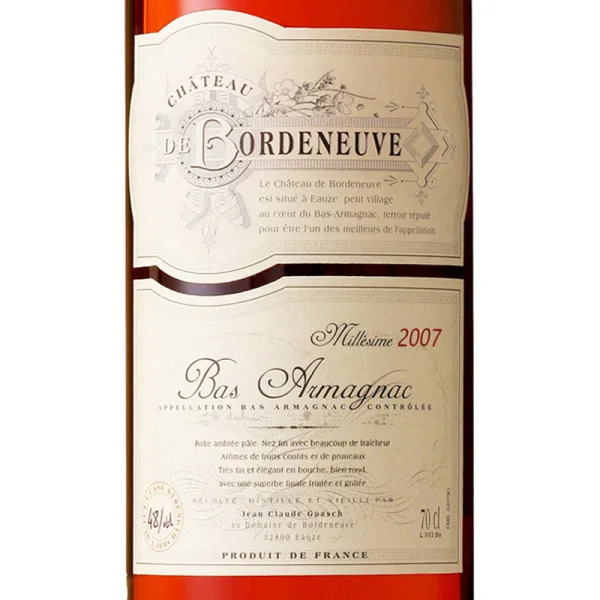
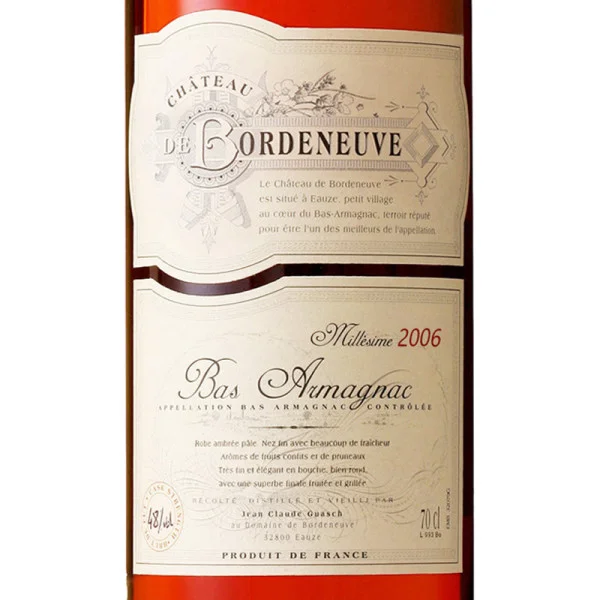
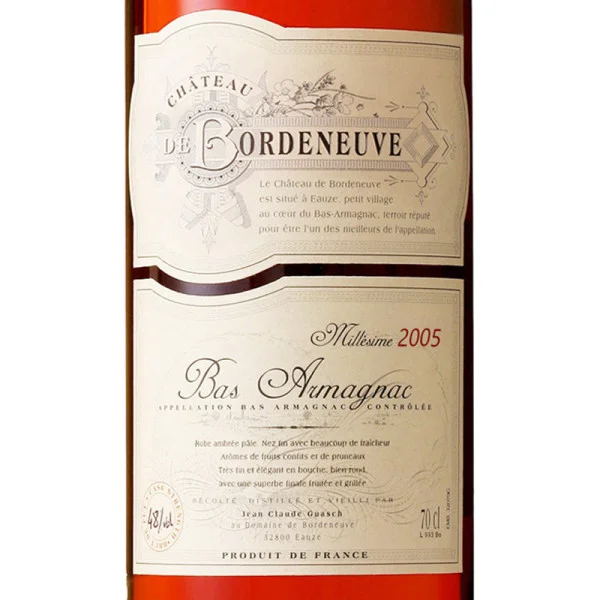
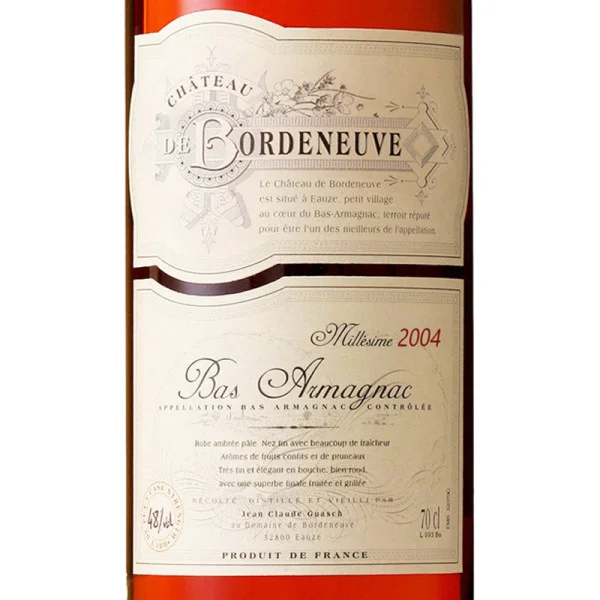
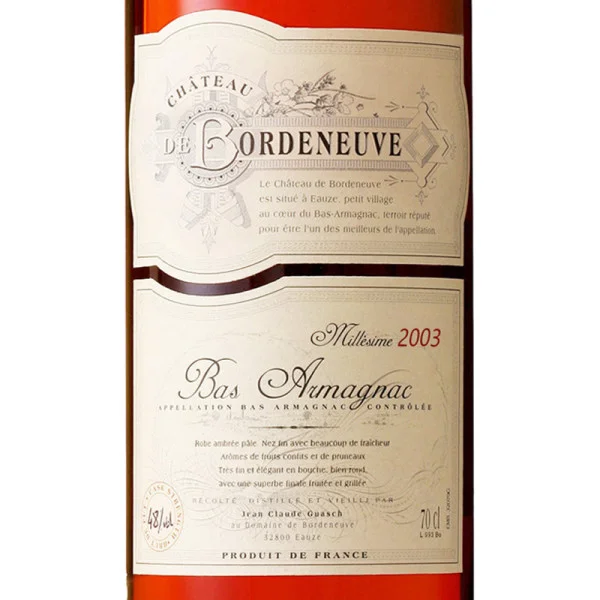
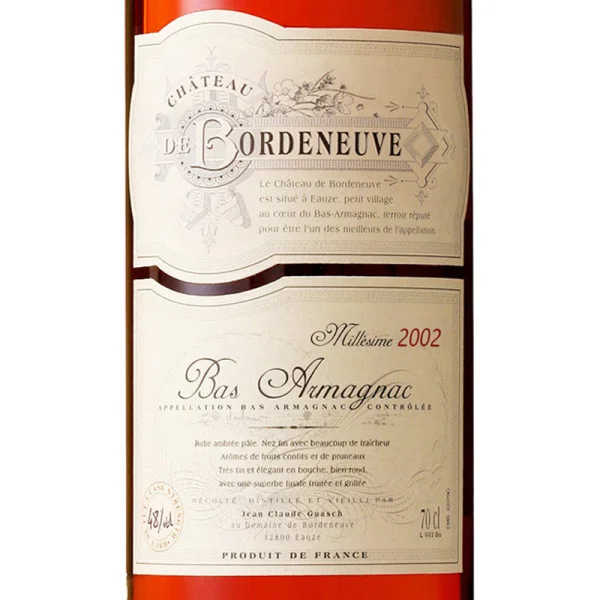
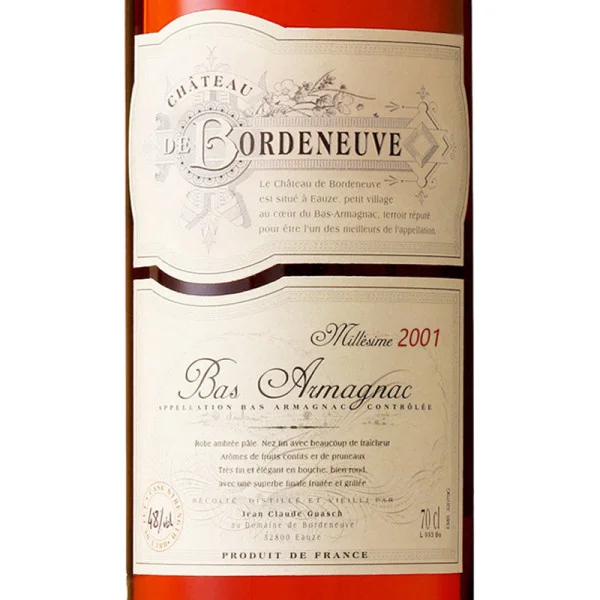
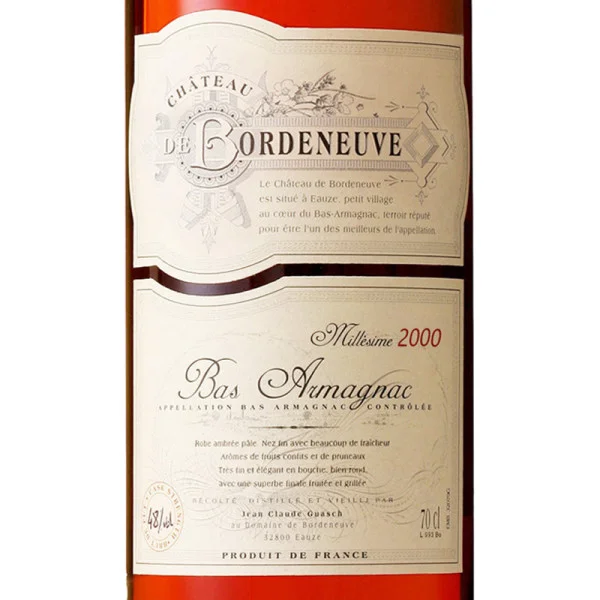
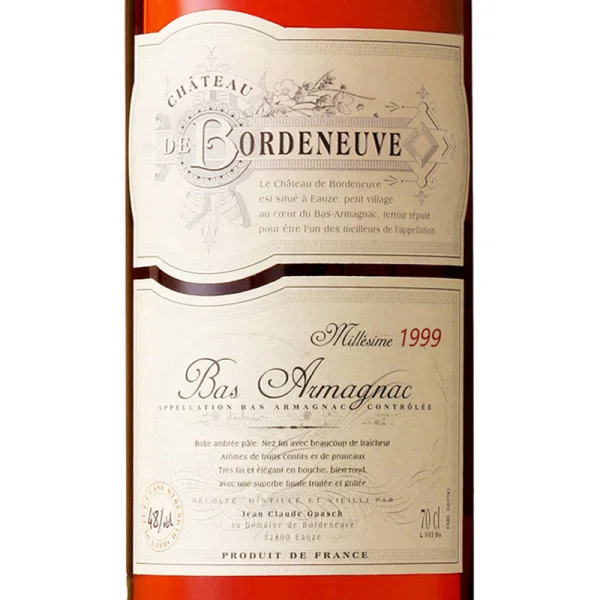
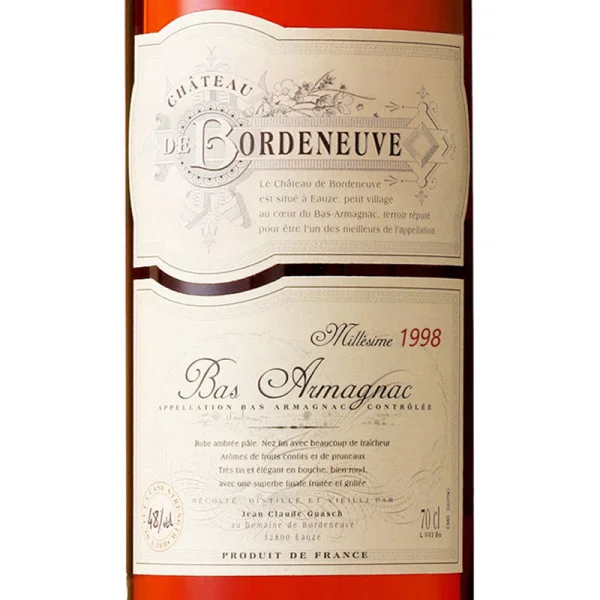
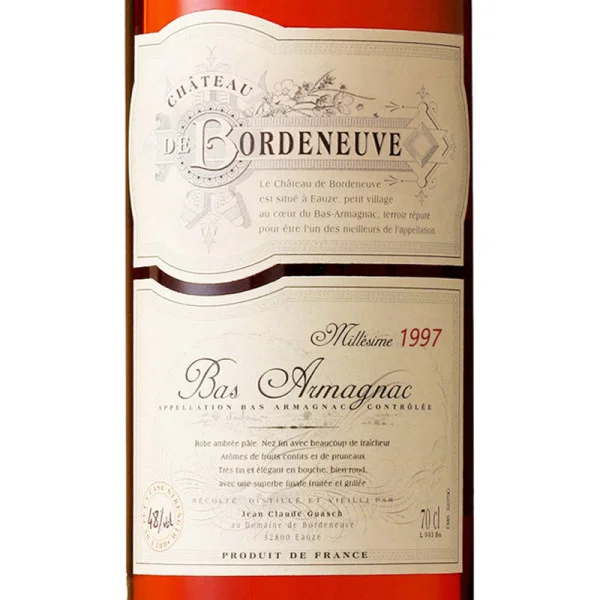
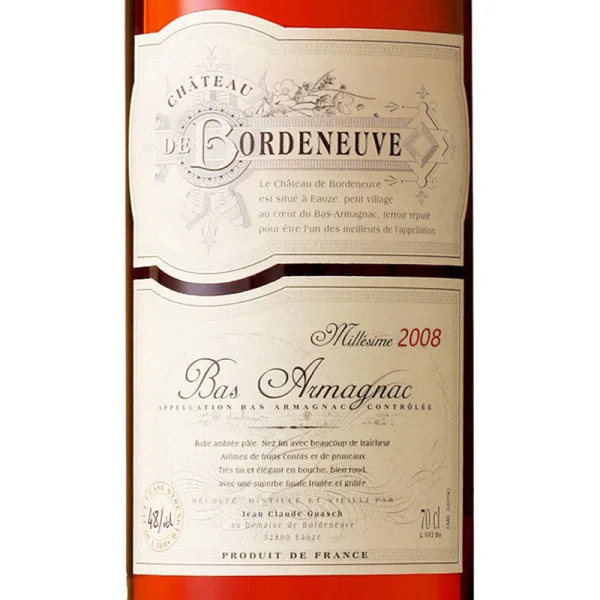
At Château de Bordeneuve, in Bas-Armagnac, the Guasch family ages each harvest separately and bottles it without reduction, between 47 and 49 %: thirteen years are available, from 1987 to 2008. Domaine de Pellehaut, in Ténarèze, offers years from 1973 to 2005, each from a single grape variety from its vines: ugni blanc for the oldest, folle blanche from 1992 onwards. Domaine de Danis, which distils folle blanche and ugni blanc in a wood-fired still, offers seven years from 1975 to 2004; the latter won the Grand Jury Prize at the Talents de l'Armagnac in 2022.
Castarède, Delord, Laubade and Dartigalongue
Castarède bottles three single casks of folle blanche from its own vineyard, aged 6, 8 and 18 years, at 59, 52 and 47 % respectively, their strength owing nothing but to evaporation. At Delord, the Récolte 1995 comes from cask no. 2433 (47.5 %) and the Récolte 2012 from a cask of 100 % baco (51.1 %). Château de Laubade presents a 2000 at 52.4 %, in numbered bottles. Finally, Dartigalongue offers its Single Cask 1981, 1992 and 2003, and a 1976 armagnac blended for the Fest'Armagnac festival, 76 bottles of 50 cl at 45.3 %.
Aromas and tasting
Every cask has its signature. The producers describe Delord's Récolte 1995 with vanilla, beeswax, bitter orange and honey; the Récolte 2012 with candied fruit, cinnamon and spice; Dartigalongue's Single Cask 1981 with rancio, dried fruit and walnut. Depending on the estate, you will also find floral touches, notes of caramel or cocoa: a drink for contemplation, authentic and of great aromatic quality.
Serve it at room temperature, in a tulip glass, in a small measure. Let it open up for a few minutes, then taste in small sips. If the strength seems too lively, a few drops of water are enough to release the aromas: you decide on the reduction, not the cellar.
Choosing and giving a cask strength armagnac
For a birthday present, the year of birth remains the most meaningful; find all available years on our vintage armagnac page. For a connoisseur, a numbered single cask or a limited series will be a real rarity. Several bottles come in a gift box or wooden case: Delord Récolte 1995, Dartigalongue 1976 or Castarède's casks in their sleeve. And to discover the eau-de-vie before any time in cask, try the Blanche d'Armagnac.
Frequently asked questions about cask strength armagnac
What is a cask strength armagnac?
It is an armagnac bottled straight from the cask, at its natural strength, without reduction by adding water.
How is a cask strength armagnac made?
Like any AOC armagnac: distillation of a white wine from Gascony, then ageing in oak casks. Only the last step changes: the cellar master does not reduce the eau-de-vie before bottling.
Which grape varieties are used?
The varieties of the appellation: ugni blanc, baco, folle blanche and colombard. Some brut de fût armagnacs come from a single variety, such as those of Castarède and Pellehaut, or Delord's 100 % baco.
What strength is a brut de fût?
It depends on age and ageing conditions: from 45 to 49 % for the Danis and Bordeneuve vintages, up to 59 % for a young Castarède cask. The exact strength is shown on each product page.
Where can I buy cask strength armagnac?
On this page: choose your year or your cask, add the product to your basket and pay securely. Our team can also help you choose between two estates.
Please enjoy responsibly. Excessive alcohol consumption is harmful to health.



 Jean Cavé
113 bottles
Jean Cavé
113 bottles
 Armagnac Delord
92 bottles
Armagnac Delord
92 bottles
 Château de Millet
79 bottles
Château de Millet
79 bottles
 Dartigalongue
76 bottles
Dartigalongue
76 bottles
 Baron de Sigognac
69 bottles
Baron de Sigognac
69 bottles
 Armagnac Castarède
63 bottles
Armagnac Castarède
63 bottles
 Clés des Ducs
48 bottles
Clés des Ducs
48 bottles
 Château de Laubade
43 bottles
Château de Laubade
43 bottles
 Domaine de Pellehaut
28 bottles
Domaine de Pellehaut
28 bottles
 Château de Bordeneuve
17 bottles
Château de Bordeneuve
17 bottles
 Charles de Granville
13 bottles
Charles de Granville
13 bottles
 Domaine de Danis
7 bottles
Domaine de Danis
7 bottles