Our 2011 armagnac: characteristics
Here is what we know about this bottle, based on the information published by the Clés des Ducs house:
- harvest: 2011 only, with no blending with other harvests;
- appellation: AOC Armagnac, in the Gers, in the heart of South West France;
- alcohol content: 40% ABV, it is a reduced armagnac, not a brut de fût;
- ageing: oak casks, for deliberately light oak;
- presentation: 70 cl Exception bottle, cardboard gift box.
The house does not publish a tasting note specific to the 2011, nor its exact grape varieties: we do not make them up. It does, however, explain its approach for all its dated cuvées: whatever the harvest, the cellar master selects his casks to obtain a long, rich and smooth armagnac.
A house founded in Panjas in 1774
It all begins in Panjas, as early as 1774, with Paul Baylac, lord of the village, who distilled his first brandies there. Since 2008, it has belonged to the Armanoir Group. Its armagnacs are based on the traditional Gascon grape varieties: first ugni blanc, alongside baco, folle blanche and colombard. Distillation is continuous, at low temperature, in a copper armagnac still.
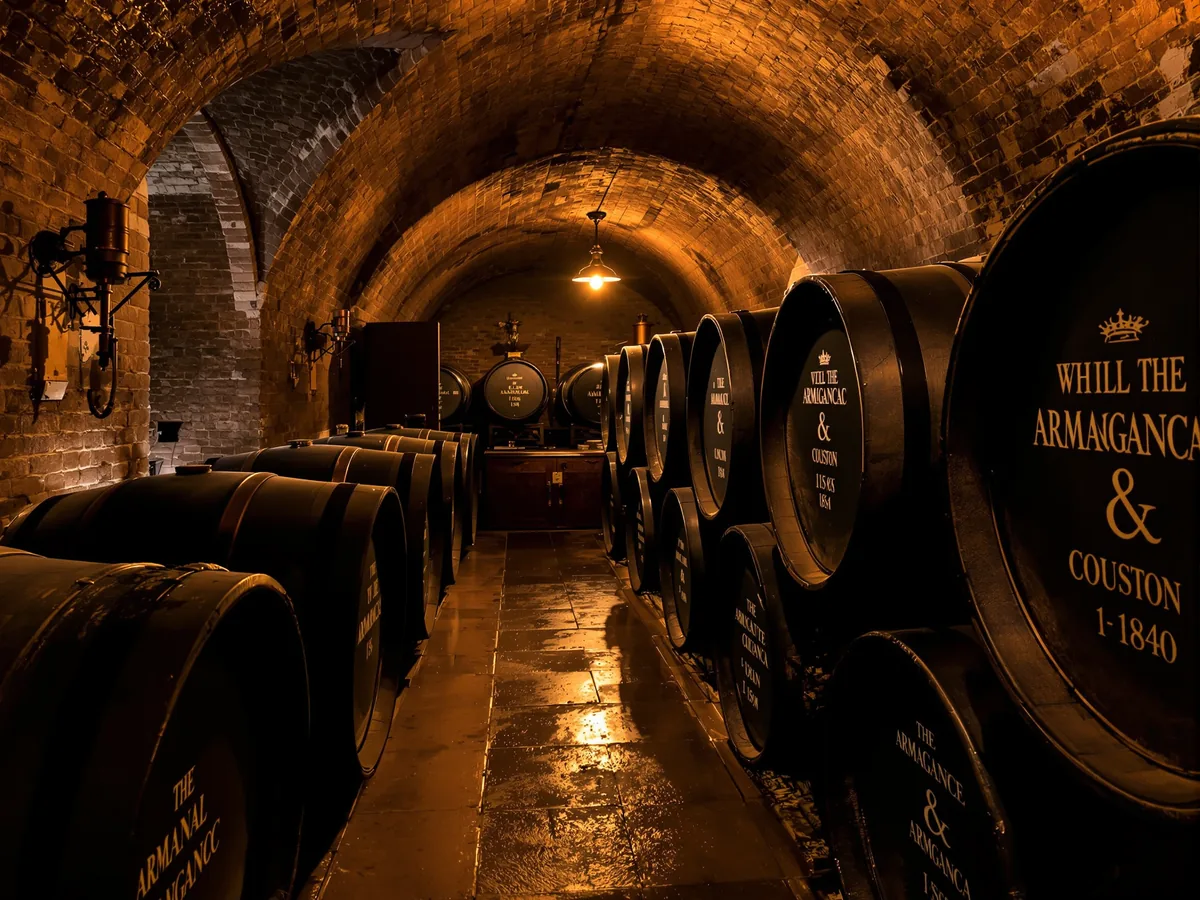
Then comes the ageing, in black Gascon oak casks. The toast of the wood remains medium to light, and time in new casks is limited to three or four months: a choice that explains the discreet oak sought by the house, to preserve the finesse of the fruit. This know-how earned it a silver medal at the Talents de l'Armagnac competition, for its VSOP cuvée.
Vintage or age statement?
On an armagnac label, two approaches coexist. Age statements, VSOP, XO, hors d'âge, designate blends of brandies of several ages, classified by the age of the youngest. The vintage, on the other hand, indicates a single harvest: a 2011 armagnac comes only from grapes picked in autumn 2011, distilled the following winter, then aged in the cellar until bottling. That is what makes this bottle so personal, tied to a precise date.
Fifteen years after the harvest, the exact time spent in wood depends on the bottling date, which is not specified here. One thing is certain: once bottled, an armagnac no longer ages.
2011, a royal wedding
On 29 April 2011, Prince William married Catherine Middleton at Westminster Abbey, in London, in front of millions of television viewers (source: Wikipedia, article "Mariage du prince William et de Catherine Middleton"). In Gascony, winegrowers and home distillers followed their usual calendar: harvesting in autumn, making a dry white wine on the estate, then distilling during the winter. To our knowledge, no house has published an assessment of this 2011 harvest: we do not describe it.
Bas-Armagnac, Ténarèze, Haut-Armagnac
The appellation covers three terroirs. Bas-Armagnac, around Eauze and Nogaro, is renowned for its tawny sands and fine brandies; Ténarèze, on more clay-limestone soils, gives armagnacs that are often more structured; Haut-Armagnac remains the most confidential. Our 2011 bears the Armagnac appellation, with no area mentioned: it is the combination of a house's know-how and a single harvest, not of a single terroir claimed on the label.
Tasting a 15 year old armagnac
An armagnac of this age is still in the youth of its life. You look for fruit, and the vanilla and caramel of the oak, rather than the rancio of very old armagnacs. With deliberately light oak and a strength of 40% ABV, our 2011 aims for softness and balance: a good way in for anyone wanting to discover Gascon spirits. In young armagnacs, the most common aromas remain candied fruit, prunes, sweet spices and lightly toasted wood; on the palate, the texture is often supple. An armagnac's aromatic range becomes more complex with a long stay in wood.
Serve it in a tulip glass, at room temperature. Let it breathe for a few minutes, look at the colour and its highlights, then taste in small sips. As a digestif, it goes with a coffee, dark chocolate, a few Agen prunes or an apple croustade, a speciality of the Gers; as an aperitif, an ice cube or a dash in a cocktail also suit it very well.
Giving a 2011 armagnac
Fifteen years of marriage: a bottle from the harvest of their wedding year is a meaningful gift, to share on the day itself or to keep for another celebration. For a child born in 2011, it is a birth bottle: it is entrusted to the parents, since the sale of alcohol to minors is prohibited, and will be opened for their 18th birthday, in 2029, or much later.
Keep it upright, away from light and temperature changes. Unopened, it keeps for years without losing its quality; once opened, for several months.
Two other ideas for comparison: the 2010 armagnac, signed by two houses, or the 2012 armagnac, with a brut de fût from the Delord house drawn from a single cask, what enthusiasts call a single cask.
Other estates to discover
The 2011 is signed by only one house in our shop, but other Gascon estates await you in other harvests:
- Delord, a family house founded in 1893 in Lannepax, one of whose stills is a Sier model from 1900; its 2012 brut de fût, 100% baco, gives an idea of a more powerful style;
- Jean Cavé, based in Lannepax since 1883, keeper of very old reserves;
- Domaine de Pellehaut, in Montréal-du-Gers, in Ténarèze: Pellehaut works in particular with folle blanche;
- Château de Bordeneuve, in Castelnau d'Auzan, in Bas-Armagnac: Bordeneuve also ages the Baron de Sigognac armagnacs;
- Château de Laubade, Château de Millet, in Eauze, in AOC Bas-Armagnac, the Castarède house and Dartigalongue, in Nogaro.
Each estate has its own style, from the roundest to the liveliest: enough to build, over time, a collection of French spirits to your taste.
Frequently asked questions about 2011 armagnac
Who produces the 2011 armagnac in our selection?
The Clés des Ducs house, founded in Panjas, in the Gers, as early as 1774.
What is the price of a 2011 armagnac?
It is shown on the product page, with the house and the bottle size. From one brand to another, the price of a vintage can vary depending on the strength, the format and the rarity of the lot.
Can I give a 2011 armagnac to a child born in 2011?
Yes, provided you hand it to their parents. The sale of alcoholic drinks to minors is prohibited by the French public health code, and proof of age may be required from the buyer. The bottle will wait until their 18th birthday, in 2029.
What is the best 2011 armagnac?
There is no best armagnac in absolute terms, only the one that suits you. This 2011 vintage, soft and lightly oaked, is easy to taste; if you like more intense armagnacs, see our brut de fût armagnacs.
Where can I buy a 2011 armagnac?
At Plaisirs de Gascogne, an online shop dedicated to vintage armagnacs. The bottles come from houses in the Gers, ordering and payment are secure, delivery covers France and Europe, and our customer service will gladly advise you before you buy.
Will a 2011 armagnac still improve?
No, not in the bottle: it is ready to drink. Well stored, however, it stays intact for a very long time.
Discover all our vintage armagnacs, year by year.
Please enjoy responsibly. Excessive alcohol consumption is harmful to health.