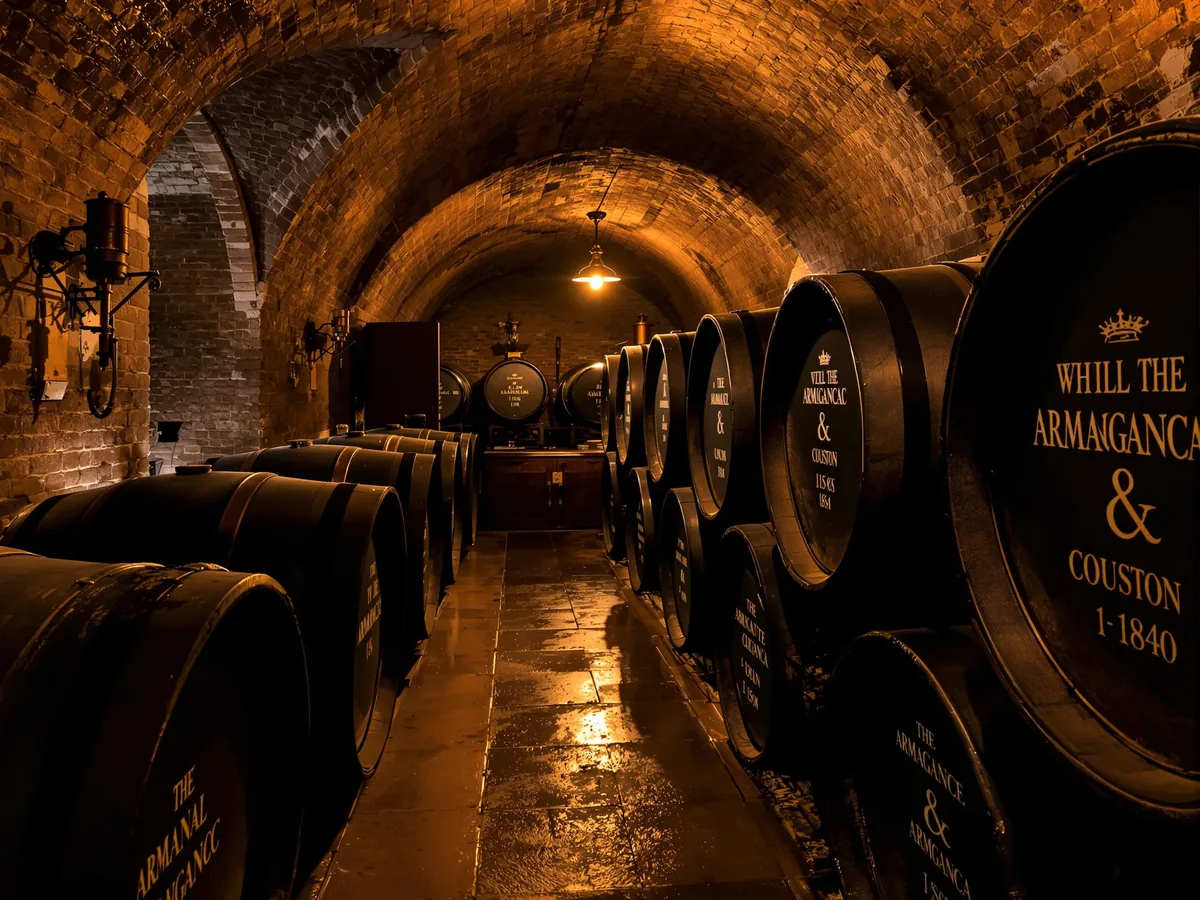
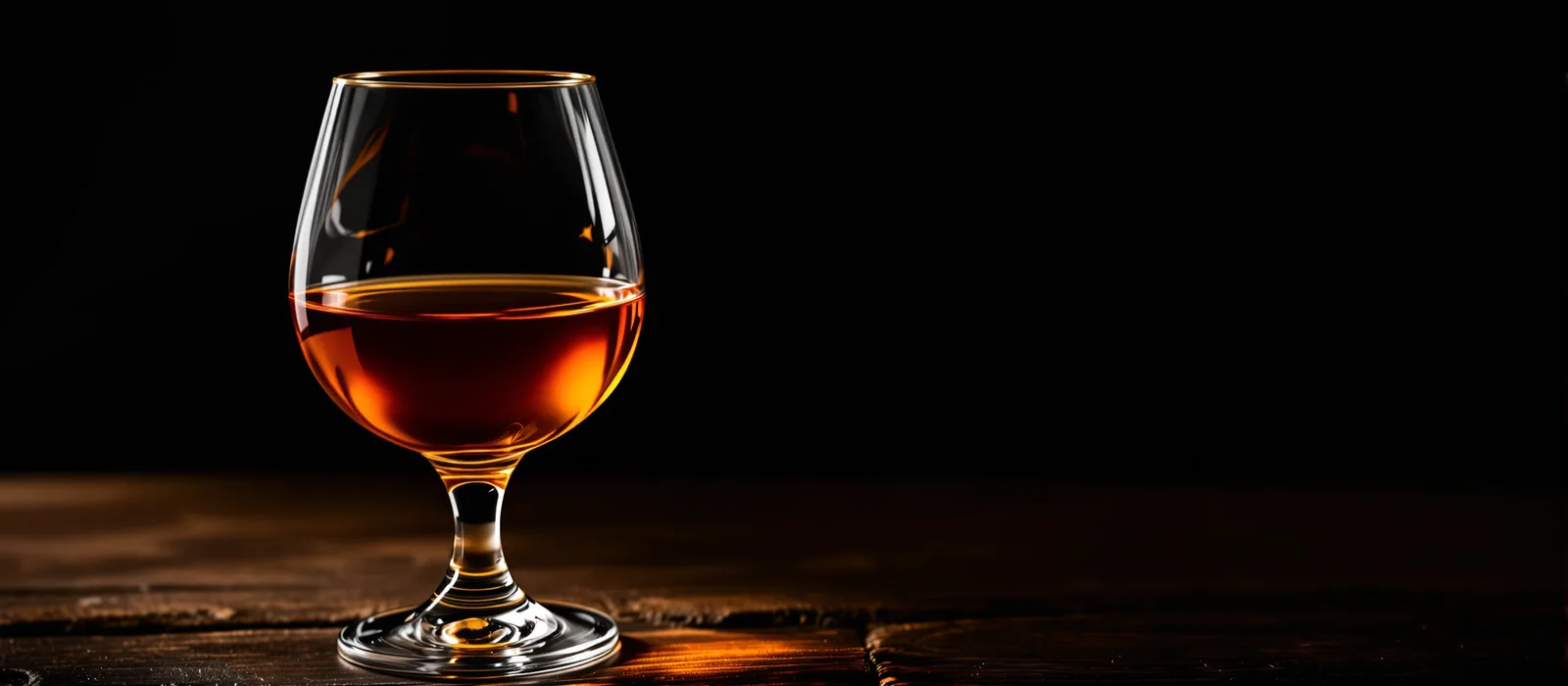
An armagnac from a single harvest
What sets a vintage armagnac apart is its unity: a single harvest year, a single distilled wine, no other brandy added. Blends such as VSOP or XO, whether armagnac or cognac, on the contrary combine several ages. Our 1903 belongs to the first family: it is a vintage in the strict sense, with its year shown on the label.
1903, the Tour and the first powered flight
On 1 July 1903, the riders of the first Tour de France set off from Montgeron, in front of the Au Réveil matin inn; Maurice Garin won the race almost three hours ahead of the runner-up (source: Wikipedia, article "Tour de France 1903"). On 17 December of the same year, the Wright brothers made their first powered flights (source: Wikipedia, article "Wright brothers"). In Gascony, no producer source describes the 1903 harvest, so we do not characterise it.
Our 1903 armagnac: a brut de fût Jean Cavé
The bottle comes from the collection of the Jean Cavé house, based in Lannepax, in the Gers. Its product sheet is clear: Bas-Armagnac AOP, no blending, bottled brut de fût. In other words, the armagnac was not reduced with water before bottling; its strength is the one shown on the label. It comes in 70 cl, in a wooden box that makes it a ready-to-give gift.
For other bottles at their natural strength, see our selection of brut de fût armagnacs.
Jean Cavé, four generations in Lannepax
A winegrower, Jean Cavé settled in Lannepax in 1883 as a distiller and cellar master, with his wife and two sons. Twenty years later, the 1903 harvest entered his cellars. The house, represented today by Henri Cavé, has built up over the generations a collection of old vintages counted among the most remarkable in the appellation. Its armagnacs age in oak casks, sometimes for decades.
Bas-Armagnac and its sands
The Armagnac appellation, in the South West, brings together three terroirs: Bas-Armagnac, Ténarèze and Haut-Armagnac. Bas-Armagnac, where our 1903 armagnac comes from, is the region of tawny sands, renowned for fine and fruity armagnacs; Haut-Armagnac, further east, is much less planted with vines today. The white wine distilled there comes mainly from ugni blanc, baco, folle blanche and colombard. It passes only once through the armagnac still, in continuous distillation, before going down into cask in the cellar.
Tasting a 1903 armagnac
The house does not publish a tasting note for this 1903, so we do not invent one. An armagnac at its natural strength is tasted with a little more care than an armagnac brought down to 40% ABV. Pour a small measure into a tulip glass, at room temperature, and let it rest for several minutes. Nose it first from a distance. If the alcohol dominates, add one or two drops of water: the aromas often open up. In armagnacs of this age, one frequently finds prune, dried fruit, cocoa, spices and rancio, with remarkable length on the palate.
A gift for a lover of sport or aviation
At 123 years old, a 1903 armagnac no longer marks a date of birth, but it speaks to many passions: cycling, aviation, the Belle Époque. It is also given for the anniversary of a house, a company or a club founded in 1903, an anniversary that is part of French history, or to bring a great vintage into a cellar. Store it upright, in the dark and somewhere cool.
Neighbours of this vintage: the 1902 armagnac and the 1904 armagnac, both from Jean Cavé. For more recent years, the shop brings together other producers. Château de Laubade, in Sorbets, offers a wide range of years; Dartigalongue, in Nogaro, is a long-established house; Castarède, founded in 1832, and Armagnac Delord, in Lannepax like Jean Cavé, complete the selection, along with Château de Millet, Domaine de Pellehaut and the Baron de Sigognac from Château de Bordeneuve. You will also find Floc de Gascogne there. Laubade, Dartigalongue, Castarède or Delord: the choice is yours.
Frequently asked questions about 1903 armagnac
How much does a 1903 armagnac cost?
It depends on the rarity of this lot, more than a hundred and twenty years old. The price is shown on the product page, with the bottle size.
Where can I buy a 1903 armagnac?
On the Plaisirs de Gascogne shop, specialising in vintage armagnacs: add to basket, secure payment by bank card, delivery in France and Europe in suitable packaging. Our customer service team is ready to listen and advise you before you order. The exact strength and size of each bottle are shown on its product page.
What are the characteristics of the 1903 armagnac?
A Bas-Armagnac AOP from Jean Cavé, from a single harvest, without blending or reduction, in 70 cl with a wooden case.
How is a 1903 armagnac delivered?
The bottle travels in its wooden box, protected by packaging suited to spirits, to mainland France and Europe.
What are the reviews of the 1903 armagnac?
The house publishes no rating for this vintage, so we do not quote any reviews. Ours comes down to one word: rarity.
What is the history of the 1903 armagnac?
That of a wine harvested in Bas-Armagnac during the Belle Époque, then kept for more than a century by a family from Lannepax.
Discover all our vintage armagnacs, year by year.
Please enjoy responsibly. Excessive alcohol consumption is harmful to health.



 Jean Cavé
113 bottles
Jean Cavé
113 bottles
 Armagnac Delord
92 bottles
Armagnac Delord
92 bottles
 Château de Millet
79 bottles
Château de Millet
79 bottles
 Dartigalongue
76 bottles
Dartigalongue
76 bottles
 Baron de Sigognac
69 bottles
Baron de Sigognac
69 bottles
 Armagnac Castarède
63 bottles
Armagnac Castarède
63 bottles
 Clés des Ducs
48 bottles
Clés des Ducs
48 bottles
 Château de Laubade
43 bottles
Château de Laubade
43 bottles
 Domaine de Pellehaut
28 bottles
Domaine de Pellehaut
28 bottles
 Château de Bordeneuve
17 bottles
Château de Bordeneuve
17 bottles
 Charles de Granville
13 bottles
Charles de Granville
13 bottles
 Roger Groult
7 bottles
Roger Groult
7 bottles