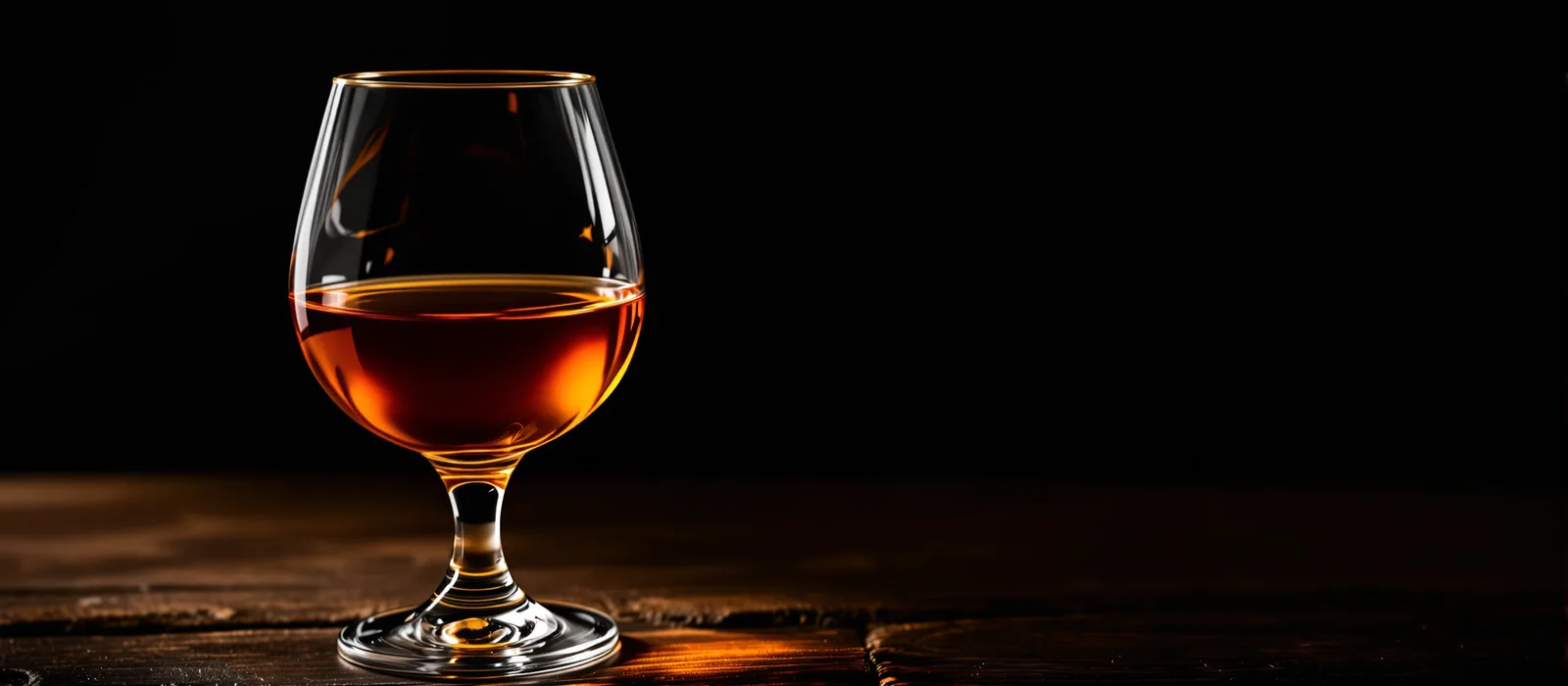
1974 armagnac, a brandy from a single year
A vintage armagnac bears the name of one year only: the year the grapes were harvested, made into wine and then distilled. A 1974 armagnac therefore comes solely from the 1974 harvest. Unlike a blend such as an XO or a hors d'âge, which combines brandies of several ages, a vintage tells the story of one harvest and of the style of the house that aged it.
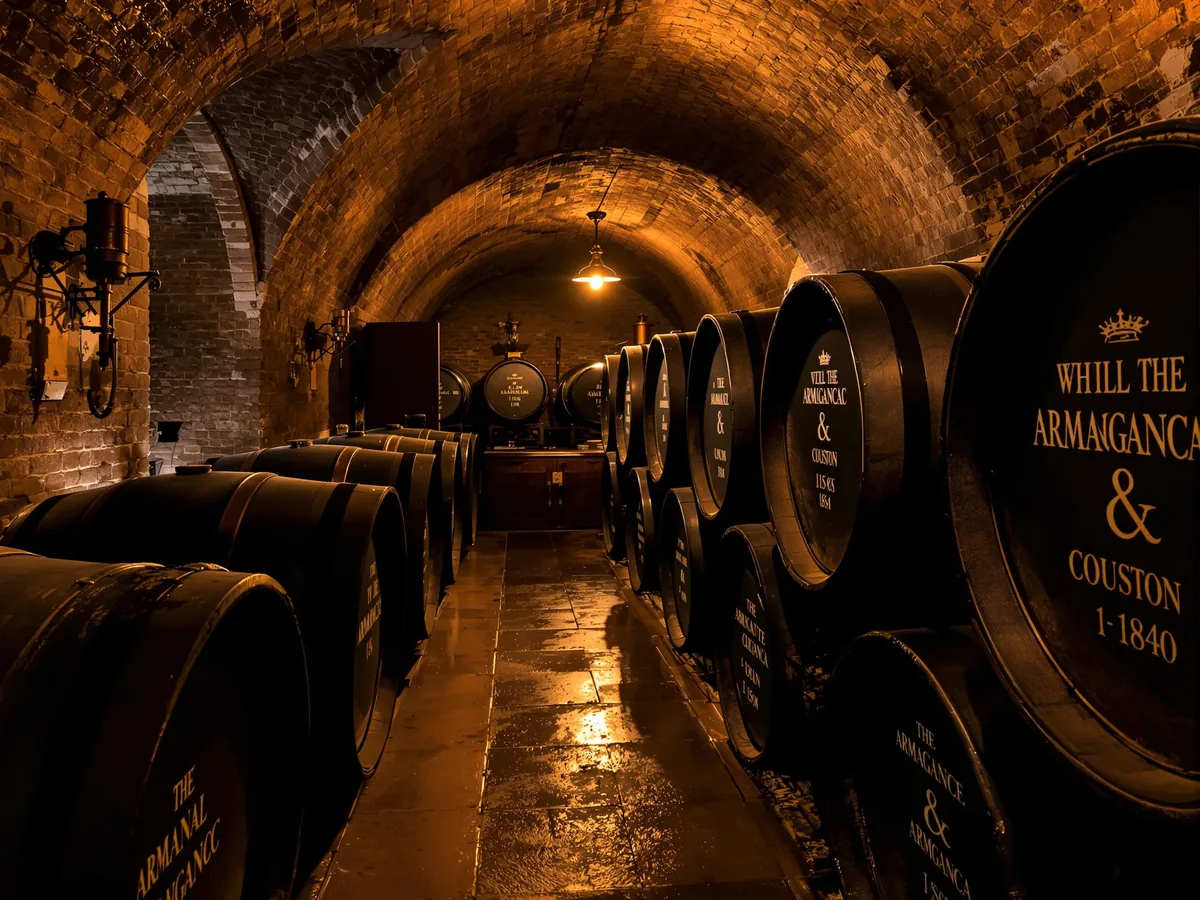
It all starts with a dry white wine made from the grape varieties of the appellation: ugni blanc, baco blanc, folle blanche and colombard. In winter, this wine goes through the armagnac still, in continuous distillation, following the traditional method of the South West. The still colourless spirit then goes down into oak casks. Over the years, it breathes through the wood, loses a little alcohol and gains its amber colour, its roundness and its aromas.
Good to know: armagnac only ages in the cask. Once bottled, it no longer evolves. The bottling date, when it appears on the label, therefore tells you how long your 1974 really spent in wood.
1974, a year that matters in Gascony
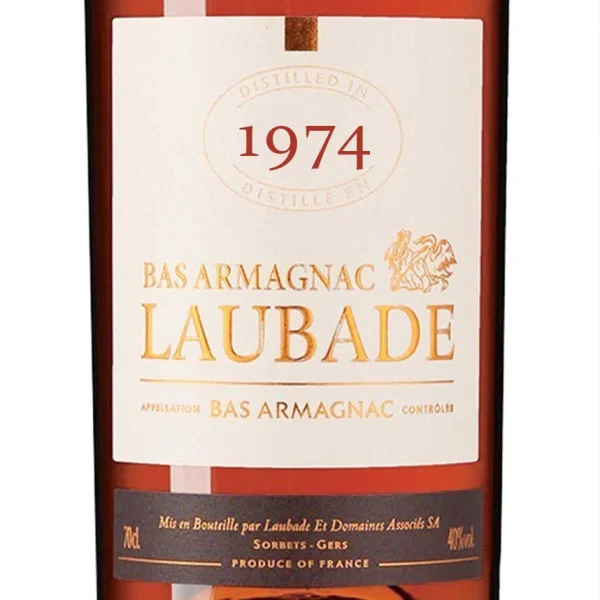
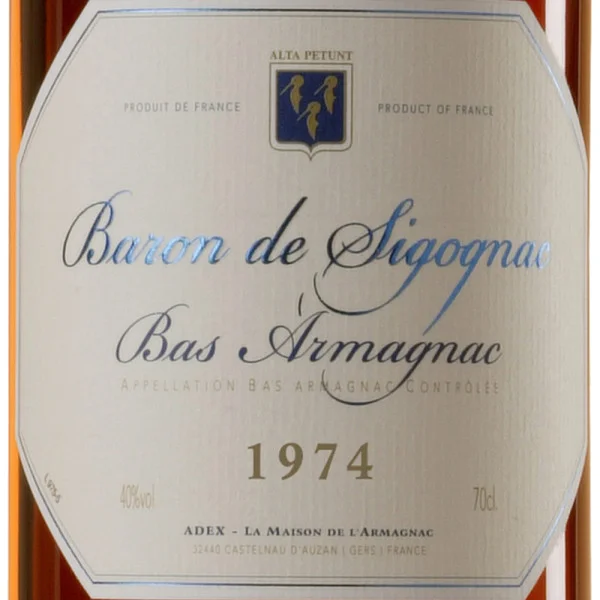
In France, 1974 is the year Valéry Giscard d'Estaing was elected President of the Republic, in May, and the year the age of majority was lowered to 18. In the world of armagnac, it is also a starting point for two of our houses: the Lesgourgues family took over Château de Laubade in 1974, the year its armagnac column still was built, and continuous distillation began that same year at Château de Bordeneuve, which produces the Baron de Sigognac armagnacs.
Our 1974 armagnacs, estate by estate
Every bottle on this page comes from a house that kept its 1974 brandies in cask before bottling them. The same year, but not the same terroir, nor the same grape varieties, nor the same length of ageing:
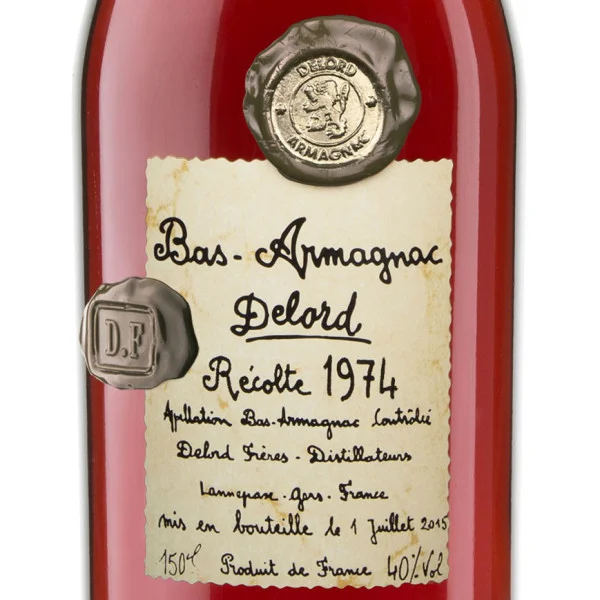
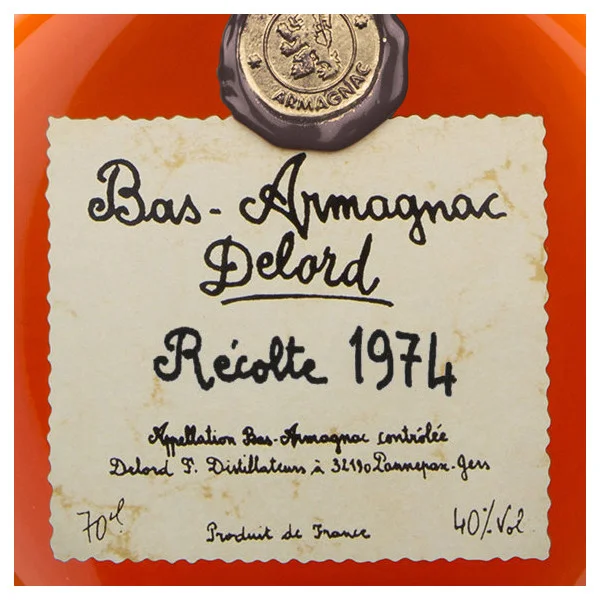
- Armagnac Delord, a family house in Lannepax, in Bas-Armagnac: a 1974 at 40% ABV, in 70 cl and magnum, with a smoky, spicy, liquorice nose;
- Château de Laubade, in Sorbets, in Bas-Armagnac: a 1974 at 40% ABV in a 50 cl bottle, aged in 420 litre Gascon oak casks, with a nose of violet and prune and a very developed rancio for its age;
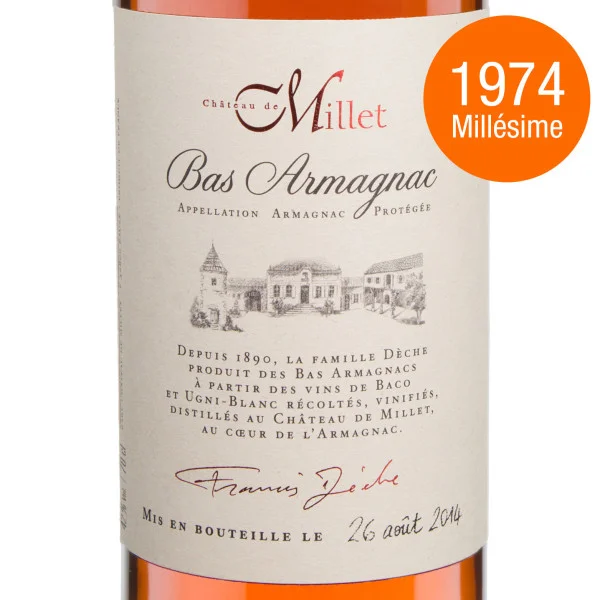
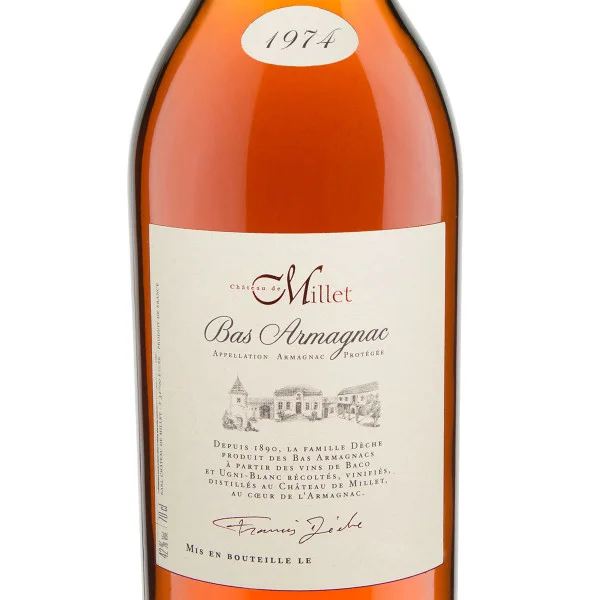
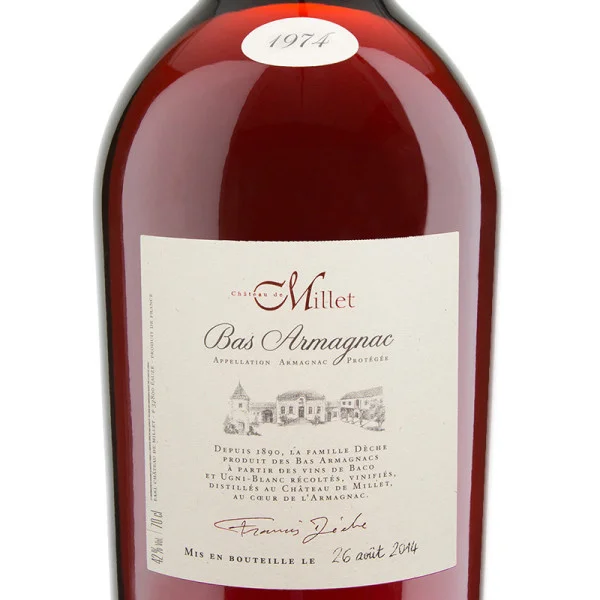
- Château de Millet, the Dèche family estate in Eauze: a 1974 at 42% ABV, made from baco and ugni blanc, in 70 cl, magnum and 250 cl Gascon pot, which the house associates with a Prix du Président de la République won in 1998 at the Concours national des grandes eaux-de-vie d'Armagnac;
- Dartigalongue, in Nogaro since 1838: a 1974 at 42% ABV, with spices, white flowers, dried walnut and a noble rancio;
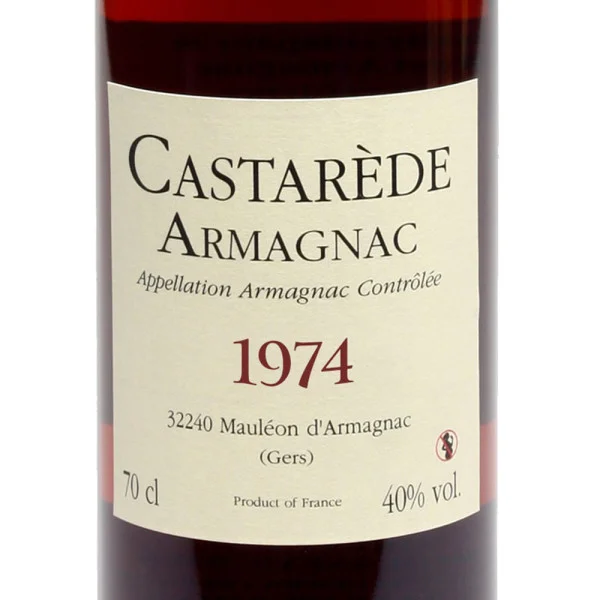
- Armagnac Castarède, a house founded in 1832: a 1974 at 40% ABV, which spent 46 years in cask before being bottled in 2020;
- Baron de Sigognac, at Château de Bordeneuve: a 1974 at 40% ABV, from ugni blanc and baco, supple and round, with vanilla and candied pear;
- Domaine de Pellehaut, in Ténarèze: an unfiltered brut de fût (cask strength, not reduced), 100% ugni blanc, at 40% ABV, gold medal at the IWSC 2024;
- Jean Cavé, in Lannepax since 1883: a brut de fût at 53.4% ABV, bottled without reduction.
Lovers of natural strengths will find these two bottles among our cask strength armagnacs.
Tasting notes for a 1974 armagnac
Half a century in cask produces complex, refined brandies. In the 1974s of our selection, the nose reveals prune, violet, candied fruit, apricot, citrus, sometimes a smoky or roasted touch. On the palate come sweet spices, liquorice, gingerbread, mellow oak and, at some houses, a lovely note of rancio. The finish is long. A brut de fût at over 50% ABV will be more powerful; a 1974 reduced to 40% ABV will be softer and more approachable.
Serve it at room temperature in a tulip glass, without ice. Let it breathe for a few minutes, warm the glass in your hand, then taste in small sips. As a digestif, it goes well with a square of dark chocolate or a dessert with dried fruit.
A gift for the 52nd birthday of someone born in 1974
In 2026, people born in 1974 celebrate their 52nd birthday, and couples married in 1974 their 52nd wedding anniversary. An armagnac from their year of birth or marriage has lived through the same half-century as they have: a rare and lasting gift, to open on the day of the celebration or to keep for another great moment. The magnum and the Gascon pot mark a celebration to be shared; the 70 cl bottle, presented in a gift case or gift box depending on the house, remains the most popular choice.
Storing your 1974 armagnac properly
Keep the bottle upright, away from light and heat, so that the alcohol does not eat into the cork. Unopened, it keeps for a very long time without losing its qualities. Once opened, it keeps for several months; if the level drops a lot, finish it sooner to preserve its aromas.
Frequently asked questions about 1974 armagnac
What is the best 1974 armagnac?
There is no single best 1974 armagnac, but rather different styles. For softness, choose a vintage reduced to 40% ABV such as Laubade, Delord or Sigognac; for power, a brut de fût such as Jean Cavé. The awards mentioned on the product pages, such as Pellehaut's IWSC 2024 gold, can also guide your choice.
Which grape varieties are in 1974 armagnac?
Depending on the house: ugni blanc, baco blanc, folle blanche and colombard. Pellehaut's 1974 is 100% ugni blanc, Millet's combines baco and ugni blanc, and Laubade's brings together all four grape varieties.
How much does a 1974 armagnac cost?
It depends on the estate, the size (50 cl, 70 cl, magnum, Gascon pot), the strength and the type of bottling, reduced or brut de fût. Each product page on this page shows the producer, the bottle size and the price.
How can I buy a 1974 armagnac online?
At Plaisirs de Gascogne, a shop specialising in vintage armagnacs: the bottles come directly from the Gascon houses, payment is secure and delivery is made in France and across Europe, in protective packaging.
Also discover all our vintage armagnacs, year by year, or the 1975 armagnac for the following year.
Please enjoy responsibly. Excessive alcohol consumption is harmful to health.



 Jean Cavé
113 bottles
Jean Cavé
113 bottles
 Armagnac Delord
92 bottles
Armagnac Delord
92 bottles
 Château de Millet
79 bottles
Château de Millet
79 bottles
 Dartigalongue
76 bottles
Dartigalongue
76 bottles
 Baron de Sigognac
69 bottles
Baron de Sigognac
69 bottles
 Armagnac Castarède
63 bottles
Armagnac Castarède
63 bottles
 Clés des Ducs
48 bottles
Clés des Ducs
48 bottles
 Château de Laubade
43 bottles
Château de Laubade
43 bottles
 Domaine de Pellehaut
28 bottles
Domaine de Pellehaut
28 bottles
 Château de Bordeneuve
17 bottles
Château de Bordeneuve
17 bottles
 Charles de Granville
13 bottles
Charles de Granville
13 bottles
 Roger Groult
7 bottles
Roger Groult
7 bottles