A vintage past the hundred-year mark
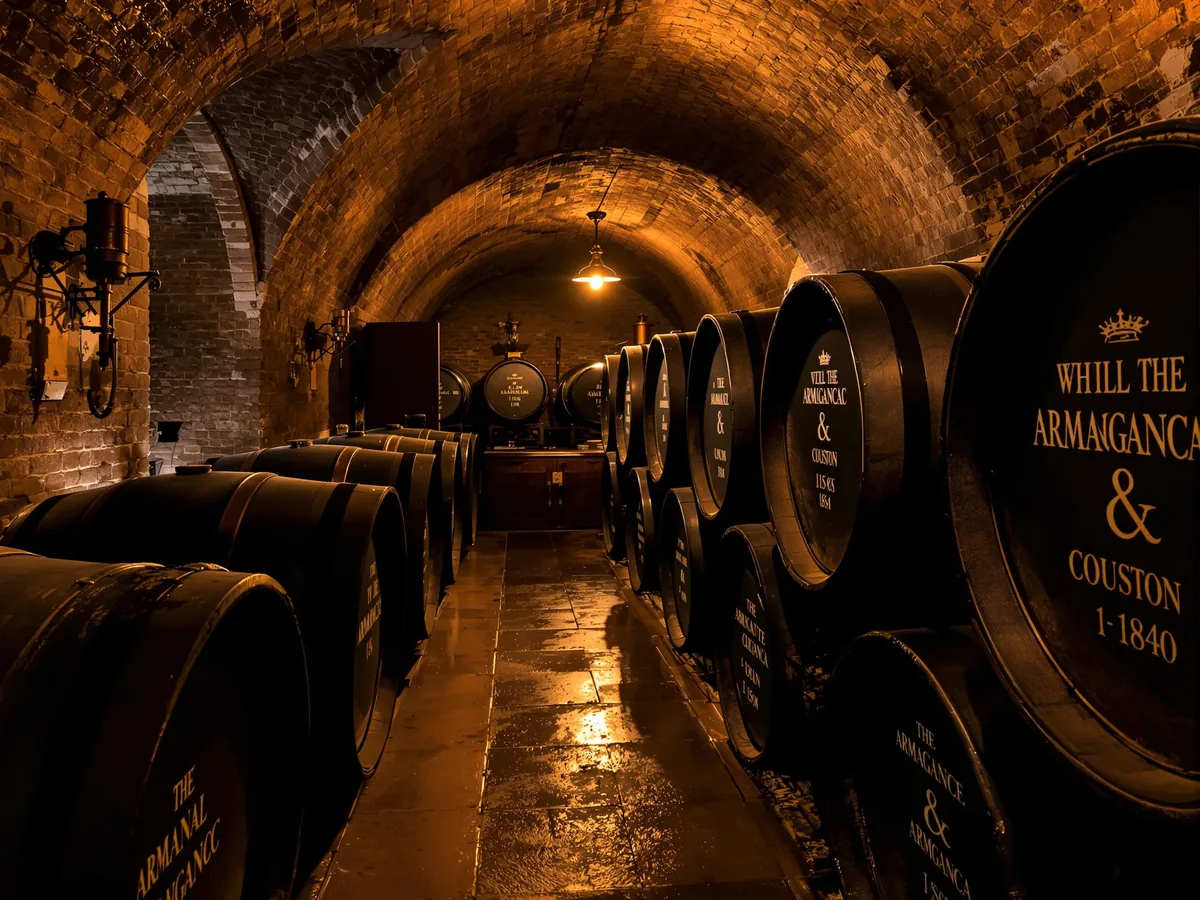
A vintage armagnac bears the name of a single year because it contains only that harvest. It is not "corrected" with younger or older brandies, as is done for a VSOP, an XO or a hors d'âge, which are blends. A 1925 vintage therefore keeps the imprint of one harvest and one cellar, nothing more, nothing less.
Passing the hundred-year mark is by no means automatic. It takes a family that keeps its lot without selling it, a cellar that protects it, and acceptance that part of the volume evaporates every year. That is why a 1925 armagnac is found in such small quantities.
1925, the year that gave Art Deco its name
From April to October 1925, Paris hosted the International Exhibition of Modern Decorative and Industrial Arts. It was this exhibition that would give its name to the Art Deco style (source: Wikipedia, article "Exposition internationale des arts décoratifs et industriels modernes"). The same year, Josephine Baker made her Paris debut in the Revue nègre, at the Théâtre des Champs-Élysées (source: Wikipedia, article "Joséphine Baker"). In Gascony, far from the Paris pavilions, winegrowers brought in their harvest in the autumn. We found no producer source on the quality of the 1925 harvest, and so we do not characterise it.
Two 1925 armagnacs in our shop
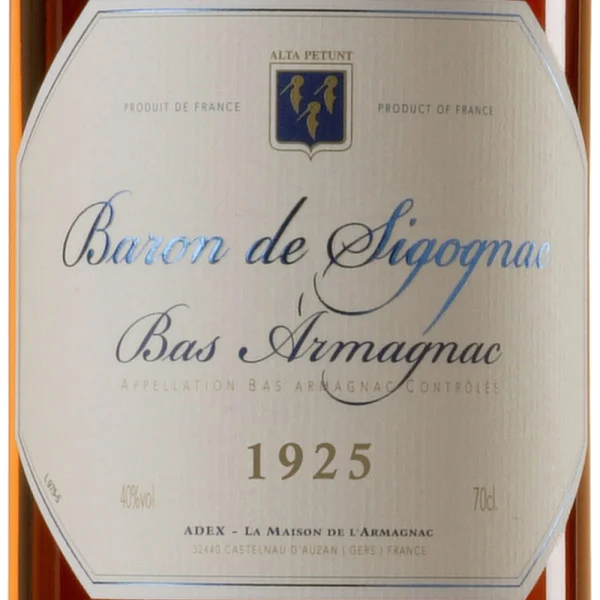
- Baron de Sigognac: a 1925 at 40% ABV, made from ugni blanc and baco. It is kept at Château de Bordeneuve, where each year ages apart; the estate keeps harvests dating back to 1893. The house prepares its vintages to order and writes the bottling date on the back. No tasting note published for 1925;
- Jean Cavé: a 1925 Bas-Armagnac AOP, without any blending, from the house's collection of old vintages, in Lannepax. It was bottled brut de fût, with no added water, and its strength is shown on the label. It is presented in a wooden box.
Two characters, then: an armagnac reduced to 40% ABV, round and approachable, and a brut de fût, more intense, which joins our brut de fût armagnacs.
Jean Cavé and Baron de Sigognac
For the house of Jean Cavé, it all began in 1883: a winegrower from Lannepax, in the Gers, became a distiller and ager of armagnac. Four generations followed, and today Henri Cavé watches over a collection of old years renowned throughout the appellation. The most precious rest in demijohns, in the paradis of the cellar, where they no longer evolve.
The Baron de Sigognac armagnacs are aged at Château de Bordeneuve, near Eauze, by the Guasch family, owners of the estate since 1974. Production there is confidential, some fifty casks a year according to the house, and each vintage ages separately in the darkness of the cellars. The house style is described as round and fruity, with notes of toasted dried fruit, coffee and dark chocolate that grow more pronounced over the years.
Our shop features other producers for more recent years: Castarède, Château de Laubade, Château de Millet, Delord, Dartigalongue, Clés des Ducs or Domaine de Pellehaut. Each house has its own page, where you can discover its history, its region and its style.
How an armagnac becomes a centenarian
The base wine is a dry white, made from ugni blanc, baco, folle blanche or colombard. During the winter, it goes just once through the armagnac still, in continuous distillation; cognac, for its part, is distilled twice. The brandy comes out clear and lively, then goes into cask. That is where everything happens: colour, tannins, aromas and smoothness come from the wood and from time, while the strength slowly falls.
An armagnac no longer ages once in the bottle, which is what makes the bottling date so useful. The appellation has three terroirs, Bas-Armagnac, Ténarèze and Haut-Armagnac; our two 1925s come from the first, whose tawny sands are renowned for finesse.
Tasting it as it deserves
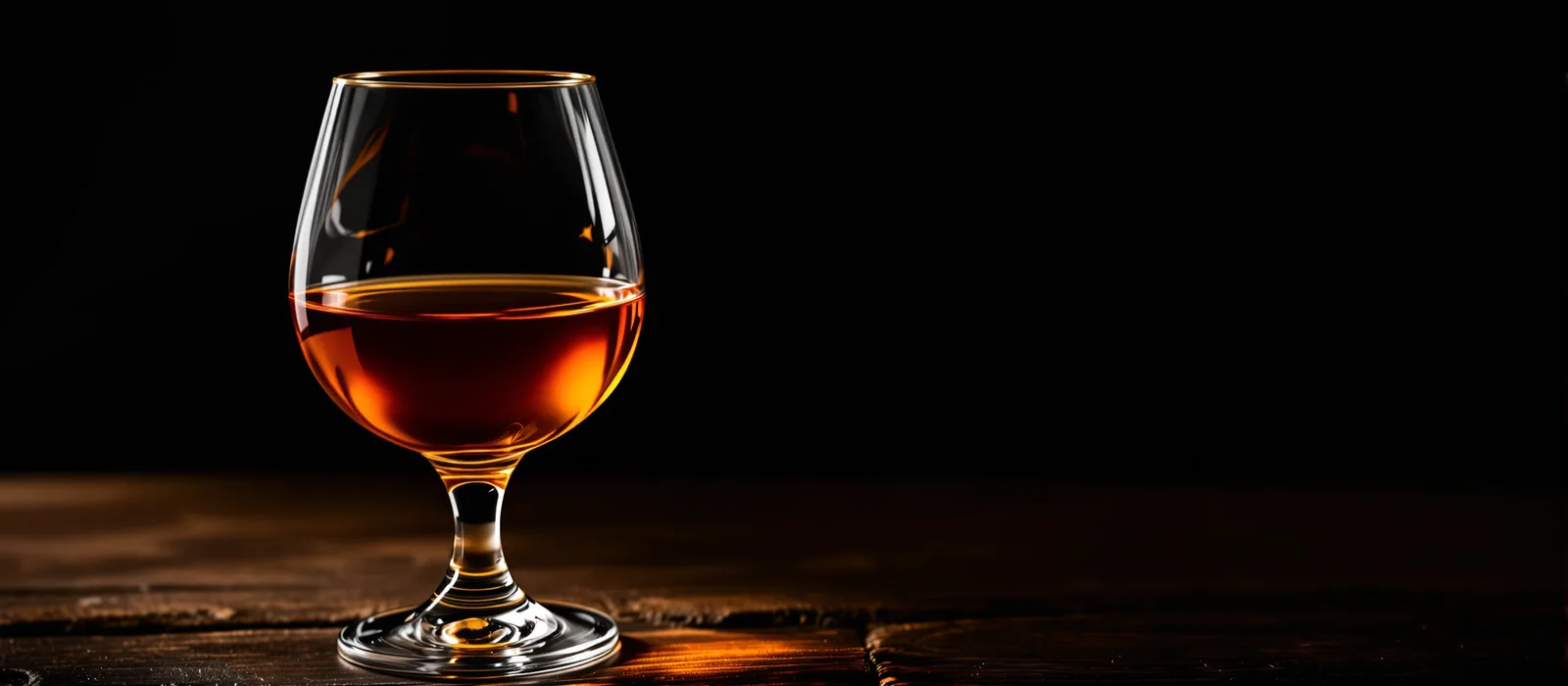
A 101-year-old armagnac is tasted at room temperature, in a tulip glass, and in a small measure. Give it ten minutes or so before tasting: the air helps it open up. Very old brandies often offer notes of prune, walnut, cocoa, blond tobacco or spices, sometimes rancio; but it is the bottle that decides. With the brut de fût, take very small sips, and do not hesitate to compare the two 1925s side by side.
Unopened, the bottle should be kept upright, in a dark, temperate place. Opened, it stays lovely for several months.
Giving a 1925
For an exceptional gift, few bottles speak as eloquently as a birth-year vintage. A 1925 armagnac marks the 101st birthday of someone born that year, but also the centenary just past of a house, an estate or a family business. For a lover of architecture or design, the year of Art Deco makes it a gift full of meaning. In a collection, it finds its place between our 1924 armagnac and our 1926 armagnac, which turns a hundred this year.
Frequently asked questions about 1925 armagnac
What is the price of a 1925 armagnac?
It depends on the house and the bottling, reduced or brut de fût. The price of each bottle is shown on its product page.
Where can I buy a 1925 armagnac?
In our Plaisirs de Gascogne shop, an online merchant devoted to armagnac and the spirits of the region: add the bottle to your basket, pay securely, and shipping is available in France and across Europe, in careful packaging. A customer service team is available to guide you before you order.
Who are the producers of the 1925 armagnac?
In our selection, Baron de Sigognac and Jean Cavé, two Bas-Armagnac houses.
What are the characteristics of the 1925 armagnac?
Two 70 cl bottles from a single harvest: one at 40% ABV, from ugni blanc and baco, the other brut de fût, unblended.
What is the history of the 1925 armagnac?
That of a wine harvested in 1925, distilled the following winter, then aged and kept for more than a century by two Gascon families.
Which grape variety dominates in these 1925s?
The Baron de Sigognac combines ugni blanc and baco, according to its product page. The Jean Cavé product page mentions no grape variety, and we do not guess it.
Can I order if I am under age?
No. The French Public Health Code prohibits the sale of alcoholic beverages to minors, and proof of age may be requested. Being of legal age is therefore required for any order in our shop.
Discover all our vintage armagnacs, year by year.
Please enjoy responsibly. Excessive alcohol consumption is harmful to health.



 Jean Cavé
113 bottles
Jean Cavé
113 bottles
 Armagnac Delord
92 bottles
Armagnac Delord
92 bottles
 Château de Millet
83 bottles
Château de Millet
83 bottles
 Dartigalongue
76 bottles
Dartigalongue
76 bottles
 Baron de Sigognac
69 bottles
Baron de Sigognac
69 bottles
 Armagnac Castarède
63 bottles
Armagnac Castarède
63 bottles
 Clés des Ducs
48 bottles
Clés des Ducs
48 bottles
 Château de Laubade
43 bottles
Château de Laubade
43 bottles
 Domaine de Pellehaut
28 bottles
Domaine de Pellehaut
28 bottles
 Château de Bordeneuve
17 bottles
Château de Bordeneuve
17 bottles
 Charles de Granville
13 bottles
Charles de Granville
13 bottles
 Roger Groult
7 bottles
Roger Groult
7 bottles