The year 2000 in the Gascon vineyards
2000 remains the year of the symbolic passage into the new millennium and, for football fans, the year France won the Euro. In the lands of Gascony, the vines produced a fruity, expressive vintage. Twenty-six years later, these brandies have a still youthful and lively profile, where flowers and light vanilla dominate oak that has remained discreet.
Nine bottlings, eight producers
The 2000 vintage is one of the most complete in our selection. It lets you taste the same year through very different terroirs, grape varieties and methods: three châteaux, family houses and an estate in Ténarèze.
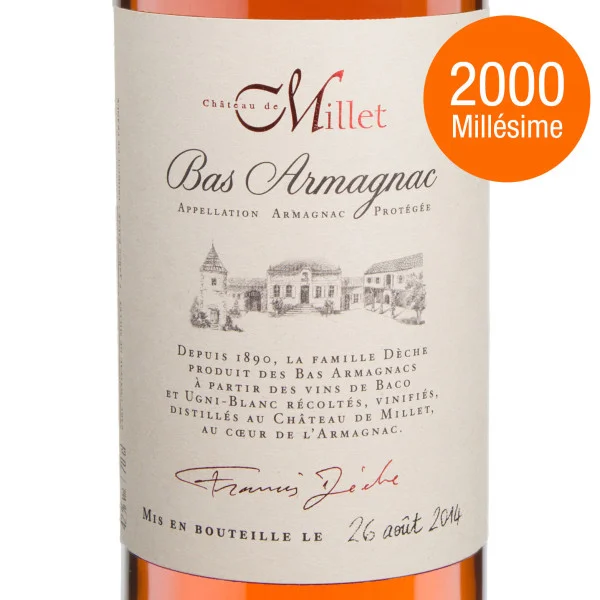
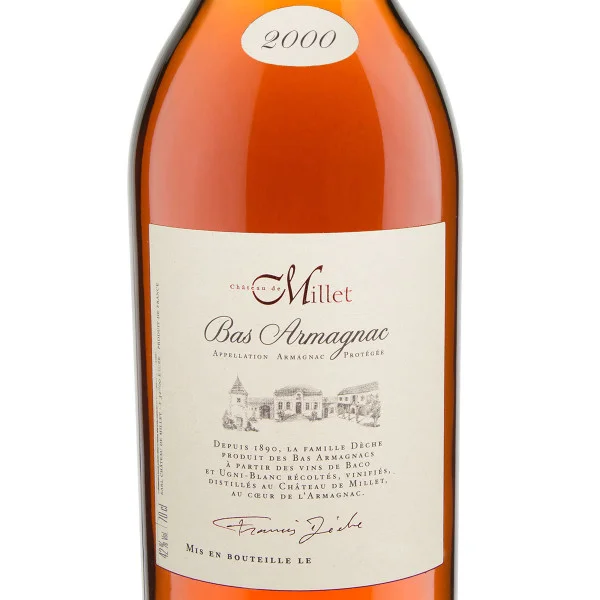
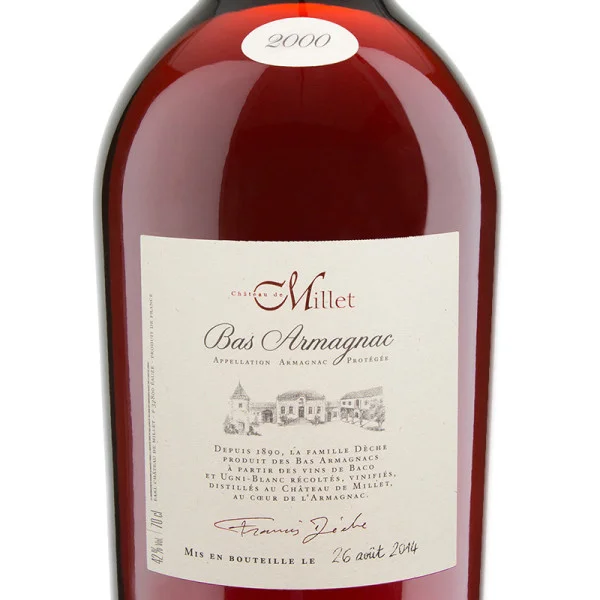
- Château de Millet, in Eauze, owned by the Dèche family for five generations, vineyard certified HVE 3 (High Environmental Value): a Bas-Armagnac AOP made from baco and ugni blanc, at 42%, available in 70 cl, magnum or 250 cl Gascon pot. An orange colour with mahogany glints, a frank nose with vanilla, a palate balanced by lovely freshness, and a spicy, harmonious finish. Gold medal at the Concours Général Agricole 2022, gold at Spirits Selection 2024 and 91/100 from Gilbert & Gaillard.
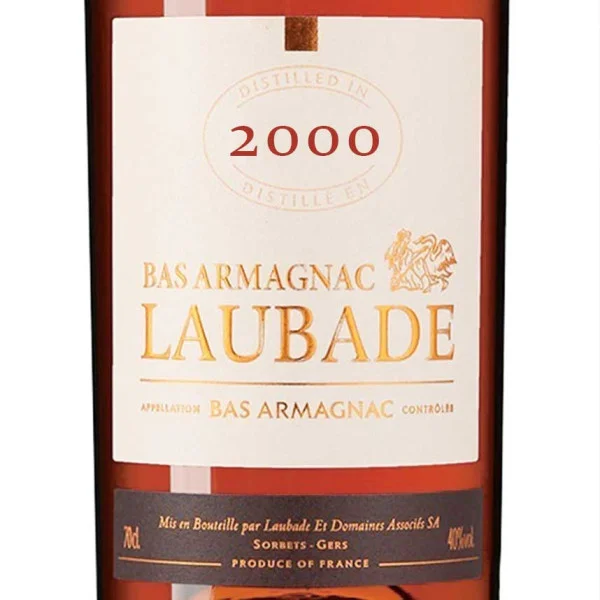
- Château de Laubade, in Sorbets: two versions of the same vintage. The 2000 reduced to 40%, broad and generous, with vanilla, candied fruit and mellow oak, and great softness on the palate; and a version at 52.4%, bottled without reduction or chill filtration, in numbered bottles.
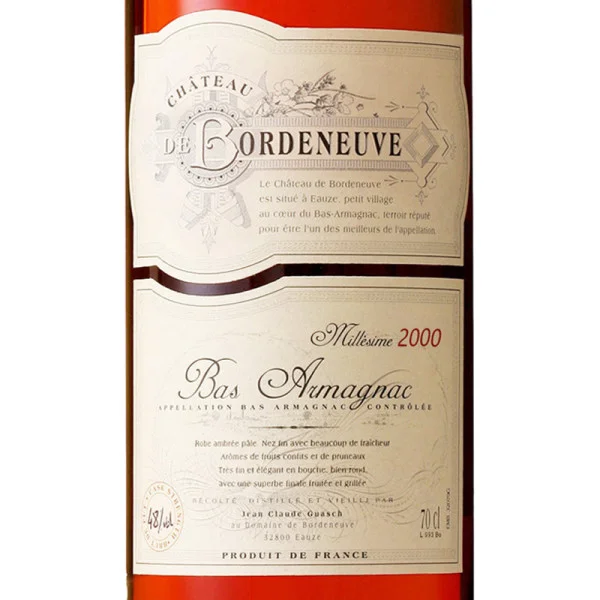
- Château de Bordeneuve, in Castelnau d'Auzan, Guasch family: a château armagnac bottled at its natural strength, 49%, made from ugni blanc and baco. A golden yellow colour with amber glints, and a harmonious nose of exotic fruit, vanilla and light oak.
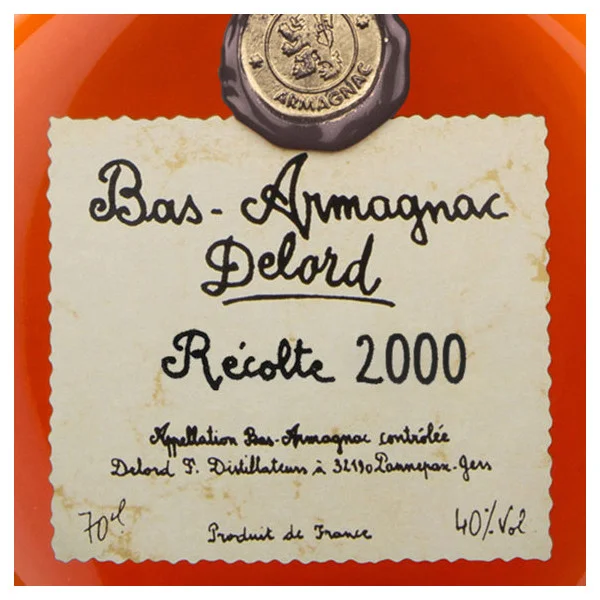
- Armagnac Delord, in Lannepax: a pure vintage, aged in Gascon oak and brought down to 40% like the house's entire range.
- Dartigalongue, in Nogaro: a 2000 at 42%, with sweet almond, baked apple and elderflower. Light and fine on the attack, it gains length after a few minutes of aeration, as the tannins come through. Gold medal at the Talents de l'Armagnac 2022.
- Clés des Ducs, a house born in Panjas in 1774: a 2000 at 40%, never blended, long, rich and smooth, with discreet rather than overwhelming oak.
- Domaine de Pellehaut, in Montréal-du-Gers, in Ténarèze: a 2000 at 50%, 100% folle blanche, unreduced, with a supple attack that quickly comes alive with fresh gingerbread. Gold medal at the Concours Général Agricole 2022.
- Jean Cavé, in Lannepax since 1883: a Bas-Armagnac AOP brut de fût (cask strength, not reduced) at 51.3%.
Reduced or brut de fût: which taste to choose?
Our advice depends on who will be drinking it. For a first armagnac or a lover of softness, the versions at 40 or 42% are the most approachable. For a palate that enjoys intensity, the four brut de fût bottlings of this vintage offer the brandy in its natural state, with no added water. Comparing the two 2000s from Sorbets is fascinating, by the way: same château, same year, two tastes.
The grape variety matters too: folle blanche brings floral finesse, baco roundness, ugni blanc liveliness. And the quality of an old armagnac depends as much on the cellar master's savoir-faire as on age.
How a 2000 vintage armagnac is born
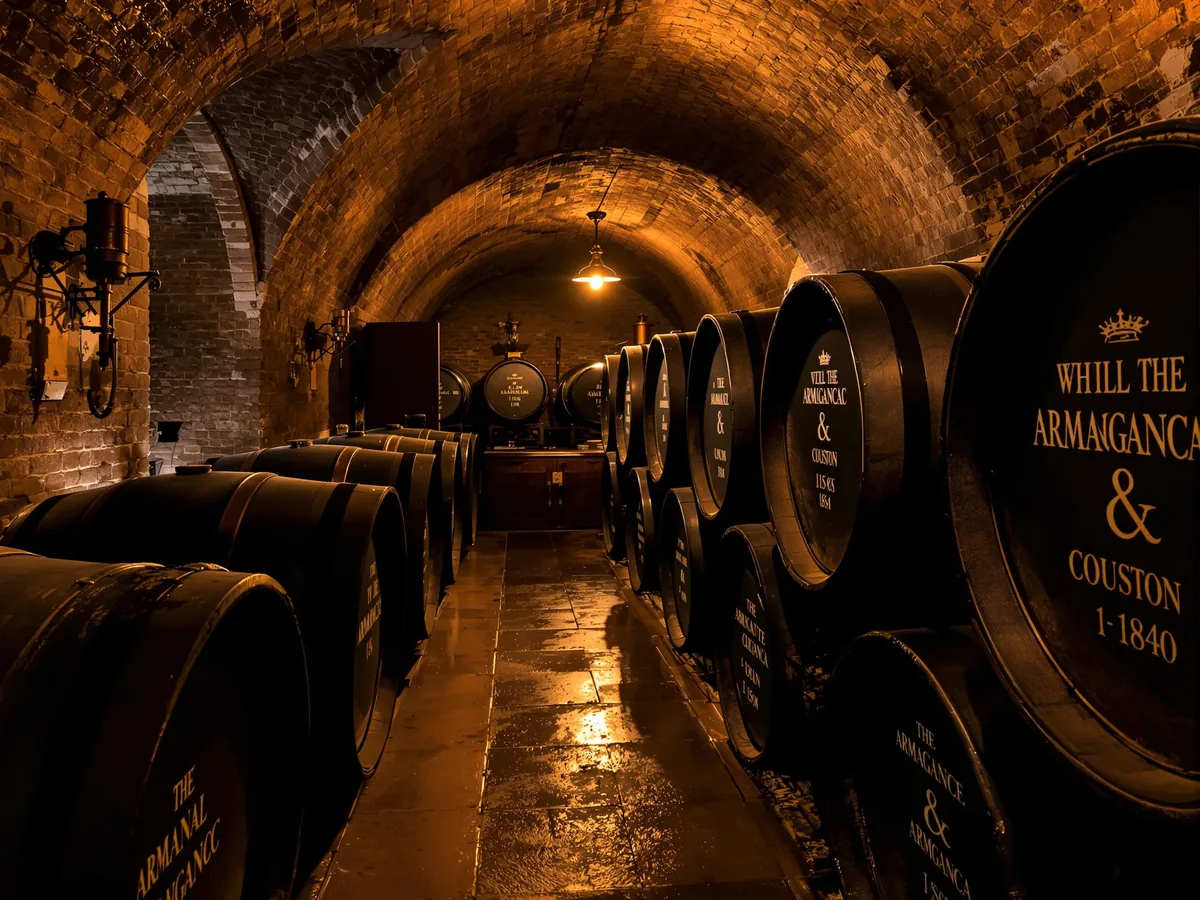
The wine from the 2000 harvest was distilled in the armagnac still, continuously, then the brandy aged in the cellar. For around twenty-five years, it breathed through the wood, to the rhythm of time and the seasons, lost a little alcohol and gained its colour and aromas. An armagnac only ages in the cask: once bottled, it stays as it is. That is also why a vintage, unlike a blend of several years, tells the story of a single harvest.
The AOP appellation is divided between three lands, three areas: Bas-Armagnac, where most of our houses are located, Ténarèze and Haut-Armagnac. Each gives the spirit its own taste.
Giving an armagnac from the year 2000
Children of the year 2000 celebrate their 26th birthday in 2026, and couples married that year their 26th wedding anniversary, known in France as the jade anniversary. A vintage armagnac from their year is a gift to enjoy on the day itself or to keep for years: it does not spoil over time. The Gascon pot makes a fine impression on a festive table, and the numbered bottles from Château de Laubade will appeal to collectors.
Tasting and storage
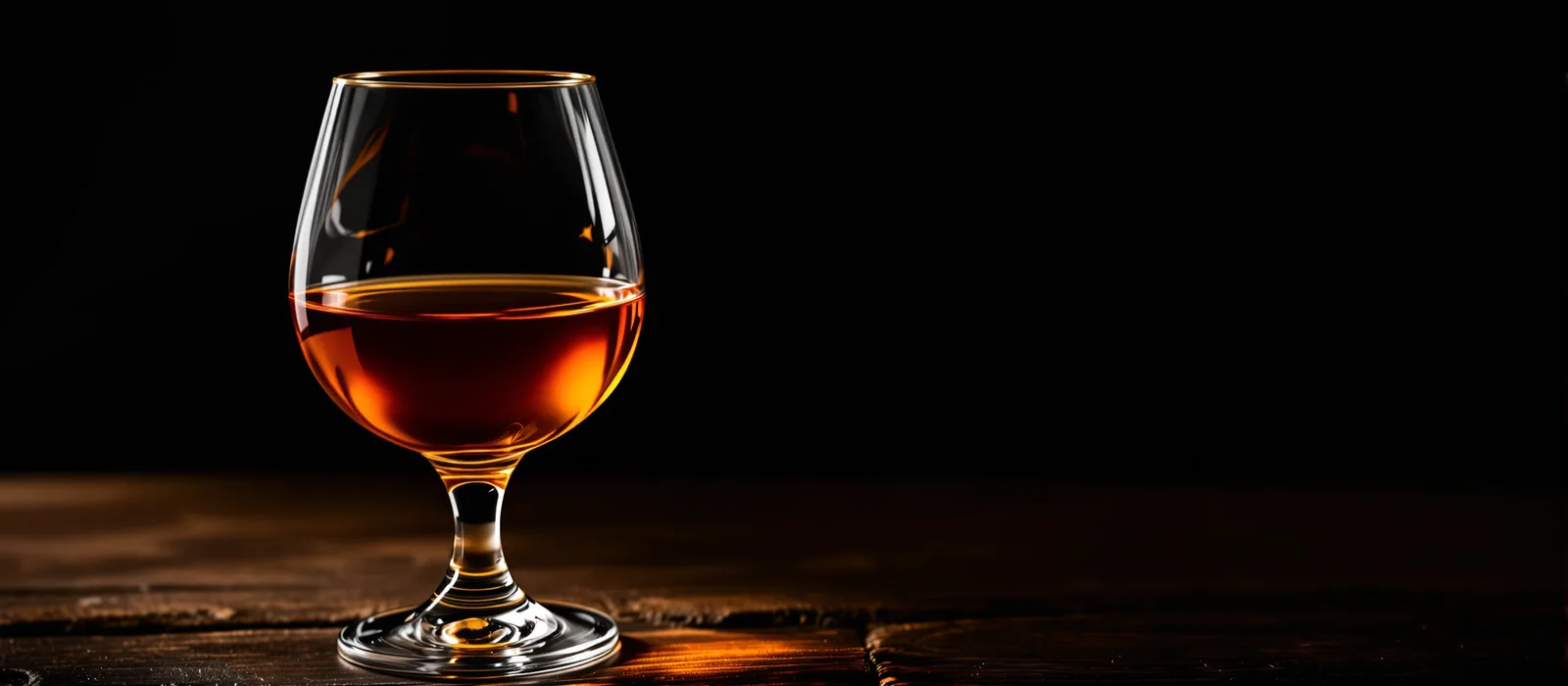
At 26 years of age, armagnac keeps its brightness. Serve it at room temperature in a tulip glass, let it open up for a few minutes, then taste it in small sips. Depending on the house, you will find exotic fruit, baked apple, almond, vanilla, gingerbread, sometimes prune. The strongest versions can take a drop of water, which releases the aromas and softens the attack on the palate.
To store it, keep the bottle upright, away from light and heat. Once opened, it stays enjoyable for several months.
Frequently asked questions about 2000 armagnac
How much does a 2000 armagnac cost?
It varies according to the house, the strength and the size. Each product page on this page shows its price, from 70 cl to Gascon pot.
Where can I buy a 2000 armagnac online?
At Plaisirs de Gascogne, a wine and spirits merchant specialising in vintage armagnacs: secure payment, protective packaging, delivery in France and across Europe. A question about a bottle? Our team will answer you.
Which grape varieties are used for 2000 armagnac?
Baco and ugni blanc in Eauze and Castelnau d'Auzan, the four traditional grape varieties in Sorbets, and 100% folle blanche for the estate in Montréal-du-Gers.
How good is the 2000 vintage?
A good vintage, fruity and expressive. Several of our bottles have won medals, including those from Château de Millet, Dartigalongue and Pellehaut.
Also discover our vintage armagnacs and the 2006 armagnac, ideal for a 20th birthday.
Please enjoy responsibly. Excessive alcohol consumption is harmful to health.



 Jean Cavé
113 bottles
Jean Cavé
113 bottles
 Armagnac Delord
92 bottles
Armagnac Delord
92 bottles
 Château de Millet
83 bottles
Château de Millet
83 bottles
 Dartigalongue
76 bottles
Dartigalongue
76 bottles
 Baron de Sigognac
69 bottles
Baron de Sigognac
69 bottles
 Armagnac Castarède
63 bottles
Armagnac Castarède
63 bottles
 Clés des Ducs
48 bottles
Clés des Ducs
48 bottles
 Château de Laubade
43 bottles
Château de Laubade
43 bottles
 Domaine de Pellehaut
28 bottles
Domaine de Pellehaut
28 bottles
 Château de Bordeneuve
17 bottles
Château de Bordeneuve
17 bottles
 Charles de Granville
13 bottles
Charles de Granville
13 bottles
 Roger Groult
7 bottles
Roger Groult
7 bottles