Why a 1930 vintage is unique
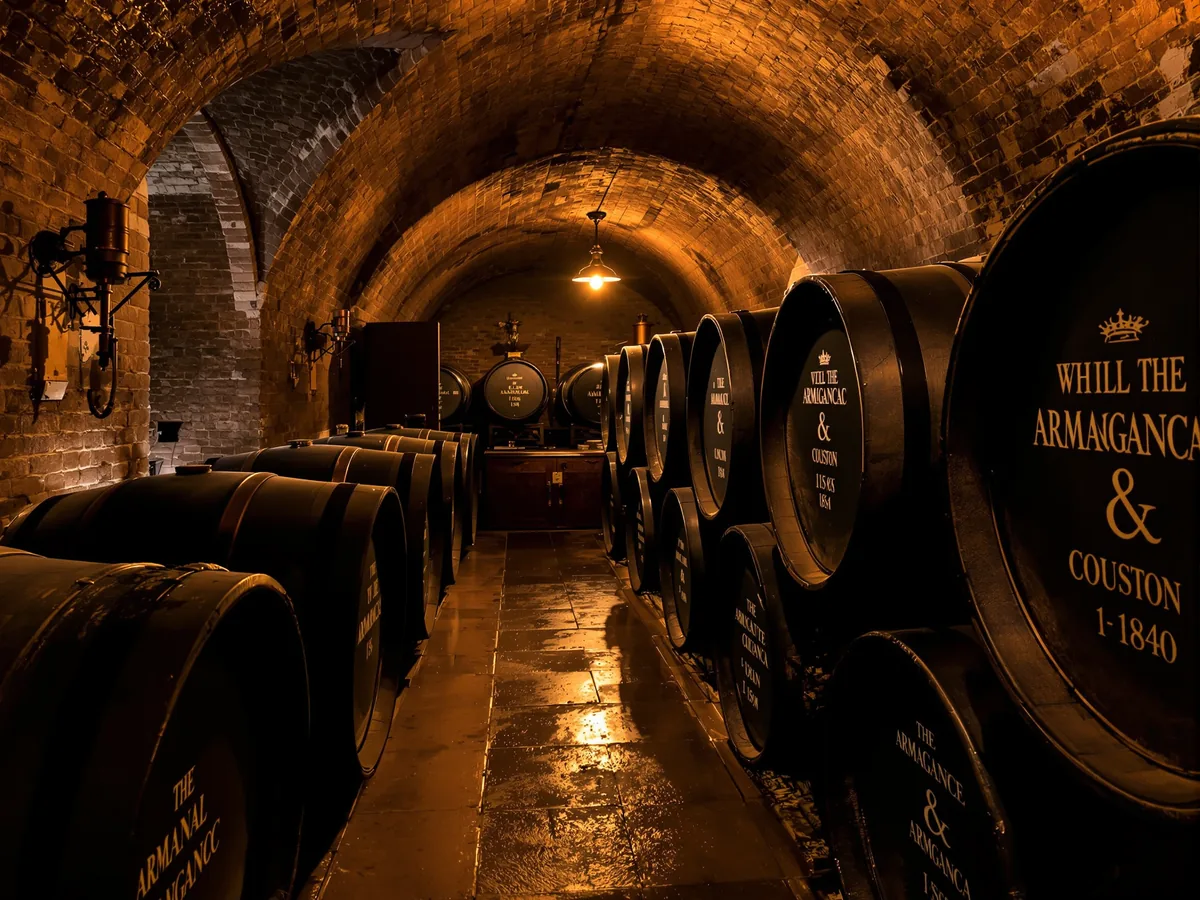
A vintage armagnac comes from a single harvest only. In a bottle of 1930, there is only the 1930 harvest, with no brandy from another year to smooth out its taste. It is the exact opposite of a VSOP, an XO or a hors d'âge, which blend several ages. A vintage is a photograph: that of one year, one vineyard and one cellar.
For a photograph from 1930 to reach us, Gascon families had to keep this lot for nearly a century. Every winter, a share of the volume evaporated through the staves. That is why these bottles are rare, and why each one counts.
1930, the first Football World Cup
From 13 to 30 July 1930, Uruguay hosted the very first Football World Cup, won by the host country against Argentina (source: Wikipedia, article "Coupe du monde de football 1930"). A few months earlier, in February, the American astronomer Clyde Tombaugh discovered Pluto (source: Wikipedia, article "Pluton (planète naine)"). In Gascony, winegrowers harvested in the autumn, and the wine went through the still during the winter. We found no producer source on the quality of the 1930 harvest, so we do not describe it.
Our two 1930 armagnacs
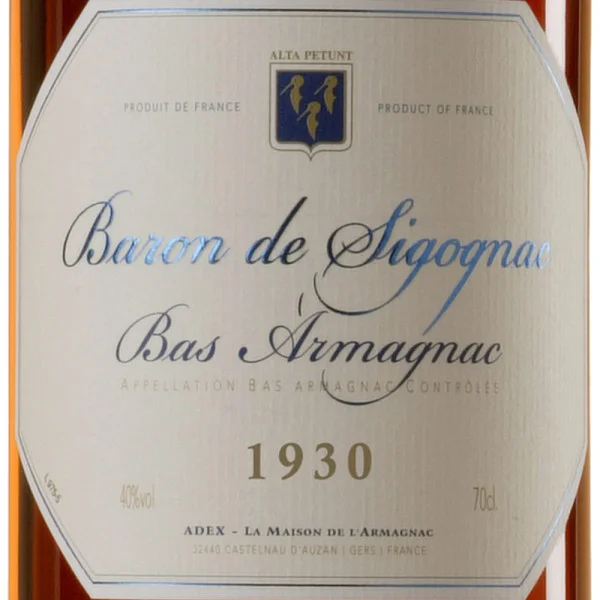
- Baron de Sigognac: a 1930 at 40% ABV, from ugni blanc and baco, kept at Château de Bordeneuve, in Castelnau d'Auzan, where each vintage ages separately. According to the house, the bottles are prepared to order, with the bottling date on the back. No tasting note is published for 1930;
- Jean Cavé: a 1930 Bas-Armagnac AOP, drawn from the house's collection of old vintages, in Lannepax. It has undergone no blending and was bottled brut de fût, without reduction; the exact strength is written on the label. The bottle is presented in a wooden box.
The Sigognac, at 40% ABV, is for those seeking smoothness; the Jean Cavé, for those who love the power of an unreduced armagnac. Discover also our brut de fût armagnacs from other years.
Jean Cavé and Château de Bordeneuve
Having set up in Lannepax in 1883 as a winegrower, distiller and cellar master, Jean Cavé founded a house now run by Henri Cavé, of the fourth generation. The family has gathered there a collection of old vintages among the most remarkable in the appellation, part of which rests in demijohns in the paradis of the cellar.
Château de Bordeneuve, for its part, has belonged to the Guasch family since 1974. On the tawny sands of Bas-Armagnac, the estate ages the Baron de Sigognac armagnacs in very small quantities and keeps years dating back to 1893. The house style is described as round and fruity, with notes of toasted dried fruit, coffee and dark chocolate that grow more pronounced over time.
Other estates and châteaux of the South West are present in our shop for younger years: Château de Laubade, Castarède, Delord, Dartigalongue, Château de Millet or Domaine de Pellehaut.
From grape to armagnac
The base wine is a dry white, made from ugni blanc, baco, folle blanche or colombard. It is distilled just once, continuously, in the armagnac still, whereas cognac goes through the still twice. The brandy then ages in oak casks: colour, tannins and aromas come to it from the wood, and the alcohol slowly falls. In the bottle, armagnac no longer evolves. The appellation has three terroirs, Bas-Armagnac, Ténarèze and Haut-Armagnac; our two 1930s come from the first.
Single cask, folle blanche: two terms worth knowing
Two terms come up often when looking for an old vintage. The first, single cask, comes from whisky: it refers to a bottle drawn from a single cask, with no mixing with another barrel, and therefore a tiny series. Not all vintages are single casks, since a house may bring together several casks from the same year. Neither Baron de Sigognac nor Jean Cavé claims this mention for their 1930, so we do not use it.
The second, folle blanche, is a historic grape variety of the Gascon terroir, sought after for the floral finesse of its brandies, which became rare after phylloxera. Our Sigognac 1930 is made from ugni blanc and baco, and the Jean Cavé product page does not specify a grape variety. Lovers of folle blanche will find younger vintages in our shop, for example at Domaine de Pellehaut; Château de Laubade, Château de Millet, Delord and Dartigalongue also offer their years there.
Tasting a 1930 armagnac
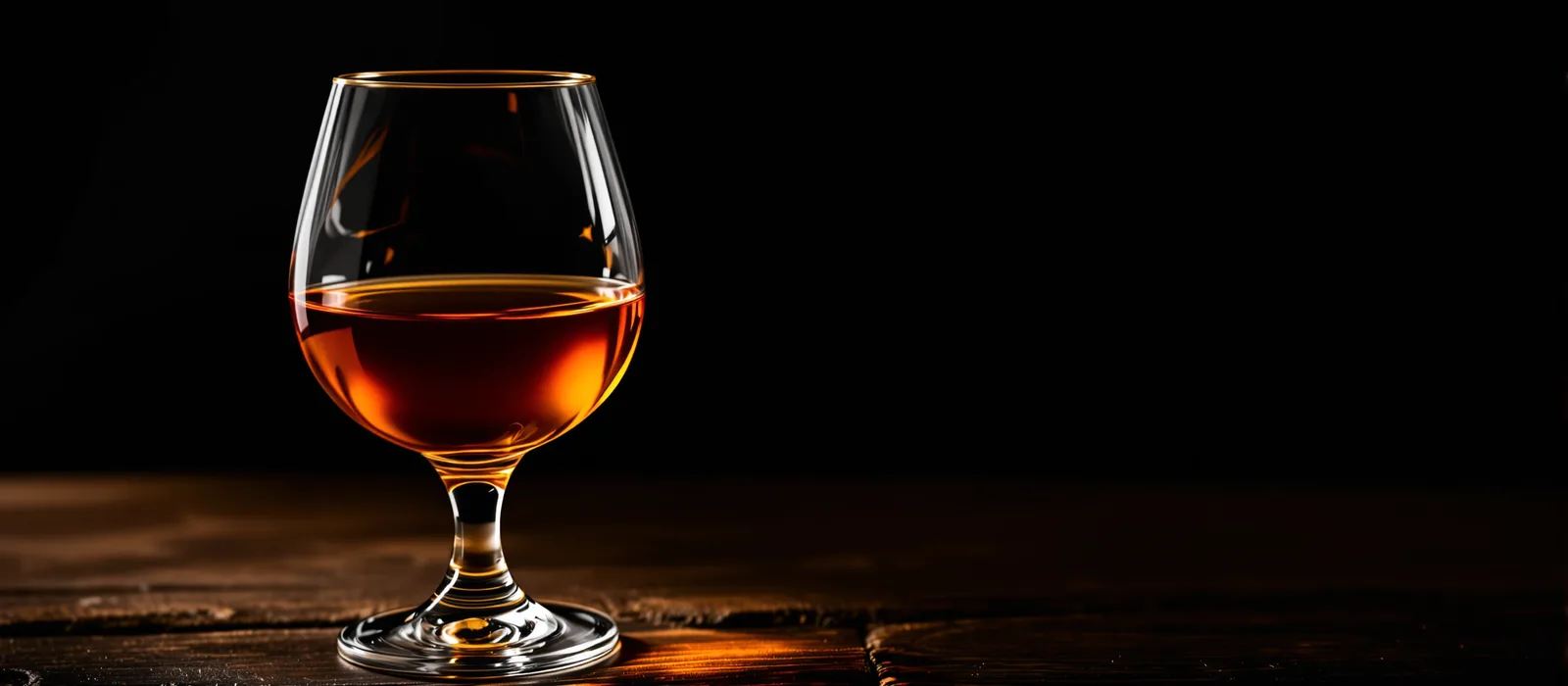
Serve it at room temperature, in a tulip glass or a small balloon glass, in a small measure. Let it breathe for ten minutes or so, then taste in small sips. Armagnacs nearly a century old often suggest prune, dried fruit, walnut, cocoa or sweet spices, sometimes with a note of rancio. On the nose and then on the palate, each bottle remains a surprise, and a true sensory experience for anyone who loves very long-aged armagnacs. Keep the bottle upright, somewhere cool and away from light; once opened, it will last several months.
Giving a 1930 armagnac
A 1930 can mark the 96th birthday of someone born that year, the anniversary of a family business or a club founded the same year, or make a gift for a football enthusiast. For a collection, it sits between our 1929 armagnac and our 1931 armagnac.
Frequently asked questions about 1930 armagnac
What is the price of a 1930 armagnac?
It varies with the house and the bottling. The price is shown on each product page, along with the bottle size and strength.
Where can I buy a 1930 armagnac?
At Plaisirs de Gascogne, an online merchant specialising in armagnac: add to basket, secure payment, careful delivery in France and across Europe, and a customer service team ready to listen.
Which producers offer a 1930 armagnac?
In our selection, Baron de Sigognac and Jean Cavé, in Bas-Armagnac.
What are the characteristics of the 1930 armagnac?
Two 70 cl bottles from a single harvest: a Sigognac at 40% ABV, from ugni blanc and baco, and a Jean Cavé brut de fût, unblended.
How do I order a 1930 armagnac?
Add the bottle to your basket from its product page, then pay securely. Shipping is available in France and the rest of Europe, with packaging suited to rare pieces; our general terms and conditions of sale set out the lead times, and our customer service team remains available for any question.
Do I need to be of legal age to buy?
Yes. The French Public Health Code prohibits the sale of alcoholic beverages to minors, and proof of age may be required from the buyer.
See all our vintage armagnacs, year by year.
Please enjoy responsibly. Excessive alcohol consumption is harmful to health.



 Jean Cavé
113 bottles
 Armagnac Delord
92 bottles
 Château de Millet
83 bottles
 Dartigalongue
76 bottles
 Baron de Sigognac
69 bottles
 Armagnac Castarède
63 bottles
 Clés des Ducs
48 bottles
 Château de Laubade
43 bottles
 Domaine de Pellehaut
28 bottles
 Château de Bordeneuve
17 bottles
 Charles de Granville
13 bottles
 Roger Groult
7 bottles