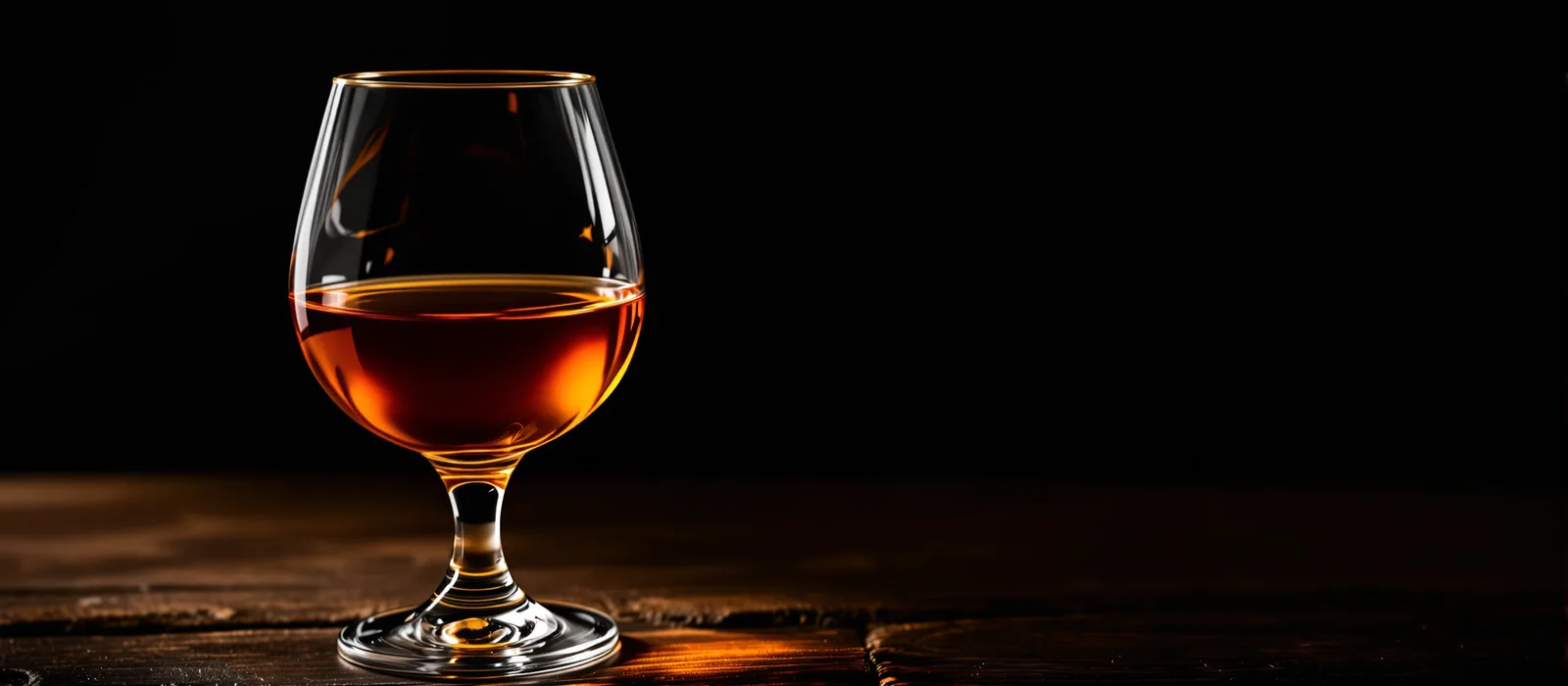
The cognac appellation, from the Charentes to the whole world
Cognac is a wine brandy protected by an appellation d'origine contrôlée. Its production area has been delimited since a decree of 1 May 1909, and the Cognac AOC was recognised in 1936, among the very first French appellations. The vineyard covers almost the entire Charente-Maritime department, a large part of the Charente and a few communes in the Deux-Sèvres and the Dordogne, in south-western France. According to the Bureau national interprofessionnel du cognac (BNIC), which has brought together growers, distillers and merchants since 1946, more than 97% of production is exported.
The name comes from the town of Cognac: in the early 19th century, the brandies took the name of this river port, the main shipping point on the Charente river. As early as the 17th century, Dutch merchants had the region's wines distilled so that they could be transported more easily to northern Europe.
Six cognac crus, from Grande Champagne to Bois ordinaires
Since 1938, the Cognac region has been divided into six crus, according to the nature of the soils. The name of the cru may appear on the label provided that 100% of the brandies in the blend come from it:
- Grande Champagne: limestone soils, at the heart of the appellation; the word "champagne" here refers to these chalky lands and has nothing to do with Champagne wine;
- Petite Champagne: also limestone, with thinner layers;
- Borderies: a modest-sized cru, of around 4,000 hectares;
- Fins Bois: the largest, partly on marl and clay;
- Bons Bois and Bois ordinaires, the latter also known as Bois à terroirs.
The Fine Champagne statement refers to a blend of brandies from Grande and Petite Champagne only, with at least 50% Grande Champagne.
How is cognac made?
It all starts with a white wine, made mainly from the ugni blanc grape, along with folle blanche and colombard. Harvested from mid-September to mid-October, this wine from the Charente vineyards is around 9% ABV; it is acidic and not very pleasant to drink, but ideal for distillation. Adding sugar is forbidden.
Cognac production then goes through double distillation in a copper Charentais still. The first heating produces the brouillis, at around 30% ABV; the second, known as the bonne chauffe, separates the heads and tails to keep only the heart, a clear brandy of around 70% ABV. Distillation must be completed by 31 March following the harvest at the latest.
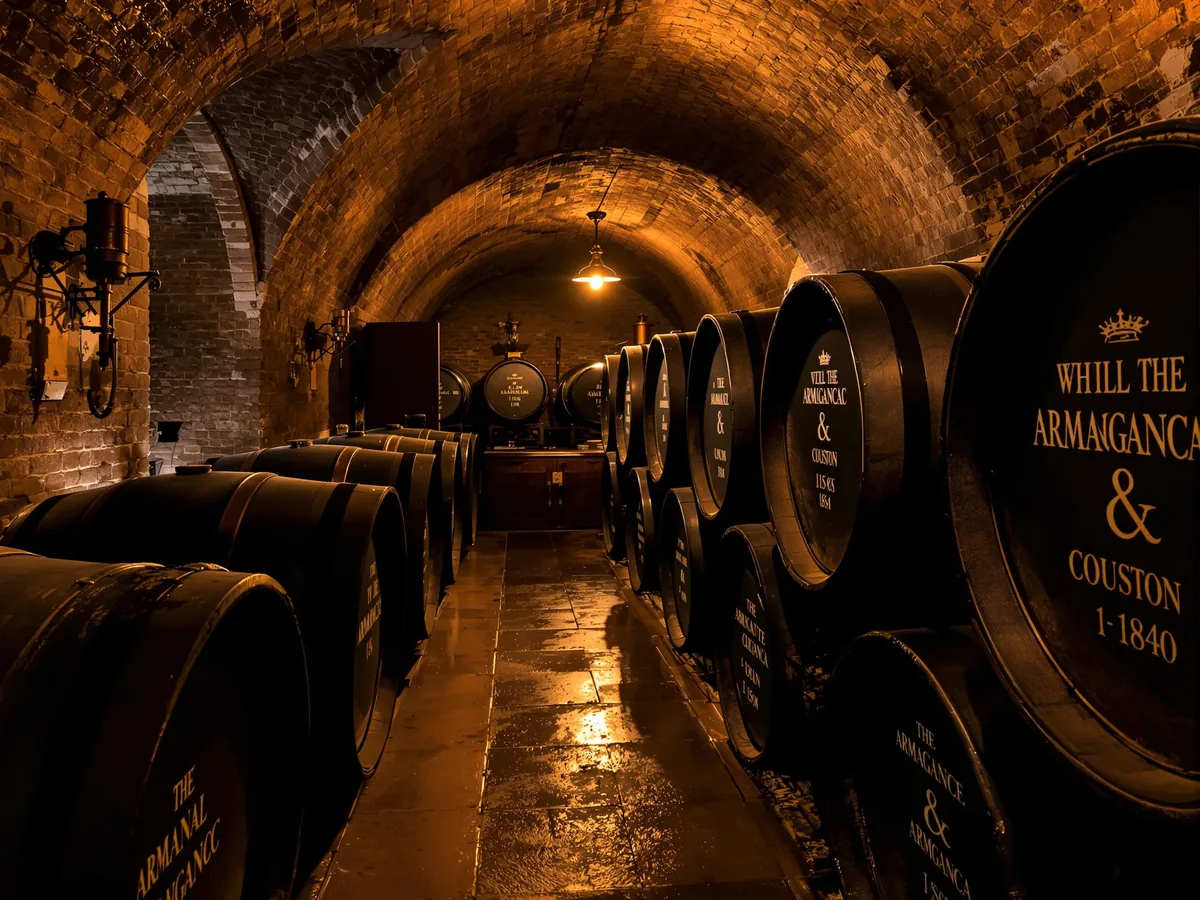
Then comes ageing, for at least two years and without interruption in oak casks, often made from Limousin or Tronçais wood. The cellar master then composes blends of brandies of different ages and crus, and gently reduces them to the desired strength: at least 40% ABV at bottling. Once in glass, cognac no longer ages.
Cognac VS, VSOP, XO: reading the age on the label
As with armagnac, the statement indicates the age of the youngest brandy in the blend, according to the BNIC:
- Cognac VS (Very Special) or three stars: at least 2 years;
- Cognac VSOP (Very Superior Old Pale) or Réserve: at least 4 years;
- Napoléon or Très Vieille Réserve: at least 6 years;
- Cognac XO (Extra Old), Hors d'âge or Extra: at least 10 years since 2018;
- XXO: at least 14 years.
A vintage, for its part, indicates the harvest year of a single brandy. It remains rare in cognac, far more so than in armagnac.
Our Gaston de Casteljac cognacs
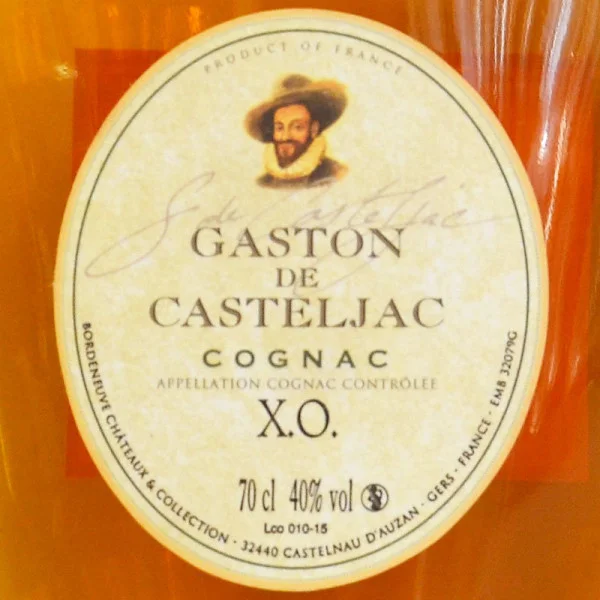
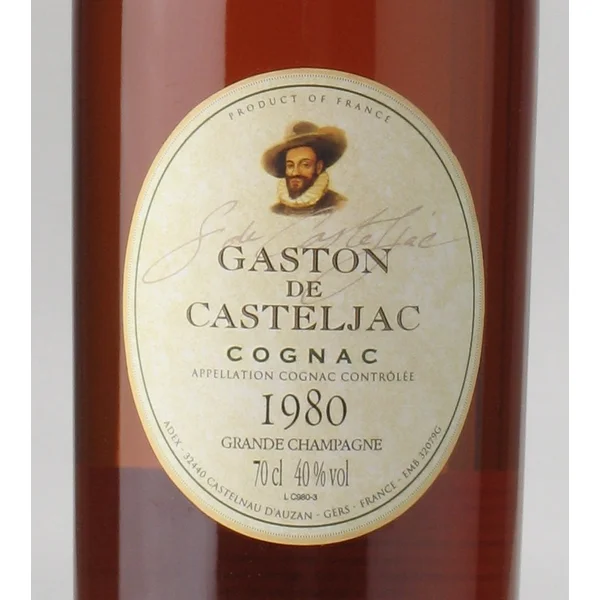
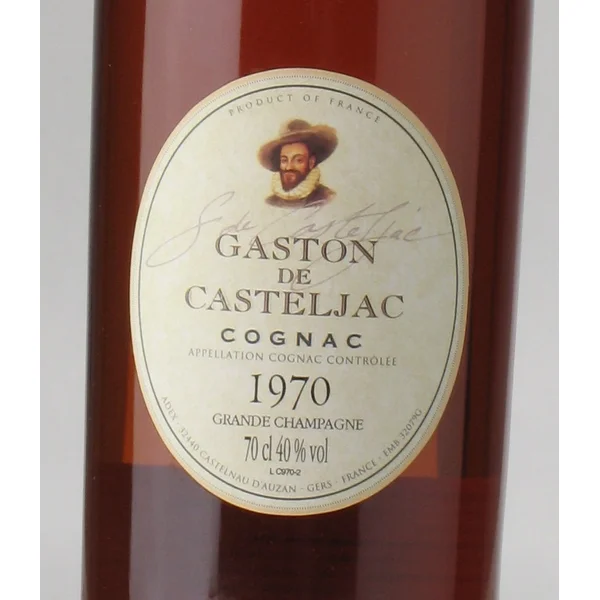
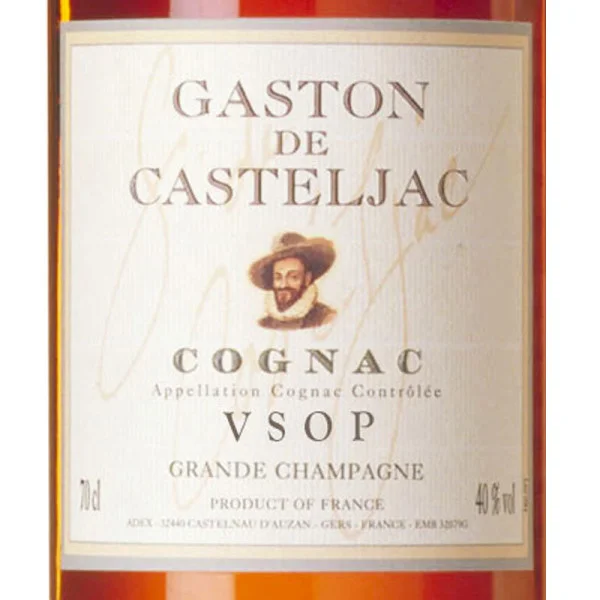
Alongside our Gascon brandies, we have chosen a single cognac brand, Gaston de Casteljac, for its range of Grande Champagne cognac distilled slowly and without filtration. It is produced by the family house that also makes Baron de Sigognac armagnac. All the bottles are 70 cl at 40% ABV:
- VSOP, in a gift case: golden yellow colour, fresh nose of ginger and cinnamon, with a touch of raisins;
- XO, in a decanter and pine wood case: powerful nose of cinnamon then prune, rich and round palate, clove and red fruit;
- 1970 vintage: candied fruit, Corinth raisins, a structured palate and a spicy finish;
- 1976 vintage: made from ugni blanc, exotic fruit and spices, a supple and mellow palate;
- 1980 vintage: cinnamon and dried fruit, a fine palate, a smooth finish;
- 1990 vintage: prune, vanilla and a smoky note, then honey, baked apple and orange zest.
Cognac or armagnac: the real differences
These are two great white wine brandies from the south west, aged in oak casks, but they are made differently:
- The region: the Charentes for cognac, Gascony (Gers, Landes, Lot-et-Garonne) for armagnac;
- Distillation: double distillation is compulsory for cognac; for armagnac, most often a single continuous distillation in the armagnac still, which produces a brandy of between 52 and 62% ABV, richer in aromas;
- Grape varieties: ugni blanc dominates on both sides, and armagnac adds baco;
- Minimum age: 2 years for a VS cognac, 1 year for a VS armagnac; the 10 year threshold is the same for both XOs, to compare with our XO armagnacs;
- Style: cognac is often described as finer and more floral, armagnac as rounder and more marked by fruit and wood.
Choosing, tasting and giving a cognac
For a first discovery, a VSOP can be enjoyed neat, on ice or in a cocktail; it also has its place at the bar, in classics such as the Sazerac, born in New Orleans with cognac. When tasting an XO or a vintage, serve it at room temperature in a tulip glass, let it breathe for a few minutes, then look at the colour, smell the nose and hold it in your mouth in small sips. As for food and cognac pairings, the BNIC suggests a young cognac with chocolate or seafood, and an older cognac with cheese.
As a gift, the XO in its decanter makes a beautiful bottle to give. For a birth year or wedding year, a 1970, 1976, 1980 or 1990 vintage has a real story to tell; if the year you need is missing, our vintage armagnacs cover many other dates.
Frequently asked questions
What is cognac?
Cognac is a white wine brandy produced under AOC in the Charentes, distilled twice in a Charentais still and aged for at least two years in oak casks.
What is the difference between VS, VSOP and XO cognac?
The minimum age of the youngest brandy: 2 years for VS, 4 years for VSOP, 10 years for XO.
What does Grande Champagne mean on a bottle of cognac?
That all the brandies come from this cru, with its limestone soils, at the heart of the Cognac region. This is the case for all our Gaston de Casteljac cognacs.
What are the major cognac brands?
The best known are the large merchant houses such as Hennessy, Martell, Rémy Martin or Courvoisier. Alongside them, more confidential brands such as Gaston de Casteljac offer single-cru cognacs and vintages.
Where can I buy cognac online?
Right here on this page: choose your bottle, add it to your basket and pay securely. We ship across France and Europe, in packaging designed for spirits. Also fond of fruit brandies? Discover our calvados.
Please enjoy responsibly. Excessive alcohol consumption is harmful to health.



 Jean Cavé
95 bottles
Jean Cavé
95 bottles
 Armagnac Delord
92 bottles
Armagnac Delord
92 bottles
 Château de Millet
79 bottles
Château de Millet
79 bottles
 Dartigalongue
75 bottles
Dartigalongue
75 bottles
 Baron de Sigognac
69 bottles
Baron de Sigognac
69 bottles
 Armagnac Castarède
59 bottles
Armagnac Castarède
59 bottles
 Clés des Ducs
48 bottles
Clés des Ducs
48 bottles
 Château de Laubade
31 bottles
Château de Laubade
31 bottles
 Château de Bordeneuve
17 bottles
Château de Bordeneuve
17 bottles
 Domaine de Pellehaut
17 bottles
Domaine de Pellehaut
17 bottles
 Charles de Granville
13 bottles
Charles de Granville
13 bottles
 Roger Groult
7 bottles
Roger Groult
7 bottles