A vintage from a single year
On the label of a vintage armagnac, the year is not a wink: it is the year of the harvest, and that year only. Every bottle on this page therefore contains brandies from the 1983 harvest, made from a white wine distilled the following winter in the armagnac still, then kept in the cellar until bottling. Nothing from another year has been added, unlike an XO or a hors d'âge, which are built by blending.
At more than forty years old, a 1983 armagnac has reached a pivotal age: the fruit of youth is still there, but the wood has melted in and the first notes of maturity are appearing. It is an age that many connoisseurs find particularly elegant, and an old spirit that is already very expressive.
Our 1983 armagnacs, house by house
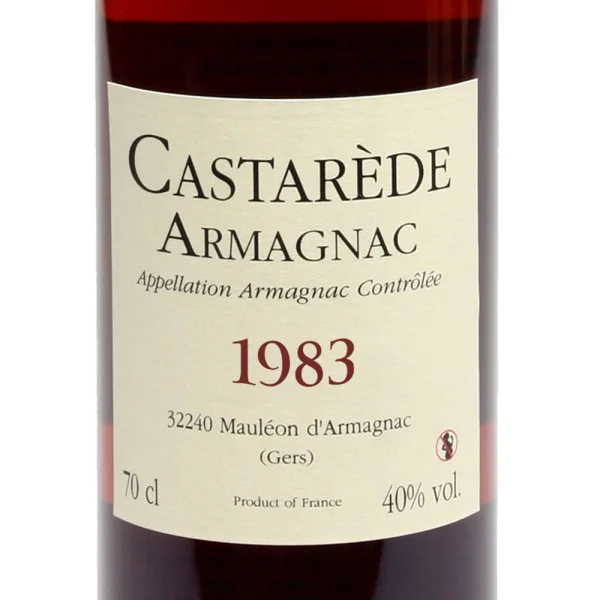
- Armagnac Castarède, a family house founded in 1832: its 1983 spent 37 years in wood before being bottled in 2020, at 40%. A pale gold colour, candied fruit and vanilla, a gentle, round attack.
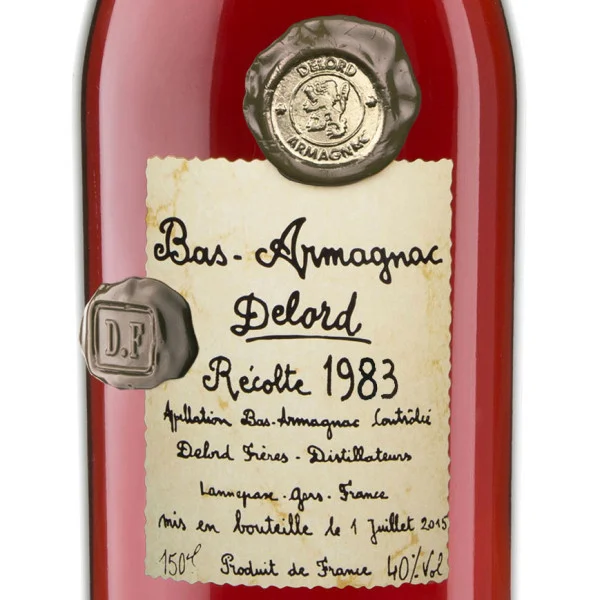
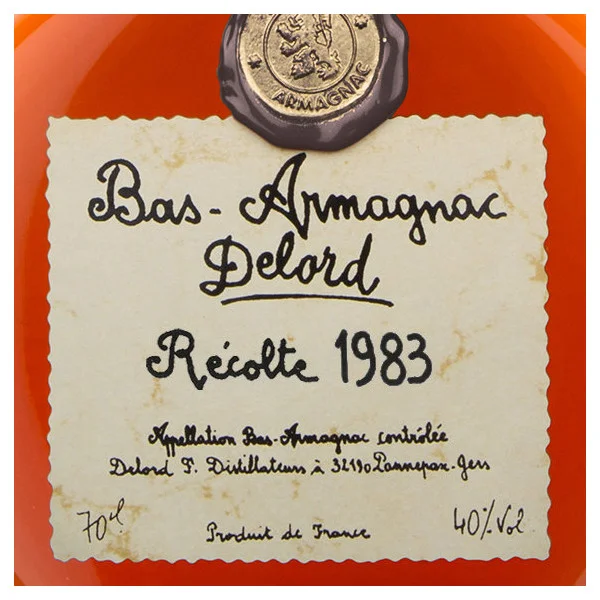
- Armagnac Delord, in Lannepax in the Gers: a 1983 vintage at 40%, in 70 cl or 150 cl magnum. The elegant nose plays on dried flowers, tobacco and nutmeg; the palate is rich and spicy, with a touch of verbena.
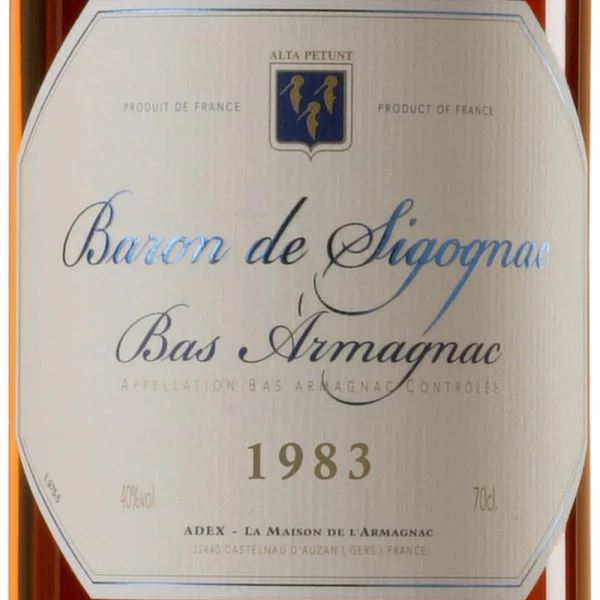
- Baron de Sigognac: a Bas-Armagnac aged at Château de Bordeneuve, in Castelnau d'Auzan, from the ugni blanc and baco grape varieties, at 40%. A lovely amber colour, raisins, great roundness, a long and smooth finish, lightly oaked.
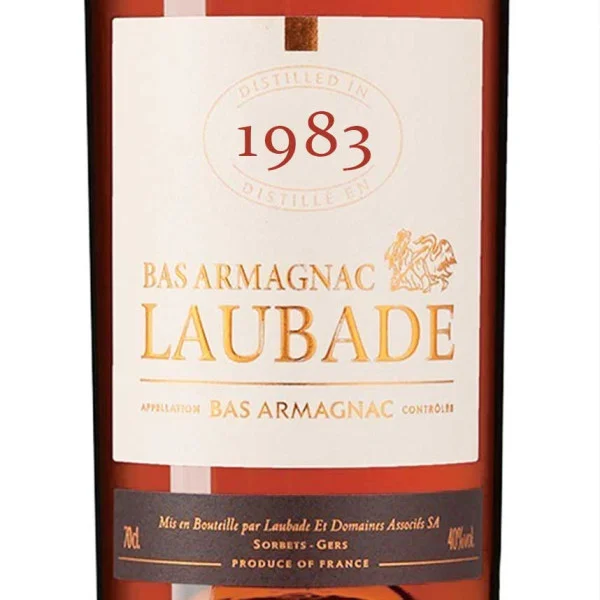
- Château de Laubade, in Sorbets, in the heart of Bas-Armagnac: 100% 1983 harvest, aged in 420 litre casks of Gascon pedunculate oak, from baco, ugni blanc, folle blanche and colombard. A fine and elegant vintage, with sweet spices, vanilla and a hint of gingerbread.
- Dartigalongue, a family house in Nogaro since 1838: an estate armagnac at 42%, showing sandalwood, spices and prunes, with a fairly dry attack with cocoa notes and a delicate, indulgent finish.
- Domaine de Pellehaut, in the Armagnac Ténarèze appellation: a 1983 bottled at 47% without reduction, 100% ugni blanc, aged in 400 litre casks. The palate is a little lively but full of power, with very ripe black plum and fine aromatic persistence.
- Jean Cavé, a distiller and ageing house in Lannepax since 1883: a 1983 Bas-Armagnac bottled at its natural strength, 44.4%, drawn from a collection of old vintages among the richest in the appellation.
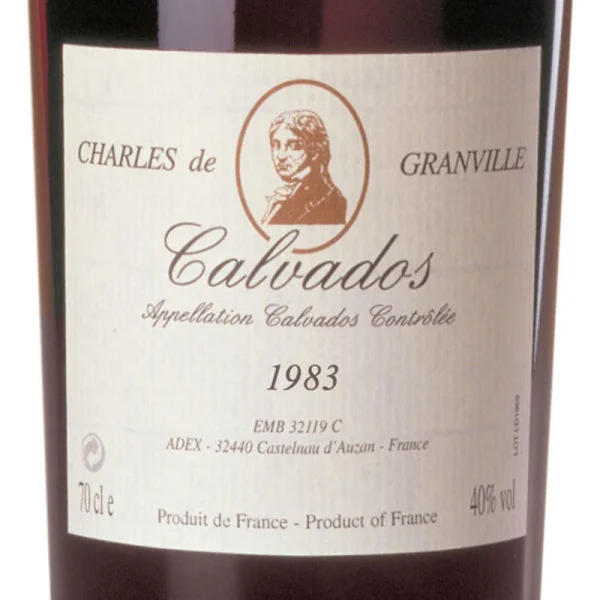
For those who prefer apples to grapes, this page also offers a 1983 calvados from Charles de Granville.
Reduced or brut de fût: how to choose
Most houses bring their vintage down to 40 or 42% through slow reduction with water, for a rounder, more approachable armagnac. Others, such as Pellehaut and Jean Cavé for this vintage, leave it at its natural strength: that is the principle of brut de fût armagnac (cask strength, not reduced), more intense and to be tasted in very small sips.
Another criterion: terroir. The appellation covers three areas of the South West: Bas-Armagnac, Ténarèze and Haut-Armagnac. Castarède, Delord, Baron de Sigognac, Laubade, Dartigalongue and Jean Cavé produce Bas-Armagnacs, often round; Pellehaut comes from Ténarèze, with its clay and limestone soils, which gives more structured brandies. The grape variety plays a part too: ugni blanc brings finesse, baco roundness, folle blanche a floral note. Finally, size matters: the Delord magnum suits a large gathering, the 70 cl bottle a personal gift.
Giving a 1983 armagnac
In 2026, people born in 1983 celebrate their 43rd birthday, and couples married that year their 43rd wedding anniversary, known in France as the flannel anniversary. These are not round numbers, and that is precisely what makes the gift unexpected: a brandy from their year, which matured while they were growing up. For a birthday as for a retirement or a birth in the family, it is a present that easily finds its place in a collection. A 1983 vintage armagnac also keeps very well for later, until the 50th birthday or another occasion to celebrate.
Tasting: what you find in a 1983
From one house to another, the tasting notes vary, but a few landmarks recur: candied fruit, prunes, sweet spices, blond tobacco, sometimes a floral or cocoa touch. The palate is generally round, with mellow oak, and the finish remains long.
No ice: a tulip glass and room temperature are all it needs. Let it breathe for a few minutes: the alcohol fades and the aromatic range opens up. A small amount is enough, held in the mouth for a moment: the experience lies in taking it slowly. As a pairing, a square of dark chocolate, a dessert with dried fruit or a cigar suit it very well.
An unopened bottle keeps upright, away from light and heat: armagnac no longer ages in glass. Once opened, it keeps for several months without losing its qualities.
Frequently asked questions about 1983 armagnac
How much does a 1983 armagnac cost?
It varies according to the house, the strength, the size and the bottling method. Each product page on this page shows its price and the useful information.
Where can I find a 1983 armagnac?
Right here, at Plaisirs de Gascogne, an online wine and spirits merchant specialising in vintage armagnacs, working directly with the Gascon houses. To buy with confidence: secure payment, careful shipping in France and across Europe, and a customer service team that answers your questions.
What are the characteristics of a 1983 armagnac?
A brandy from a single harvest, aged for more than four decades: an amber to golden colour, aromas of candied fruit and spices, a round palate and a lingering finish. The exact style depends on each estate.
What are the aromas of 1983 armagnac?
Raisins at Baron de Sigognac, candied fruit and vanilla at Castarède, dried flowers and tobacco at Delord, spices and gingerbread at Laubade, sandalwood and cocoa at Dartigalongue, black plum at Pellehaut.
What do people think of these vintages?
Each product page includes the producer's description and, where available, our customers' reviews after tasting.
Also discover our vintage armagnacs, year after year, or a neighbouring vintage such as the 1985 armagnac.
Please enjoy responsibly. Excessive alcohol consumption is harmful to health.



 Jean Cavé
113 bottles
 Armagnac Delord
92 bottles
 Château de Millet
83 bottles
 Dartigalongue
76 bottles
 Baron de Sigognac
69 bottles
 Armagnac Castarède
63 bottles
 Clés des Ducs
48 bottles
 Château de Laubade
42 bottles
 Domaine de Pellehaut
28 bottles
 Château de Bordeneuve
17 bottles
 Charles de Granville
13 bottles
 Domaine de Danis
7 bottles