Giving the year 1967: 59 in 2026, 60 in 2027
In 2026, people born in 1967 celebrate their 59th birthday; next year it will be their 60th, and for couples married in 1967, their diamond wedding anniversary. A 1967 armagnac has a special meaning for these celebrations: it was harvested, distilled and put into cask in the very year of the birth or the wedding, then matured for decades in a Gascon cellar. It is an exceptional birthday gift, to open on the day of the celebration or to keep in a collection for another great occasion.
The 150 cl magnum is ideal for large gatherings; the 70 cl bottle, delivered in a gift case or gift box depending on the house, remains the most popular choice for a personal gift.
1967, a year of tension on the eve of May 68
Around the world, 1967 was marked by the Vietnam War and the Cultural Revolution in China, while in France society was preparing, without knowing it, for the events of May 1968. In the South West, the winegrowers of Bas-Armagnac harvested as they did every autumn, and it is the brandies from that harvest, kept in cask by a few houses, that you will find on this page.
The houses behind our 1967 armagnacs
Each producer offers its own interpretation of the 1967 vintage. The same harvest, but not the same estate, nor the same grape varieties, nor the same ageing: two 1967 armagnacs are never quite alike.
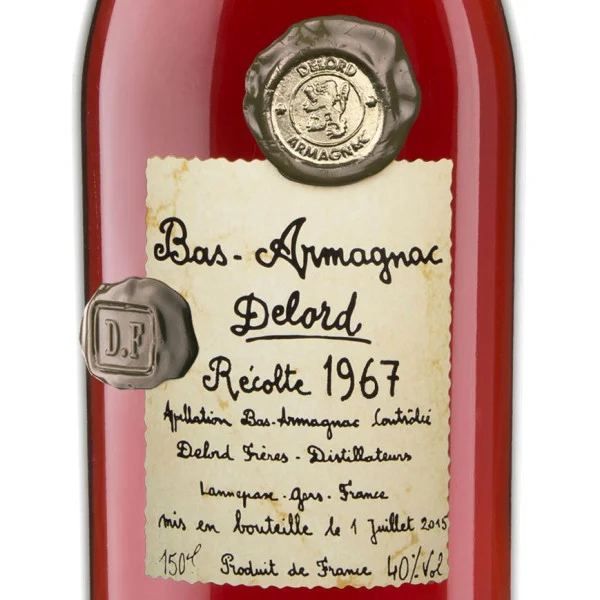
- Armagnac Delord, a family house founded in 1893 in Lannepax, in Bas-Armagnac: its 1967 is available in a 150 cl magnum, at 40% ABV, with a rich nose of ripe fruit, dried flowers and vanilla, and a frank palate marked by rancio and spices;
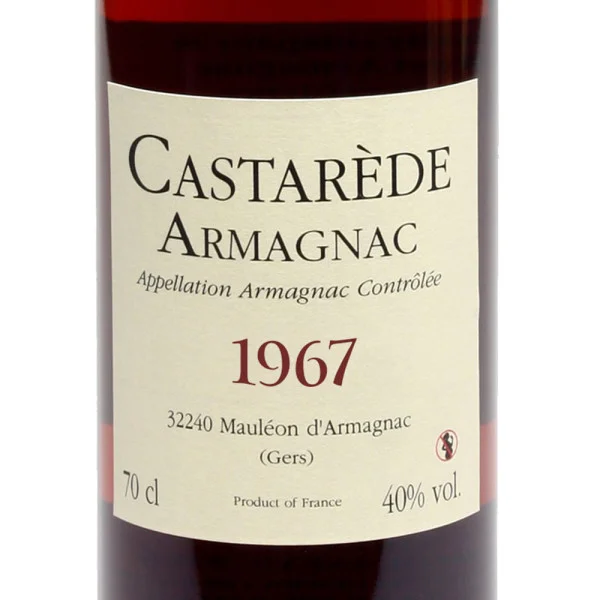
- Armagnac Castarède, a house established since 1832: a 1967 at 40% ABV, which spent 53 years in oak casks before being bottled in 2020, with a powerful, oaky nose and a harmonious palate of prune, and a long finish;
- Dartigalongue, based in Nogaro since 1838: a 1967 at 42% ABV, with spices, old casks and caramelised apple, lively on the palate, with a note of liquorice and a fruity finish;
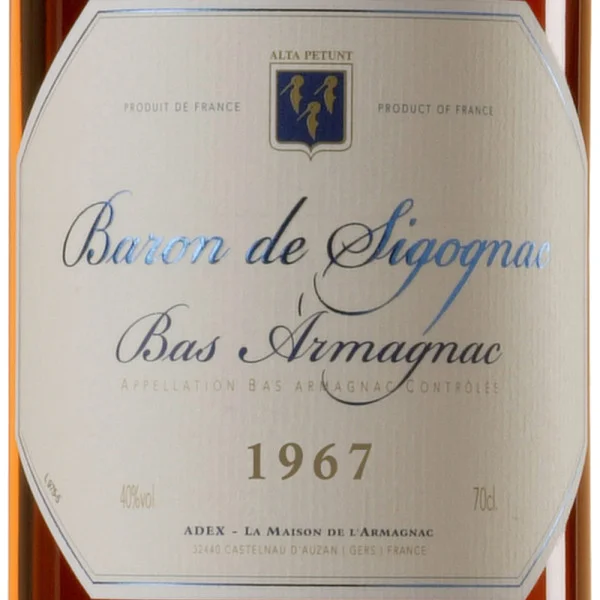
- Baron de Sigognac, aged at Château de Bordeneuve, in Bas-Armagnac, from ugni and baco: a 1967 at 40% ABV, full of freshness, fine and elegant, with a long spicy finish;
- Clés des Ducs, a house born in Panjas: a 1967 at 40% ABV, never blended, selected cask by cask for a rich, smooth brandy with discreet oak;
- Jean Cavé, a distiller and ageing house in Lannepax since 1883: its 1967 is a brut de fût (cask strength, not reduced), bottled without any added water, at 40% ABV.
From the 1967 vines to today's glass
The story of this vintage begins in the autumn of 1967, with the harvest of the appellation's grape varieties. The resulting wine, light and acidic, is not meant for drinking: it is distilled over the winter in the armagnac still, following a tradition several centuries old in the South West.
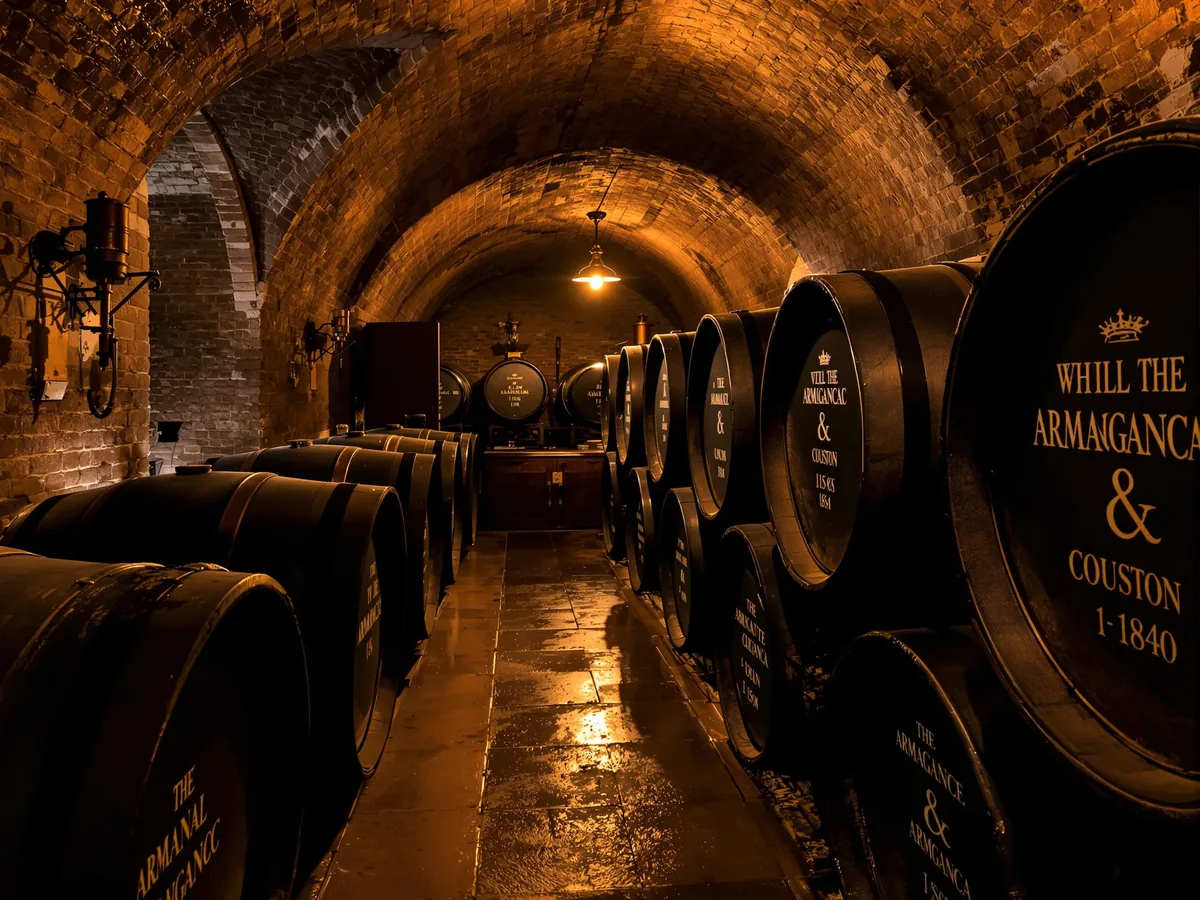
The still colourless spirit then sets off on a long ageing in oak casks. Over time, the wood gives it its amber hue, its tannins and its aromas, while a small part of the alcohol evaporates. When the cellar master judges it ready, it is bottled, and nothing changes any more: an armagnac only evolves in the cask, never in the bottle. The bottling date, when it appears on the label, therefore indicates the real length of ageing.
Unlike an XO or a hors d'âge, which blend brandies of several ages, a vintage uses only the harvest of one single year. That is what allows you to give precisely 1967.
Aromas and tasting of 1967 armagnac
The tasting notes of our 1967s speak of prune, ripe fruit, dried fruit, vanilla, caramelised apple, sweet spices, liquorice and rancio, that very particular note of very old brandies. The palate is broad and the finish lingering. An armagnac reduced to 40% ABV is softer; a 42% ABV keeps a little more tension.
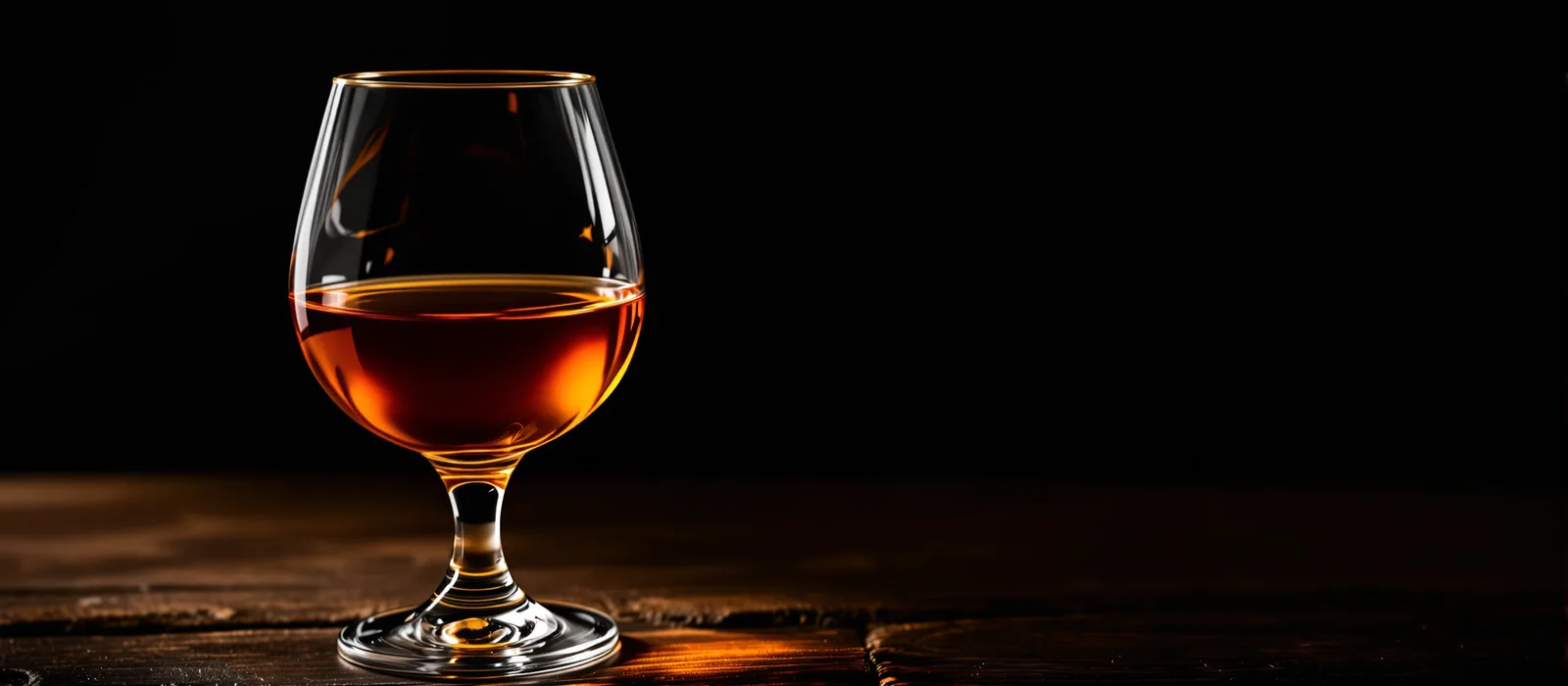
Serve it in a tulip glass, at room temperature, without ice. Look at its colour, smell it from a distance before bringing your nose closer, then take a small sip and hold it in your mouth for a few seconds: its aromatic range reveals itself little by little.
Once opened, store the bottle upright, away from light and sources of heat: stored this way, armagnac keeps for several months.
Frequently asked questions about 1967 armagnac
Who are the producers of 1967 armagnac?
Our selection brings together the 1967 vintages of Delord, Castarède, Dartigalongue, Baron de Sigognac, Clés des Ducs and Jean Cavé. Each product page details the estate, the strength and the presentation.
Which grape varieties are used for 1967 armagnac?
The grape varieties of the appellation: ugni blanc, baco blanc, folle blanche and colombard, in proportions specific to each house and each wine. Baron de Sigognac's 1967, for example, combines ugni and baco.
How much does a 1967 armagnac cost?
The price varies according to the château or house, the bottle size and the type of bottling, reduced or brut de fût. Compare the bottles on this page according to your budget and the style you are looking for.
Where can I buy a 1967 vintage armagnac?
Right here, in the Plaisirs de Gascogne online shop, a vintage armagnac specialist: your order is prepared with care, payment is secure and delivery is made in protective packaging, in France and across Europe.
Is a 1967 armagnac still good to drink?
Yes. Once in the bottle, armagnac no longer ages and does not deteriorate if properly stored. A 1967 tastes today just as it did on the day it was bottled.
Also explore our vintage armagnacs from every year, and the 1966 armagnac, for those celebrating their 60th birthday this year.
Please enjoy responsibly. Excessive alcohol consumption is harmful to health.