1968, a year that turned everything upside down
In France, 1968 remains the year of May, of the barricades in the Latin Quarter and of a society changing its face. In the United States, it was marked by the assassinations of Martin Luther King and Robert Kennedy. Meanwhile, in the South West, winegrowers harvested as they did every autumn, and the white wines from that harvest were to become, after distillation, the armagnacs of the future. The ones we offer spent more than half a century in the cellar before being bottled. In this region, growing vines and making wine for distillation is a tradition far older than 1968.
Four houses, four views of 1968
Each bottle on this page comes from a house, château or estate that kept its 1968 casks for decades. The same harvest, but not the same wine, nor the same terroir, nor the same ageing: that is what makes comparing one house with another so interesting.
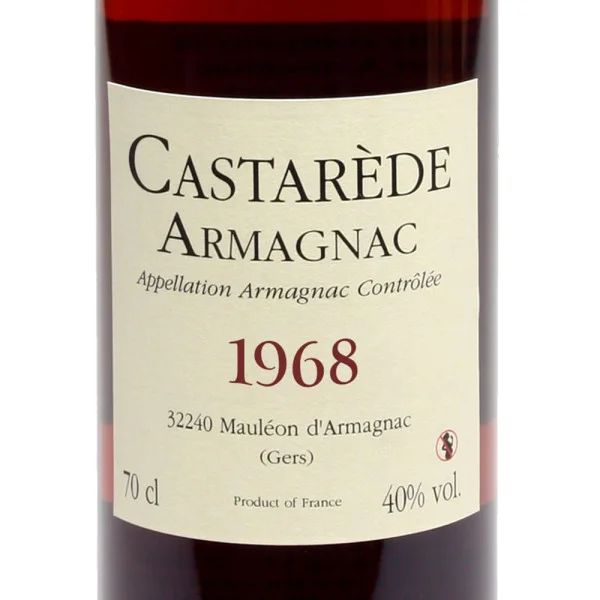
- Armagnac Castarède, one of the oldest merchant houses in the appellation, founded in 1832 and still family-owned. Its 1968 spent 52 years in oak casks before being bottled in 2020. A single year, with no blending, reduced to 40% ABV and presented in a gift case.
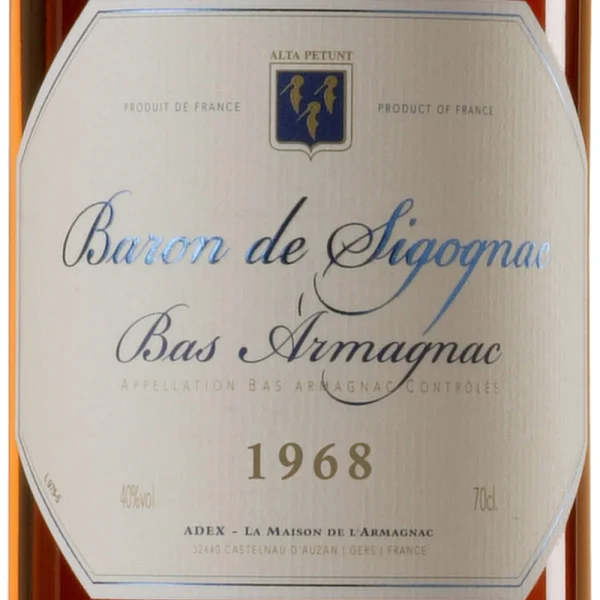
- Baron de Sigognac, aged at Château de Bordeneuve, in Castelnau d'Auzan, by the Guasch family: on this estate, each year ages separately, and Bordeneuve's oldest vintages go back to 1893. Ugni blanc and baco, 40% ABV. A lovely amber colour, a nose full of freshness, a fine and elegant palate, both fresh and powerful, with fruity notes and a long spicy finish.
- Clés des Ducs, a house whose story begins in 1774 in Panjas, in the Gers. Its 1968 belongs to its collection of unblended vintages: a rigorous selection of casks, deliberately light oak to preserve the fruit aromas, a long and smooth armagnac, at 40%.
- Jean Cavé, a distiller and ageing house in Lannepax since 1883 and the keeper of a remarkable collection of old vintages. Its 1968 Bas-Armagnac AOP is a brut de fût (cask strength, not reduced), bottled without reduction, just as it came out of the oak.
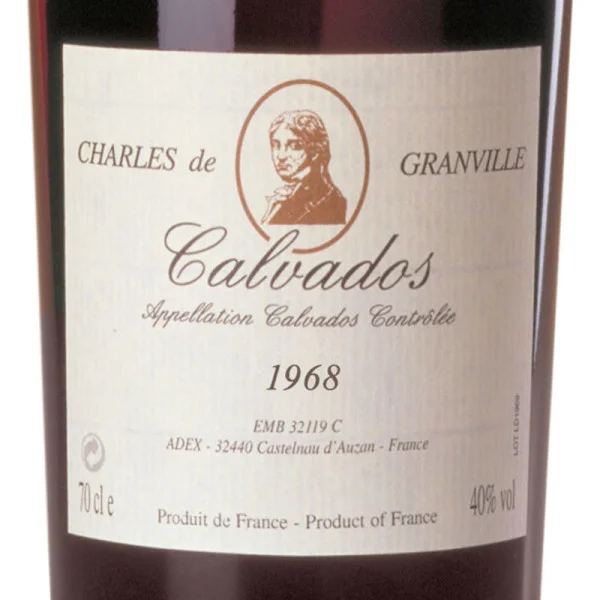
Prefer the brandies of Normandy? This page also features a 1968 calvados from Charles de Granville, with a nose of dried apricot, precious woods and vanilla-tinged prune.
Why a vintage rather than a hors d'âge
A hors d'âge or an XO combines brandies from several years to achieve a consistent style. A vintage does the opposite: it isolates one single harvest. A 1968 vintage armagnac therefore contains only grapes harvested in 1968: ugni, baco, folle blanche or colombard depending on the estate, from the tawny sands of Bas-Armagnac, the clay and limestone soils of Ténarèze or from Haut-Armagnac.
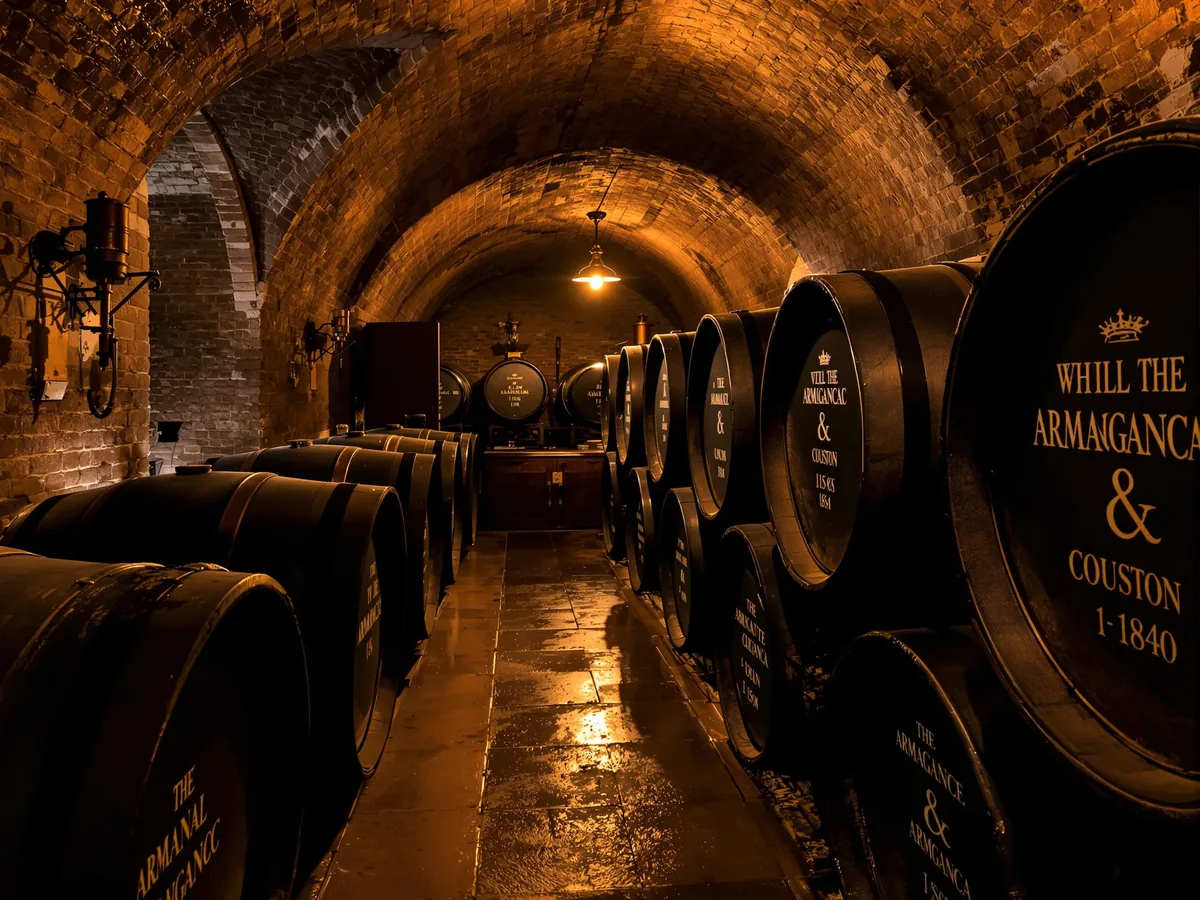
Distillation takes place in the armagnac still, continuously, during the winter following the harvest. Then comes the long ageing: the spirit breathes through the oak, loses part of its alcohol and gains its amber hue. Once in glass, it no longer changes. That is why the bottling date, such as the 2020 shown for the bottle from the house founded in 1832, tells you the real length of ageing and the maturity of the armagnac.
58th birthday or wedding anniversary: giving the exact year
In 2026, people born in 1968 celebrate their 58th birthday, and couples married that year their 58th wedding anniversary, known in France as the maple anniversary. Giving an armagnac from the year of birth or marriage means giving something that bears a powerful date, steeped in history. For a birthday gift, the bottle in its gift case is practical; for a demanding connoisseur, Jean Cavé's brut de fût shows armagnac in its true form.
And if the celebration is planned in two years' time, no need to worry: armagnac keeps without losing its qualities. A 1968 bought today will be just as fine for the 60th birthday.
Tasting a 1968 armagnac
After more than fifty years in cask, an armagnac develops great aromatic complexity: dried fruit, hazelnut, prune, spices, leather, cocoa, polished wood, sometimes a note of rancio, typical of very long ageing. The palate is often round, sometimes rich and unctuous, and the finish long. Each product page details the specific characteristics of each bottle.
Serve it in a tulip glass, at room temperature, and let it breathe for a few minutes. Look at its colour, smell it from a distance and then closer, and taste it in small sips. A brut de fût reveals itself better with a little patience; some connoisseurs add a drop of water.
As for storage: bottle upright, away from light and heat. Once opened, an old armagnac keeps for several months.
Frequently asked questions about 1968 armagnac
How much does a 1968 armagnac cost?
The price depends on the house, the rarity of the batch and the strength. Each bottle shows its price on its product page, along with its size and presentation.
Where can I buy a 1968 vintage armagnac?
Directly in our Plaisirs de Gascogne shop, dedicated to old Gascon vintages. Secure payment, orders prepared with care and shipped in France and across Europe; our customer service will answer your questions before you buy.
Which 1968 armagnac producers do you offer?
Castarède, Baron de Sigognac, Clés des Ducs and Jean Cavé, plus a 1968 calvados from Charles de Granville.
Which grape varieties are in 1968 armagnac?
Ugni and baco for Baron de Sigognac; for the other houses, the traditional varieties of the appellation. Each product page specifies what is known.
Where can I read reviews of these armagnacs?
On each product page, along with the description of the house and its tasting notes.
Continue with our vintage armagnacs or a neighbouring vintage, the 1966 armagnac.
Please enjoy responsibly. Excessive alcohol consumption is harmful to health.



 Jean Cavé
113 bottles
Jean Cavé
113 bottles
 Armagnac Delord
92 bottles
Armagnac Delord
92 bottles
 Château de Millet
79 bottles
Château de Millet
79 bottles
 Dartigalongue
76 bottles
Dartigalongue
76 bottles
 Baron de Sigognac
69 bottles
Baron de Sigognac
69 bottles
 Armagnac Castarède
63 bottles
Armagnac Castarède
63 bottles
 Clés des Ducs
48 bottles
Clés des Ducs
48 bottles
 Château de Laubade
43 bottles
Château de Laubade
43 bottles
 Domaine de Pellehaut
28 bottles
Domaine de Pellehaut
28 bottles
 Château de Bordeneuve
17 bottles
Château de Bordeneuve
17 bottles
 Charles de Granville
13 bottles
Charles de Granville
13 bottles
 Roger Groult
7 bottles
Roger Groult
7 bottles