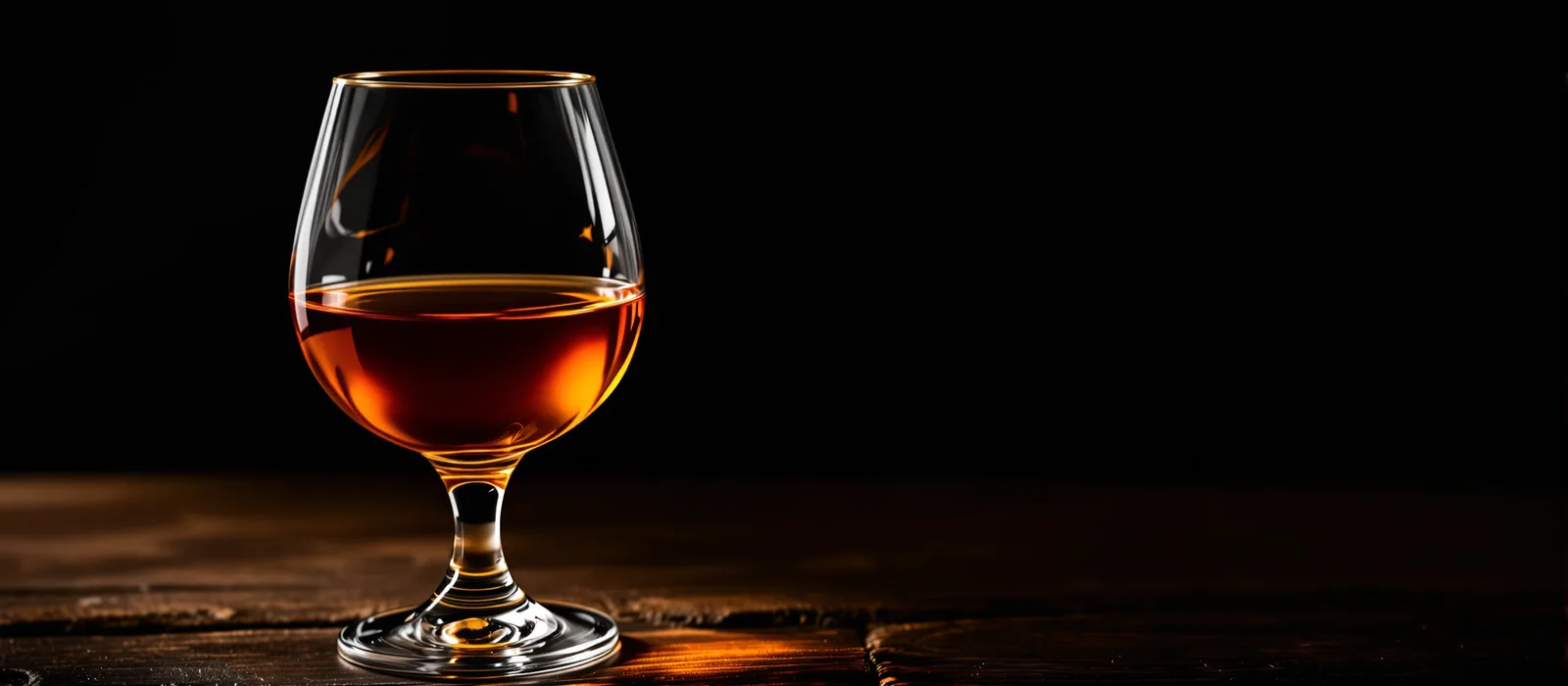
1989, the year the world changed
On 9 November 1989, the Berlin Wall fell after twenty-eight years of division. A few weeks earlier, in the vineyards of Gascony, the harvest had drawn to a close with a vintage of lovely freshness. Nearly four decades later, the brandies from this harvest have kept an appealing liveliness, between vanilla softness and spice, with an already silky texture.
Eight houses for the same harvest
1989 is one of the best represented years in our cellar: eight producers, three sizes, strengths ranging from 40% to almost 49%. Château, family estate or merchant house, each has interpreted the same harvest with its own character and tradition.
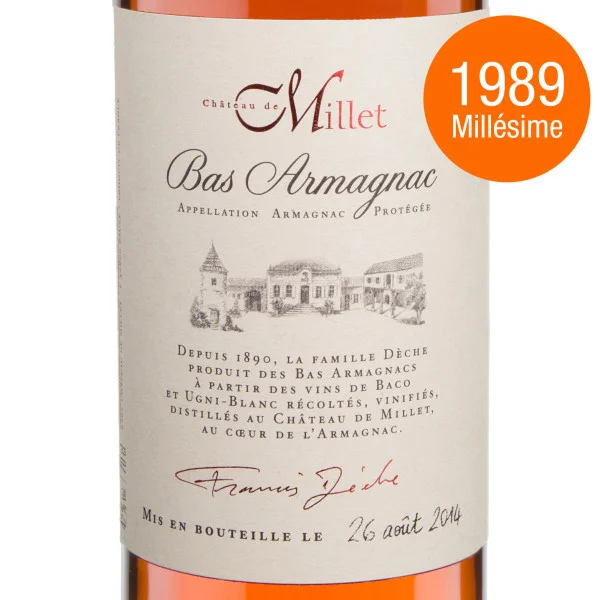
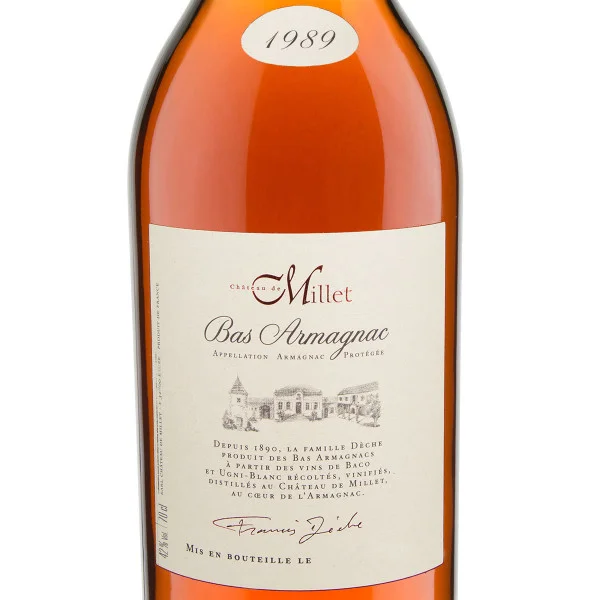
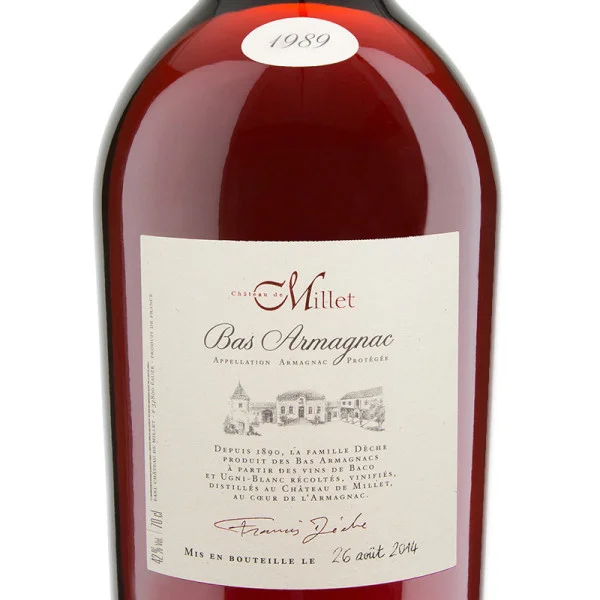
- Château de Millet, in Eauze, owned by the Dèche family for five generations. Its 1989 Bas-Armagnac, made from baco and ugni, is 42% and available in 70 cl, magnum and 250 cl Gascon pot. An amber colour with golden glints, a very fine nose of dried fruit, tobacco, prune and rancio, a frank and generous palate, and a complex, fresh finish. Gilbert & Gaillard gave it 94/100.
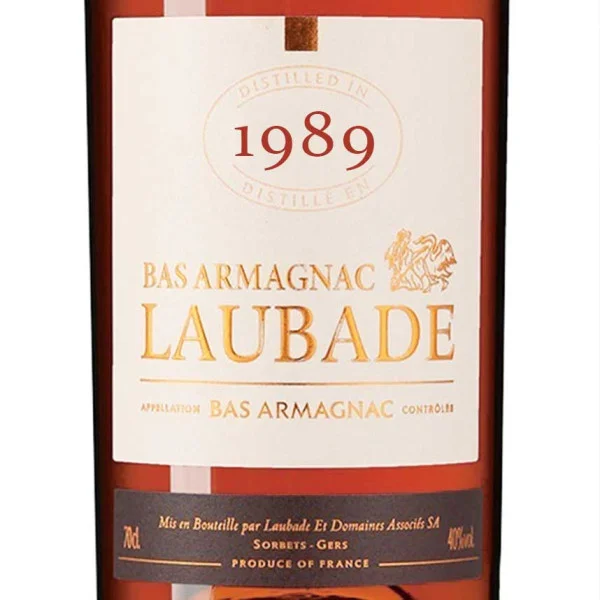
- Château de Laubade, in Sorbets: the château ages 100% of the 1989 harvest in its own 420 litre Gascon barrels, crafted on the property. The Laubade 1989 is delicately oaked, with vanilla and toasty notes, a round and rich palate, mellow tannins and a touch of chocolate. 40%.
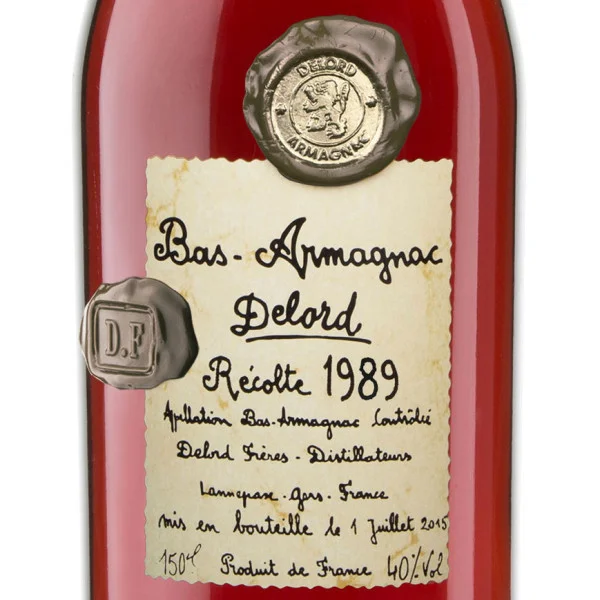
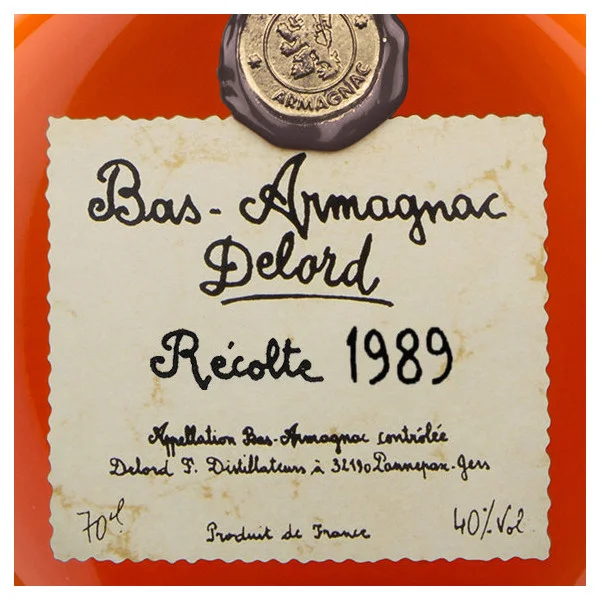
- Armagnac Delord, a family house in Lannepax, in the Gers, founded in 1893: the Delord 1989 is 40%, in 70 cl or magnum. A very aromatic nose of almond, hazelnut, cinnamon and wood, with supple tannins.
- Dartigalongue, in Nogaro since 1838: a 1989 at 42%, with spicy wood and orange peel, then pastry aromas of caramel and cream giving way to rancio and dried walnut. Gold medal "Outstanding" at the International Wine and Spirit Competition 2015 and 98 points at the Ultimate Spirits Challenge 2021.
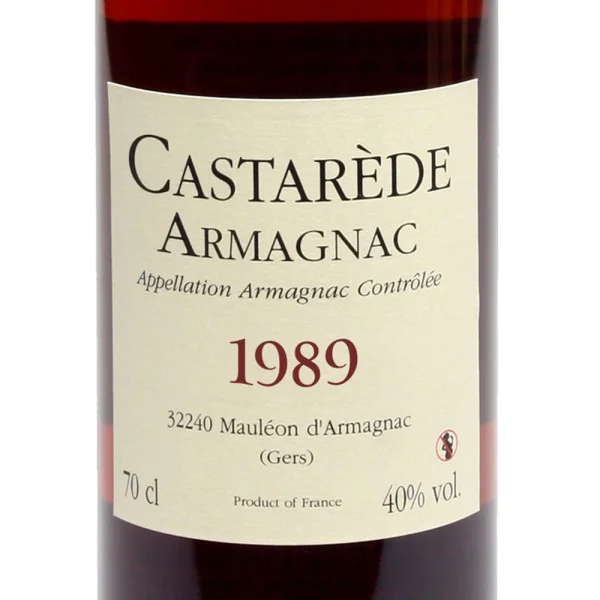
- Armagnac Castarède, a house founded in 1832: the Castarède 1989 spent 31 years in wood before being bottled in 2020, reduced to 40%.
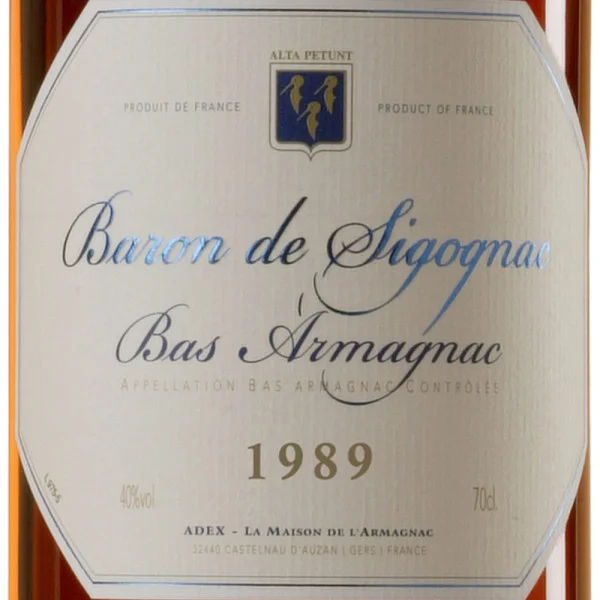
- Baron de Sigognac, aged at Château de Bordeneuve: an amber colour, a nose full of freshness with mandarin and citrus, a balanced palate, mellow, fresh and powerful at the same time. 40%.
- Domaine de Pellehaut, in Armagnac Ténarèze: a single-varietal 1989 at 48.6%, bottled without reduction, broad and full with vanilla, ripe plum and yellow peach. Gold medal at the Concours National des Eaux-de-Vie 2012.
- Jean Cavé, in Lannepax: the house of Jean Cavé, a distiller and ageing house since 1883, offers a 1989 at 47.9%, drawn from its collection of old vintages, at natural strength.
How to choose your 1989 armagnac
Faced with such a range, three questions help you decide. First, the style: the versions reduced to 40 or 42% are round and easy to share, while the brut de fût armagnacs (cask strength, not reduced) from Pellehaut and Jean Cavé, with no added water, are more intense. Next, the aromatic profile: rather rancio and tobacco in Eauze, pastry at Dartigalongue, mandarin at Sigognac, chocolate at Château de Laubade. Finally, the size: the 250 cl Gascon pot and the magnums mark a big celebration, while the 70 cl bottle, slipped into a gift box, suits a personal gift.
The story of a 1989 armagnac, from vine to glass
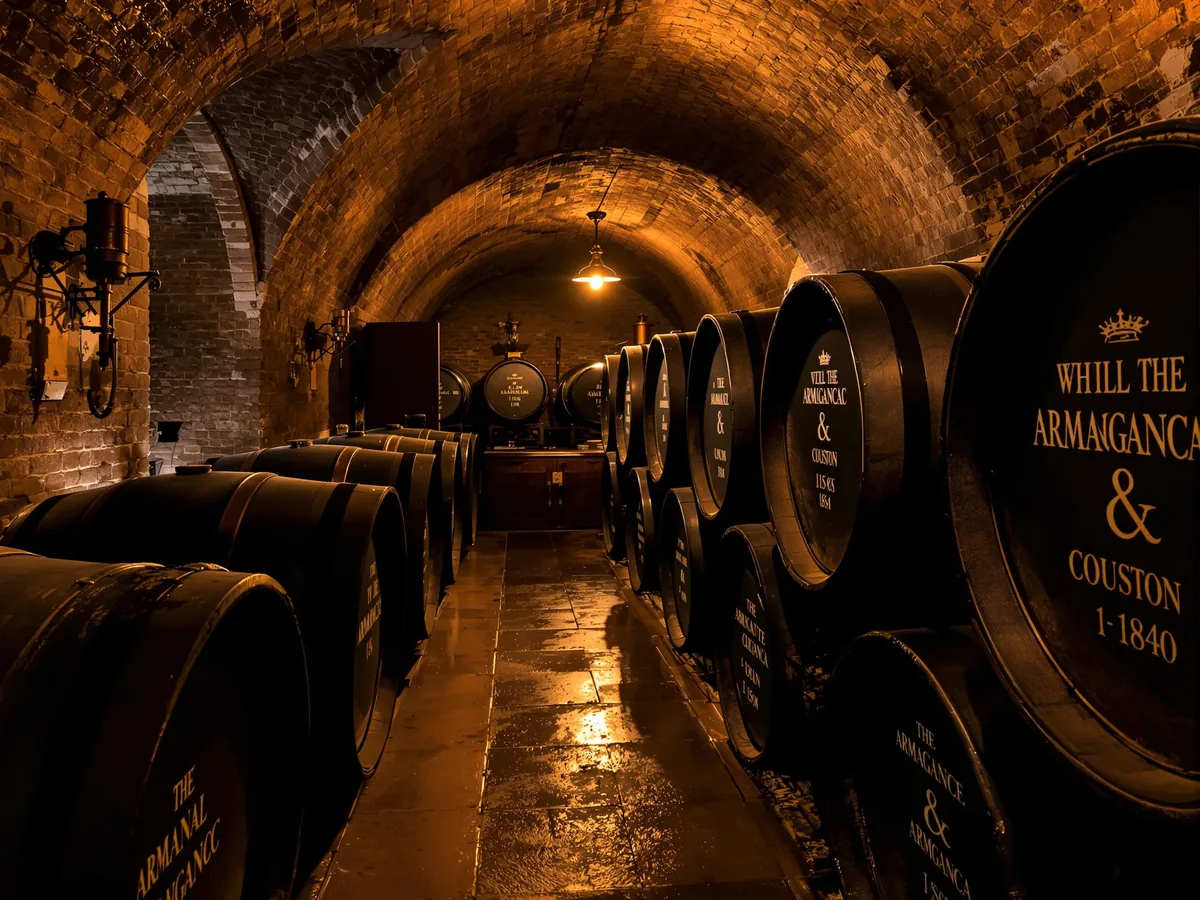
It all starts with a wine made from the grape varieties of the appellation: ugni blanc, baco blanc, folle blanche and colombard. During the winter of 1989-1990, this wine was distilled in the armagnac still, continuously, either in the estate's own distillery or by a travelling distiller from the region. The brandy then went down into barrels, in the darkness of the cellar, where ageing gave it its colour, its tannins and its aromas. At bottling, its evolution stops: the label therefore always shows the year of harvest, and sometimes that of bottling, as at Castarède. Unlike a blend, which combines several years, each bottle on this page contains only the 1989 harvest: that is what makes it unique.
The appellation has three terroirs, Bas-Armagnac, Ténarèze and Haut-Armagnac; our 1989 selection covers the first two.
A gift for a 37th birthday or wedding anniversary
In 2026, in France as elsewhere, people born in 1989 turn 37 and couples married that year celebrate their 37th wedding anniversary, known in France as the paper anniversary. An armagnac from their year is a gift that means something without being expected, and it can also be kept for the 40th birthday. Lovers of symbolism will enjoy giving a brandy from the year Europe came back together.
Tasting a 1989 armagnac
At this age, armagnac has found its balance between liveliness and oak: a lovely tasting experience, without the harshness of a brandy that is too young. Pour it into a tulip glass, at room temperature, and let it rest for a few minutes. On the nose you will often find vanilla, dried fruit and citrus peel, then rancio in the more mature cuvées. The palate is round and the finish long. As a pairing, a dark chocolate dessert works very well, as the Dèche family suggests for its 1989.
Store your bottles upright, away from light and temperature swings. Once opened, an armagnac keeps for several months.
Frequently asked questions about 1989 armagnac
How much does a 1989 armagnac cost?
It depends on the house, the size (70 cl, magnum, Gascon pot) and the strength. Compare the product pages on this page: each shows its price, its production and our customers' reviews where there are any.
Where can I buy a 1989 vintage armagnac?
At Plaisirs de Gascogne, an online wine and spirits merchant specialising in vintage armagnac: secure payment, protective packaging and delivery in France and across Europe. Our customer service will advise you on the quality and style of each bottle.
Which grape varieties are used for 1989 armagnac?
Depending on the house: baco and ugni at Millet and Sigognac, the four traditional grape varieties at Laubade, and a single grape variety, ugni, for Pellehaut.
Which 1989 armagnac has won awards?
Dartigalongue's 1989 (IWSC 2015, Ultimate Spirits Challenge 2021), Pellehaut's (Concours National des Eaux-de-Vie 2012) and Millet's, rated 94/100 by Gilbert & Gaillard.
Also explore all our vintage armagnacs or the 1986 armagnac.
Please enjoy responsibly. Excessive alcohol consumption is harmful to health.



 Jean Cavé
113 bottles
Jean Cavé
113 bottles
 Armagnac Delord
92 bottles
Armagnac Delord
92 bottles
 Château de Millet
83 bottles
Château de Millet
83 bottles
 Dartigalongue
76 bottles
Dartigalongue
76 bottles
 Baron de Sigognac
69 bottles
Baron de Sigognac
69 bottles
 Armagnac Castarède
63 bottles
Armagnac Castarède
63 bottles
 Clés des Ducs
48 bottles
Clés des Ducs
48 bottles
 Château de Laubade
43 bottles
Château de Laubade
43 bottles
 Domaine de Pellehaut
28 bottles
Domaine de Pellehaut
28 bottles
 Château de Bordeneuve
17 bottles
Château de Bordeneuve
17 bottles
 Charles de Granville
13 bottles
Charles de Granville
13 bottles
 Domaine de Danis
7 bottles
Domaine de Danis
7 bottles