
Armagnac is a wine spirit produced in Gascony, in the South-West of France, under a controlled designation of origin (AOC) since 1936. It is made from grapes harvested within a defined territory, distilled during the winter following the harvest, then aged for at least one year in oak casks. This guide explains where armagnac comes from, how it is made, where it is produced, and how to navigate the categories VS, VSOP, XO, Hors d'Âge, vintages and Blanche Armagnac. Whether you are wondering what armagnac is, whether armagnac is a brandy, or simply how armagnac pronunciation works, you will find the answers here.
Armagnac in a sentence: a wine spirit from Gascony
The AOC Armagnac specifications place armagnac within the European category of “wine spirits.” It is therefore a spirit derived from grapes, not from cereals. To carry the name, a French eau-de-vie must comply with production rules overseen by the INAO: a defined production zone, authorised grape varieties, a prescribed distillation method, and a minimum ageing period.
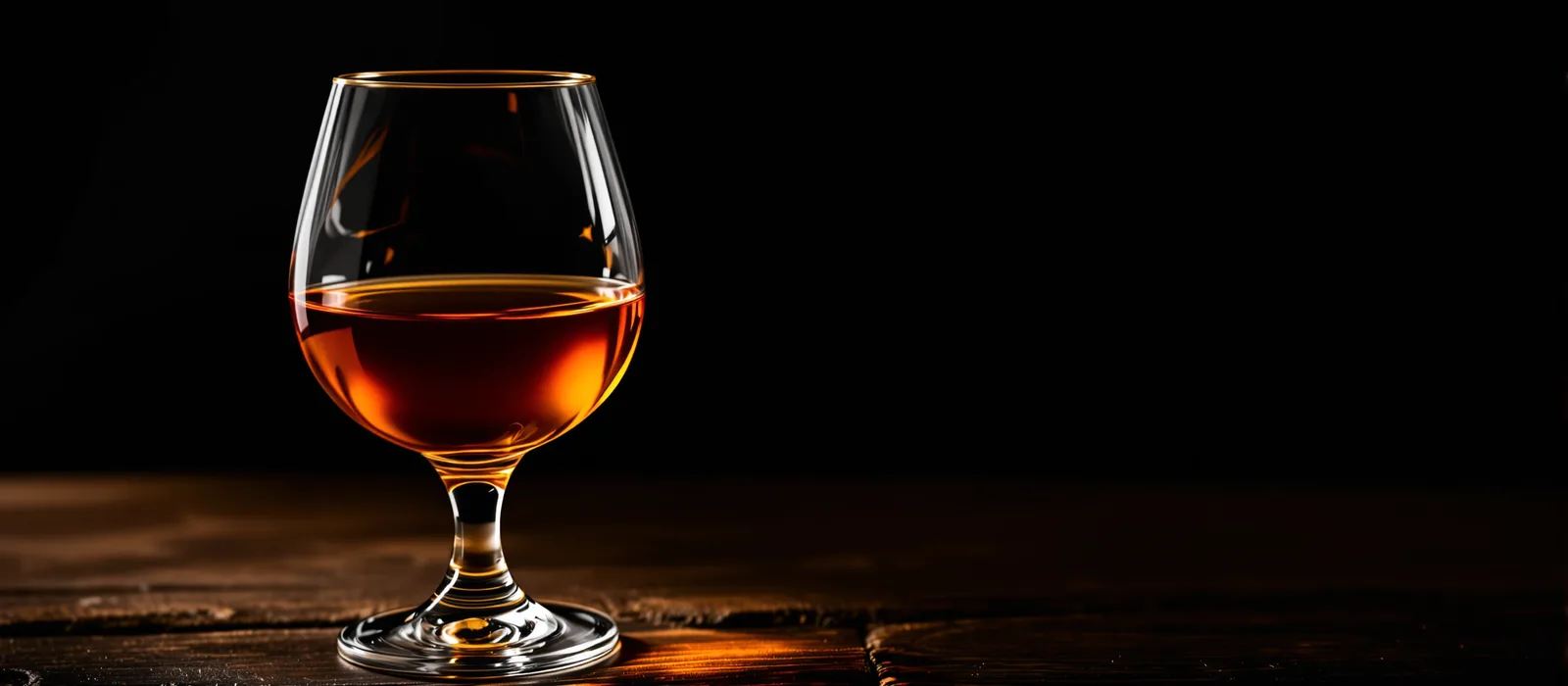
At bottling, armagnac must reach a minimum of 40% vol. Its colour moves from pale gold towards orange, amber, and finally mahogany as the years in wood accumulate: an aged armagnac cannot be colourless. The sole exception is Blanche Armagnac, which rests in an inert vessel and never touches a cask.
The appellation text also describes the expected style, and the characteristics evolve with age. When young, armagnac is warm and lively, with aromas of fresh fruit, floral notes, and gentle wood. Over time it becomes rounder and more expansive, its aromatic range turning towards cooked or candied fruit, spices, and rancio. To explore this diversity, our selection of armagnacs brings together the producers we work with.
Where armagnac comes from: more than seven centuries of history
The vine took root in Gascony during the Gallo-Roman era and developed throughout the Middle Ages: by the 14th century, numerous cartularies already recorded a substantial vineyard. The oldest document cited by the AOC specifications dates from 1310: Master Vital Dufour, prior of Eauze and Saint-Mont, described the “40 virtues of the aygue ardente”, the burning water, the water that ignites. It is on this text that the interprofession body, the BNIA, bases its presentation of armagnac as the oldest eau-de-vie in France. Its history from that point forward is inseparable from that of Gascony.
In 1373, the “Privilege of Bordeaux” barred wines from the “haut pays,” including Gascony, from reaching the port of Bordeaux before Christmas. Distilling the wine made it possible to preserve it and reduce transport costs. Later, trade with the Dutch, who were major buyers of eaux-de-vie, caused production to grow. The markets of Mont-de-Marsan and Aire-sur-l'Adour flourished, and producers gradually discovered what time in cask could bring: colour, roundness, and aromatic complexity.
A patent filed in Auch by Tuilière for a continuous-flow still subsequently paved the way for the armagnac still. Merchants built cellars and refined their skills in blending and ageing. After the phylloxera crisis, ugni blanc arrived in the region, and in 1898 the Landes ampelographer François Baco selected the grape variety that bears his name.
Formal organisation followed: a decree of 1909 delimited the production zone and its three sub-regions, and the decree of 6 August 1936 recognised the controlled designation of origin. The Bureau National Interprofessionnel de l'Armagnac took its current name in 1946. Blanche Armagnac was recognised as an appellation in 2005.
Where is armagnac produced? Gers, Landes and Lot-et-Garonne
The production area lies in Gascony, between the Garonne to the north, the Atlantic Ocean and the Pyrenees. It spans three departments: 245 communes in the Gers, 29 in the Landes, and 18 in the Lot-et-Garonne. Across this landscape of rolling hills and woodland, vineyards are often a minority crop alongside mixed farming and livestock rearing. The climate shifts from a strong Atlantic influence to a more continental regime, and the soils follow the same gradient: sandy soils and boulbènes on one side, clay-rich terreforts and limestone soils on the other.
These environments are divided into three sub-appellations, from west to east:
- Bas-Armagnac, on sandy soils, in the Landes and western Gers;
- Armagnac-Ténarèze, in the centre, around Condom and Nérac;
- Haut-Armagnac, to the east and south, around Auch and Lectoure, on predominantly limestone soils.
A label may state “Bas Armagnac,” “Armagnac Ténarèze,” or “Haut Armagnac” if the grapes come entirely from communes within that sub-appellation. Houses such as Château de Laubade and Dartigalongue work in Bas-Armagnac, while Domaine de Pellehaut grows its vines in Ténarèze.
To go further: Bas-Armagnac, Ténarèze and Haut-Armagnac, the three regions.
What armagnac is made from, and how it is made
Ten grape varieties are authorised: baco blanc, blanc dame, colombard, folle blanche, graisse, jurançon, mauzac, mauzac rose, meslier saint-françois, and ugni blanc. The specifications identify ugni blanc and baco as the principal varieties, and folle blanche and colombard as the historic varieties. The vines are trained to yield low-alcohol, high-acid wines, which are not sulphited: their natural acidity protects them through to distillation, which must be completed by 31 March following the harvest at the latest.
The primary method is continuous distillation in the armagnac still: a copper pot heated over a naked flame, topped by a column of plates. Each producer must operate at least one such still. Double distillation, known as “a repasse,” is also permitted. The spirit leaves the column at between 52 and 72.4% vol., retaining a significant portion of the wine's aromatic character. Following a tradition particular to this region, many growers call upon travelling distillers, whose stills move from estate to estate throughout the winter.
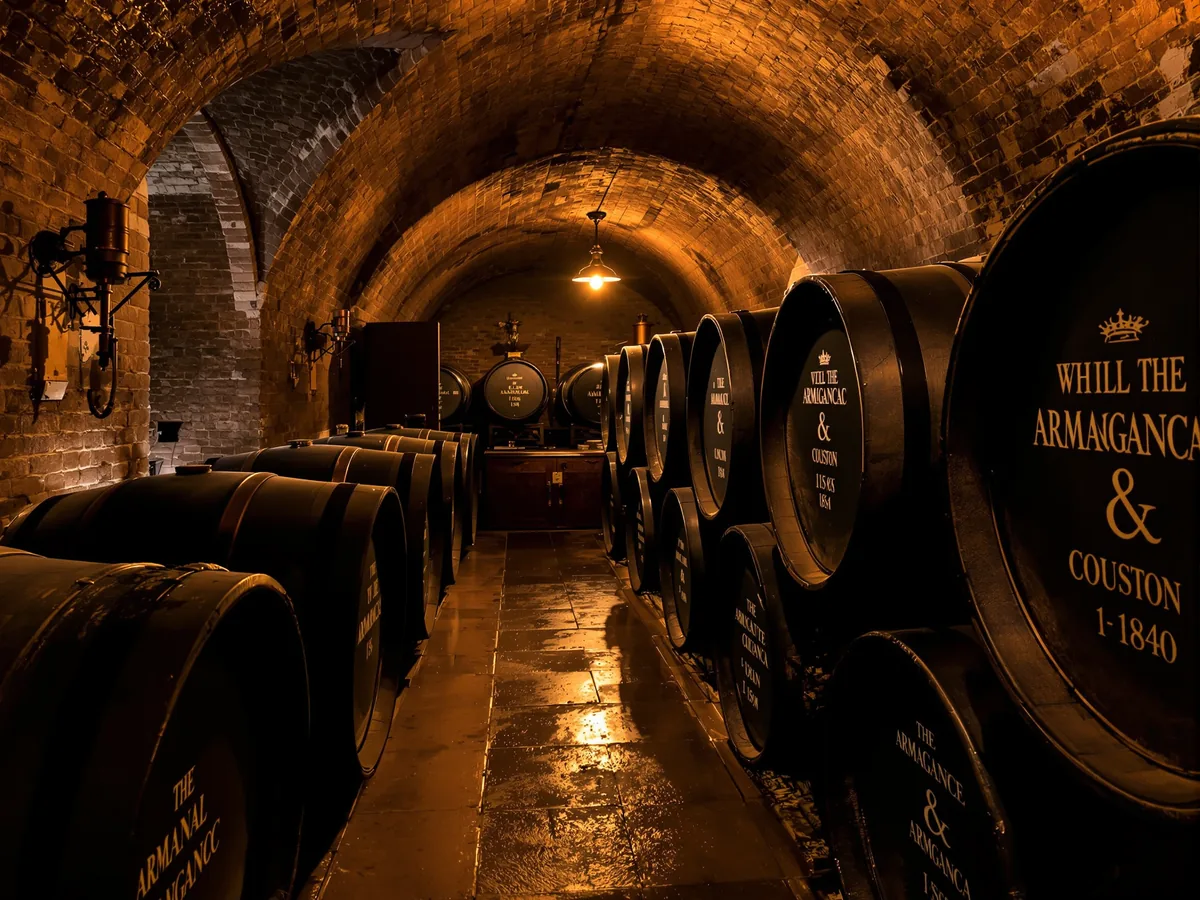
Ageing then follows, with a minimum of one year in oak casks, counted from 1 April after the spirit is placed to rest. In the cellar, a share of the alcohol evaporates, the wood releases its compounds, and the spirit oxidises slowly. The cellar master decides whether to blend several spirits together, set aside a single year as a vintage, and whether or not to reduce the strength with water before bottling. A portion of production also goes into the making of Floc de Gascogne.
Each grape's history and style: ugni blanc, baco, folle blanche and colombard.
The main categories: VS, VSOP, XO, Hors d'Âge, vintages and Blanche
On the label, an age statement always refers to the youngest spirit in the blend. According to the interprofession:
- VS or three stars brings together spirits aged at least 1 year in wood: see our VS and three stars armagnac range;
- VSOP, standing for Very Superior Old Pale, a designation rooted in Anglo-Saxon commercial tradition, requires at least 4 years: see our VSOP selection;
- XO and Hors d'Âge require at least 10 years: see our XO and Hors d'Âge range;
- a vintage comes from a single harvest year, with no blending across years: see our vintage armagnacs;
- Blanche Armagnac rests for at least three months in an inert vessel, remains colourless, and preserves fresh, fruity, and floral aromas: see our Blanche Armagnac.
Some bottles also carry the mention “brut de fut” (cask strength), which is not defined by the AOC specifications: it indicates that the producer has not reduced the spirit with water before bottling. See our cask strength armagnacs. We explain each age category in detail in our guide VS, VSOP, XO, Hors d'Âge: how to read a label.
Armagnac and cognac: two wine spirits compared
Armagnac and cognac are often compared. Both are AOC-protected wine spirits, but their terroirs, grape varieties, stills, and ageing rules differ considerably. Our guide armagnac or cognac: the real differences examines them point by point.
How to choose and enjoy armagnac
Once bottled, armagnac no longer ages: it is ready to drink from the moment it goes on sale. To choose well, start by thinking about the occasion. For a first experience, a cocktail, or cooking, the interprofession recommends VS, served neat or over a single ice cube; it considers VSOP an excellent value option, fruity and well-suited to serving on ice or alongside pan-fried foie gras. For a long, contemplative tasting, as a digestif or with a chocolate dessert, XO and Hors d'Âge offer greater structure and depth of character. Each house, and indeed each vintage, also has its own style: that is precisely why comparing several bottles is so rewarding. For a significant occasion, a birth or a wedding, a vintage armagnac makes a meaningful choice: the interprofession notes that vintage bottles are closely associated with anniversary dates. Once opened, store the bottle upright so that the spirit does not come into contact with the cork.
Frequently asked questions
What is armagnac, in short?
A wine spirit from Gascony, produced under AOC rules across three departments in South-West France, distilled primarily by continuous method, and aged for at least one year in oak casks, except for the colourless Blanche Armagnac.
What fruit is armagnac made from?
From grapes. Armagnac is distilled from wine made using the ten grape varieties authorised by the appellation and described above.
Is armagnac a brandy?
In common English usage, the word brandy is readily applied to grape-based spirits, and armagnac falls within that category. From a regulatory standpoint, it belongs to the European category of “wine spirits,” to which the rules of its own appellation are added.
What is the difference between armagnac and Bas-Armagnac?
Bas-Armagnac is a sub-appellation within the Armagnac AOC. It indicates that the grapes come from the western communes of the appellation area, on sandy and boulbène soils. An armagnac without a sub-appellation designation may blend spirits from anywhere within the full production zone.
Armagnac pronunciation: how do you say it?
It is pronounced “Ar-man-yak,” with the central syllable rhyming with “man” and the final “yak” sound corresponding to the “gnac” ending. The name comes from the historic County of Armagnac.
To explore further, discover some of the armagnac producers we work with, such as Delord, Jean Cavé or Baron de Sigognac.
Alcohol should be enjoyed responsibly. Excessive consumption is harmful to health.