Calvados, the cider brandy of Normandy
Calvados is made exclusively by distilling ciders or perries, produced from cider apples and perry pears. The appellation rules forbid pasteurising, carbonating or sweetening these ciders, and require at least twenty-one days of fermentation before distillation. The spirit is then aged for a minimum of two years in oak casks, before being bottled at 40% ABV or more.
Its name comes from the Calvados département, created during the French Revolution, with Caen as its administrative centre: it was at that time that Parisians discovered this Norman spirit, which gradually took on the name of the new département. But the production area extends well beyond its borders: it covers much of Normandy, from the Calvados to the Manche, the Orne and the Eure, and spills over into the Mayenne, the Sarthe, the Seine-Maritime and the Oise. Here you find the pré verger, where high-stemmed apple trees grow in the middle of grazing meadows, in the hedgerow landscapes stretching from Bayeux to Vire.
A Normandy terroir, from the Côte Fleurie to the bocage
Calvados is closely tied to the Normandy climate: regular rainfall, consistently moderate warmth, mild winters and little frost, all of which suit orchards. The bocage hedgerows shelter the apple trees from the wind, and the gentle slopes drain the soils naturally. The Pays d'Auge, for instance, stretches from the hinterland of the Côte Fleurie, between Honfleur, Deauville and Cabourg, as far as Livarot. Many producers are family businesses, and several open their cellars to visitors, by appointment.
Apple growing in Normandy dates back to the Middle Ages: cider apple trees appeared there between the 10th and 12th centuries, and the guild of cider brandy distillers was founded as early as 1606. Old varieties mentioned in 18th and 19th century writings, such as Bedan, Fréquin, Argile and Binet, are still grown today.
Three appellations: AOC Calvados, Pays d'Auge and Domfrontais
The spirits of several Norman regions were recognised under the name calvados as early as 1942: Cotentin, Avranchin, Mortainais, Domfrontais, Perche, Merlerault, Pays de la Risle, Pays de Bray, the Orne valley and Calvados itself. In 1984, these ten areas were brought together in a single AOC. Today, three appellations coexist, according to the trade body (IDAC):
- AOC Calvados: the largest. Distillation may take place in a column still, continuously, or by double distillation in a pot still; ageing lasts at least two years in oak casks;
- AOC Calvados Pays d'Auge: around Lisieux, Pont-l'Évêque and Honfleur. Double distillation in a "repasse" pot still is compulsory, and perry pears are limited to 30% of the fruit at most;
- AOC Calvados Domfrontais: around Domfront, in the Orne, a land of tall pear trees. Perry pears make up at least 30% of the fruit, distillation takes place in a column still, and ageing lasts at least three years.
Double distillation in the Pays d'Auge generally produces richer, more structured calvados; the column still preserves more of the fruit's freshness; and the pear, very present in the Domfrontais, gives it a profile of its own.
Age statements on a bottle of calvados
As with armagnac or cognac, the label indicates a minimum period of ageing in wood, set by the appellation rules:
- Three stars, three apples or VS: at least 2 years;
- Vieux or Réserve: at least 3 years;
- VO, Vieille Réserve or VSOP: at least 4 years;
- Hors d'âge, XO, Très Vieille Réserve, Très Vieux, Extra or Napoléon: at least 6 years.
An age statement (8, 12, 25 or 30 years) refers to the age of the youngest calvados in the blend, and a vintage indicates the year of the harvest. Over time, calvados moves from straw yellow to deep amber, and fresh apple notes give way to baked fruit, spice and oak.
Our calvados houses
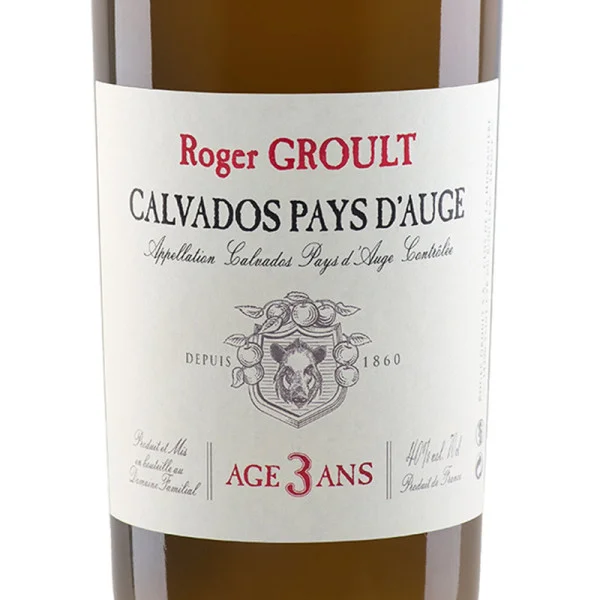
Roger Groult, Pays d'Auge
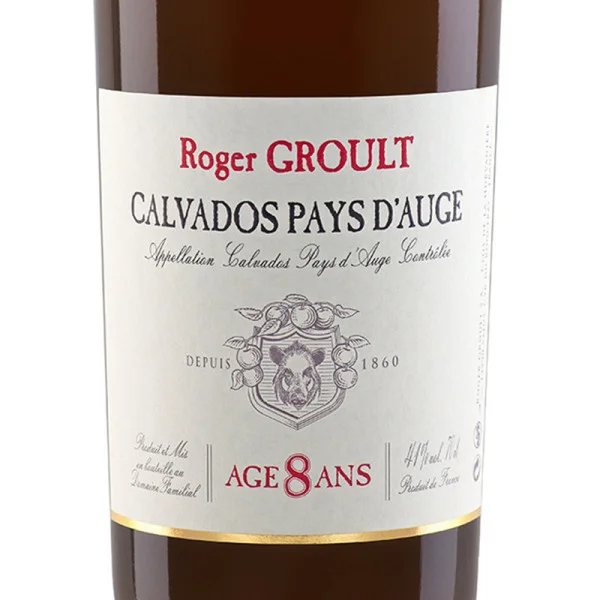
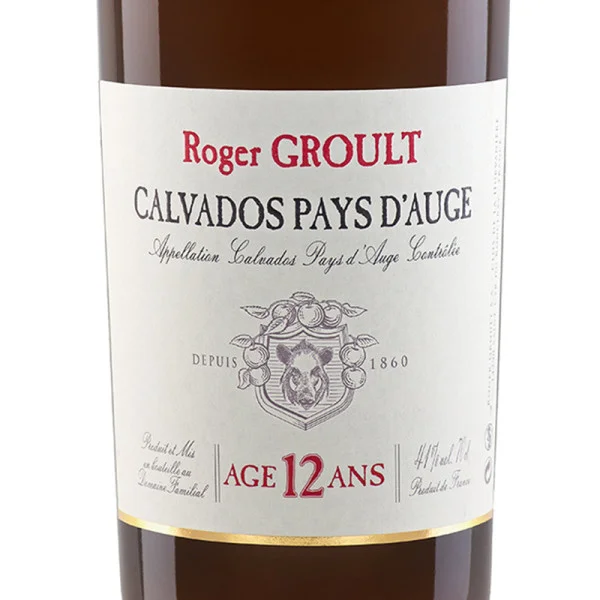
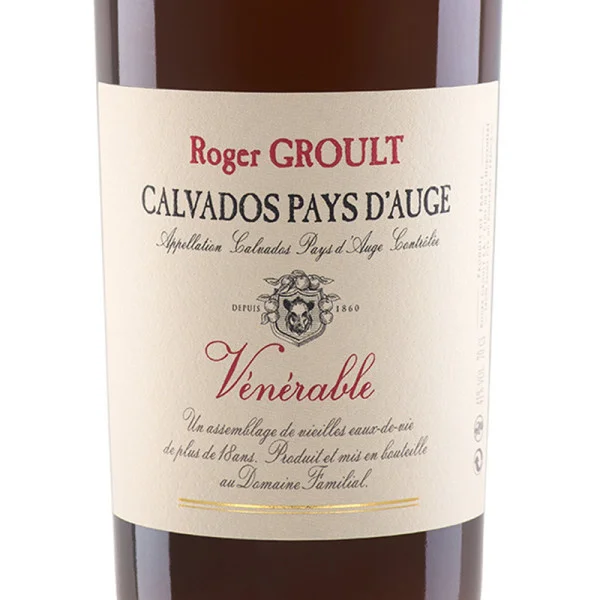
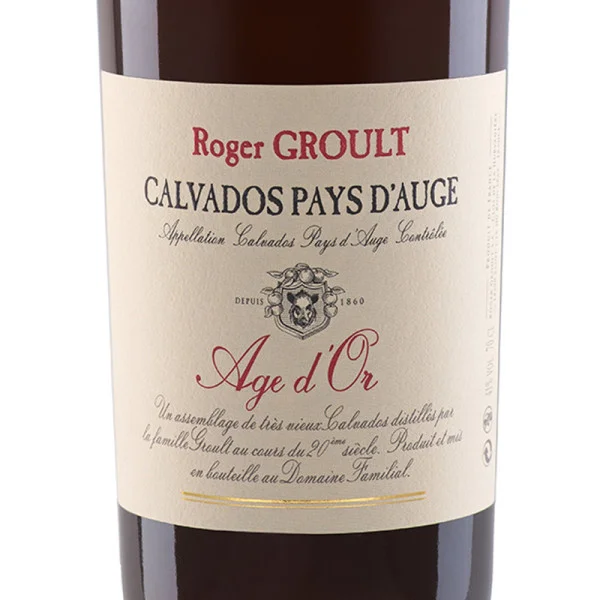
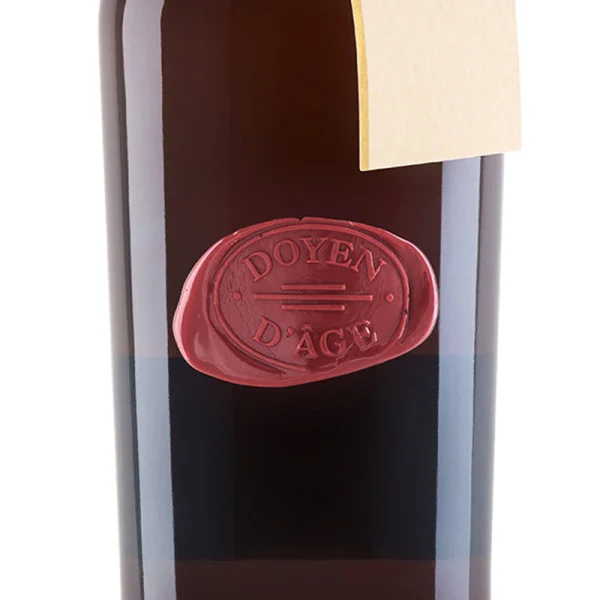
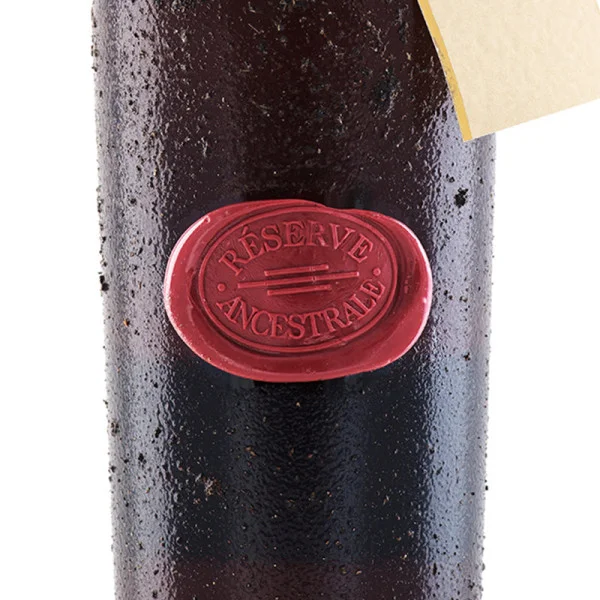
At the Clos de la Hurvanière, in Saint-Cyr-du-Ronceray, south of Lisieux, the Roger Groult family has been distilling AOC Calvados Pays d'Auge for five generations. The cider, made from some thirty apple varieties, passes twice through small wood-fired Charentais pot stills. Our selection follows the scale of time: Réserve 3 year old, 8 year old, 12 year old, Vénérable (18 years), then the oldest blends, Âge d'Or, Doyen d'Âge and Réserve Ancestrale.
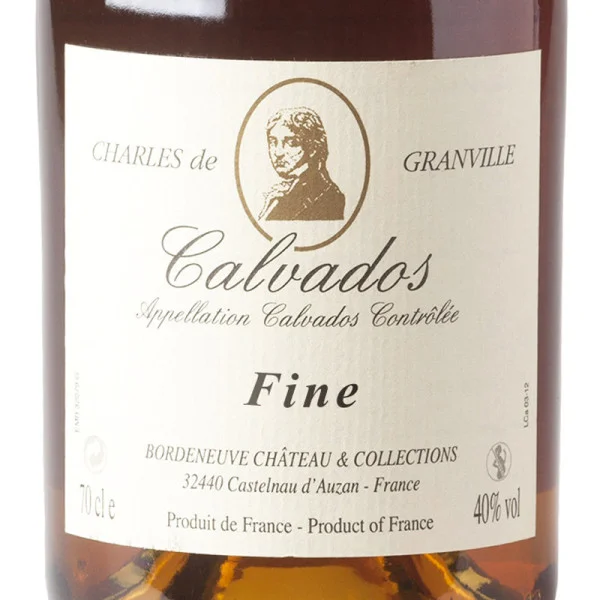
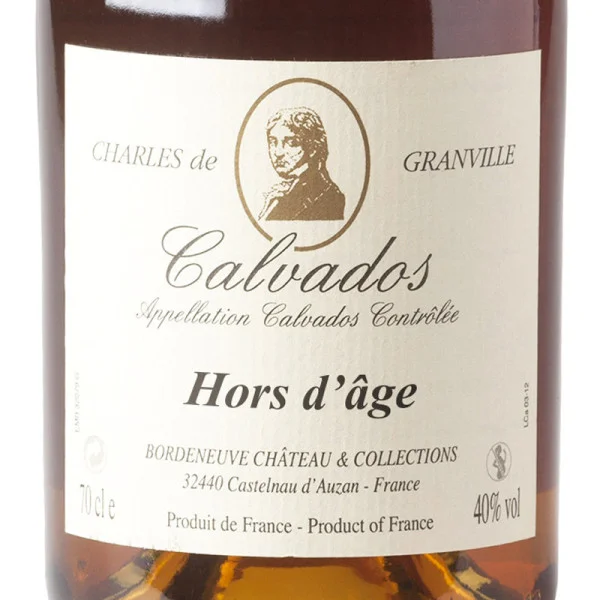
Charles de Granville, from the Fine to the vintages
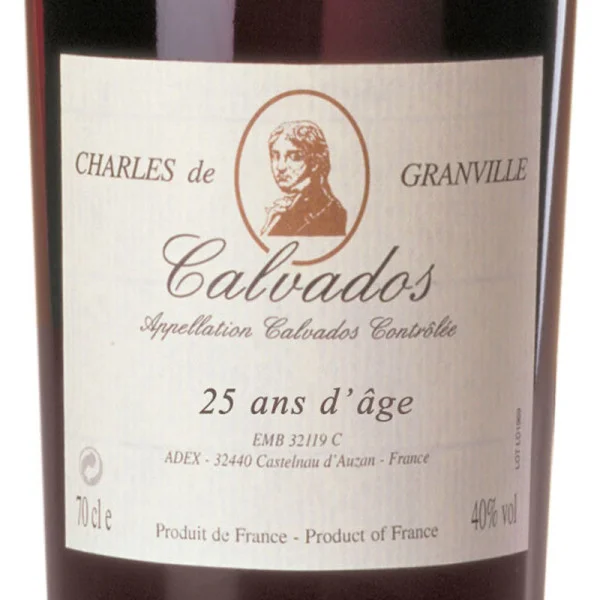
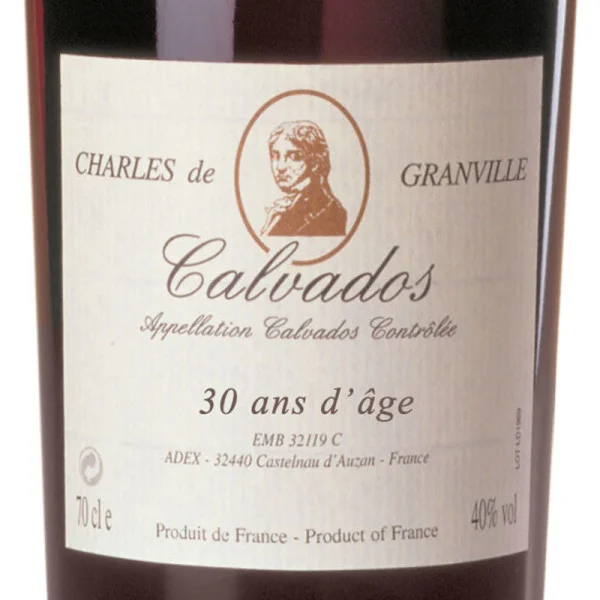
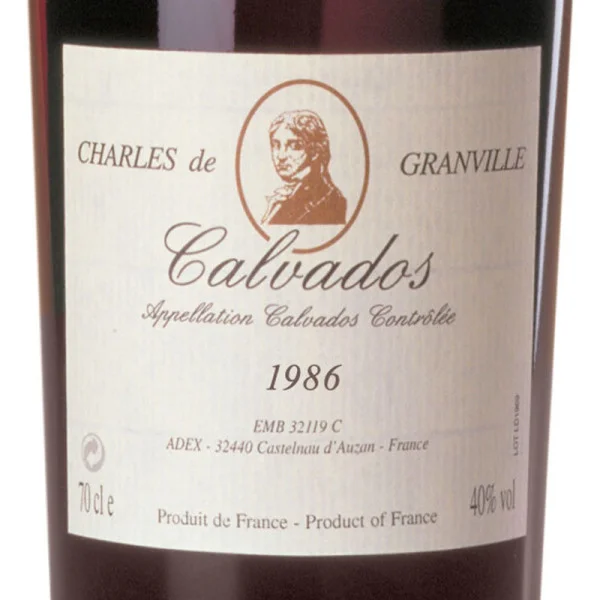
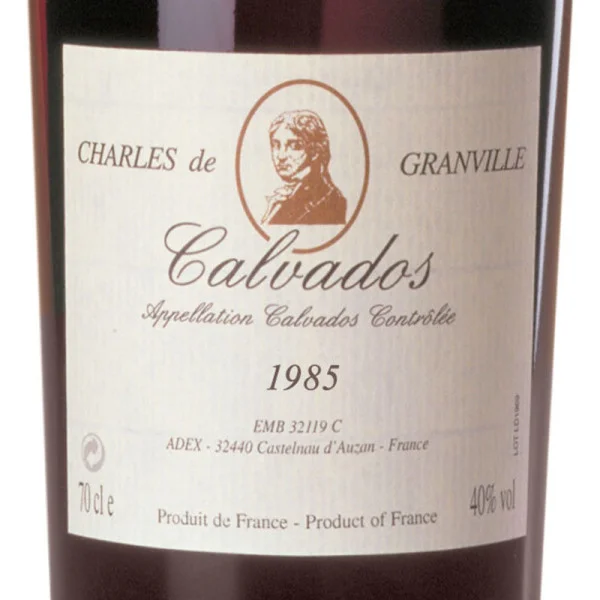
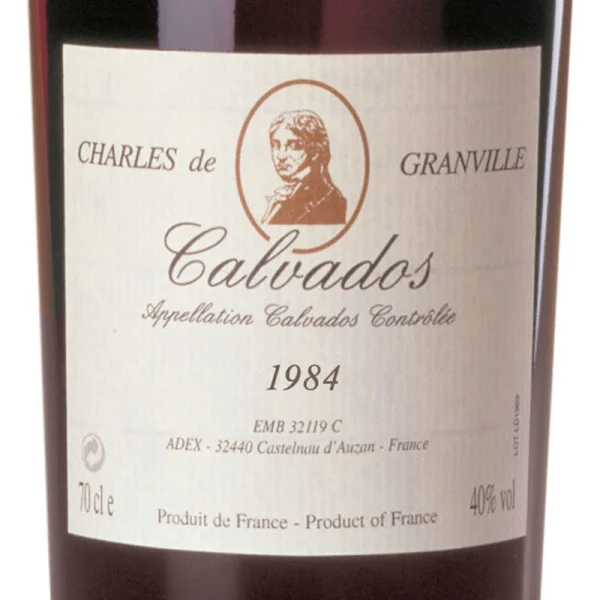
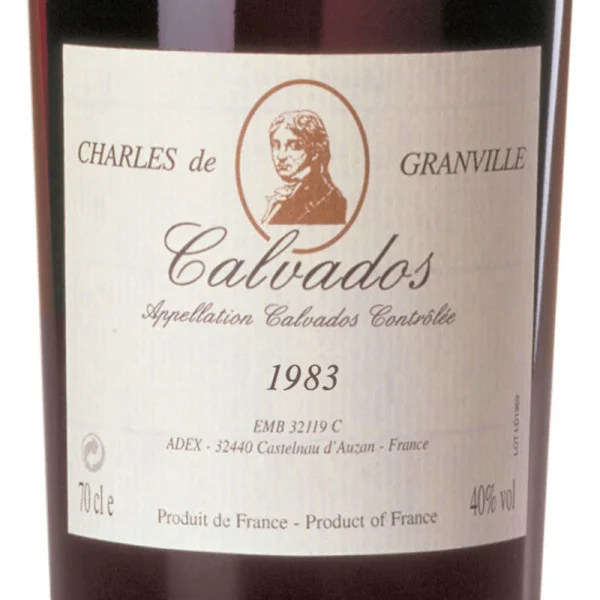
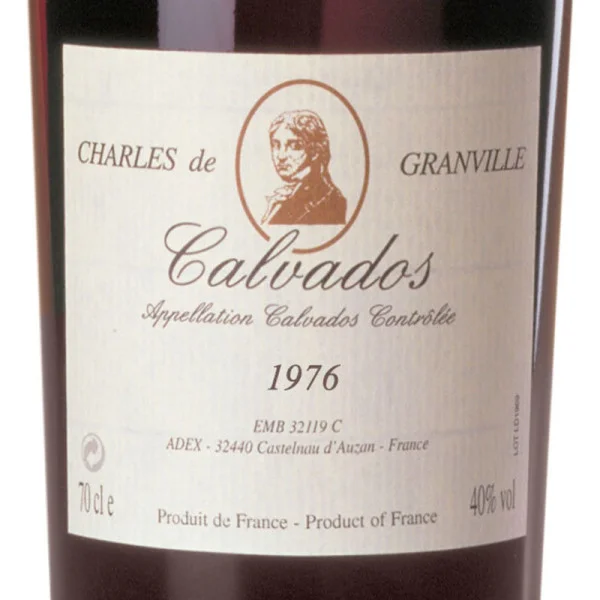
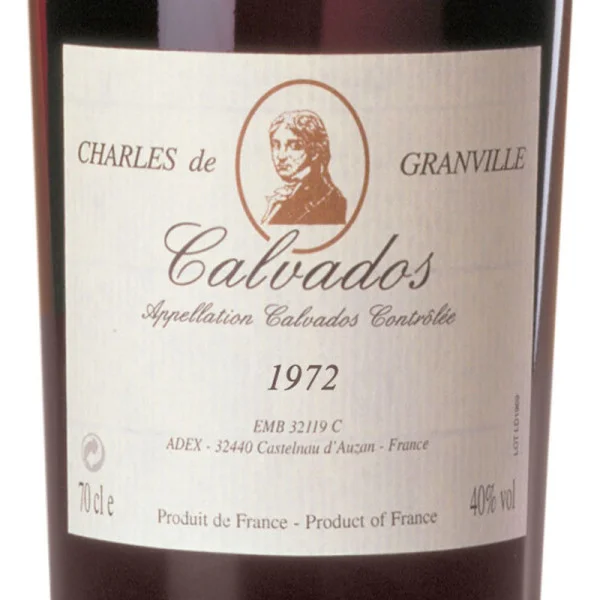
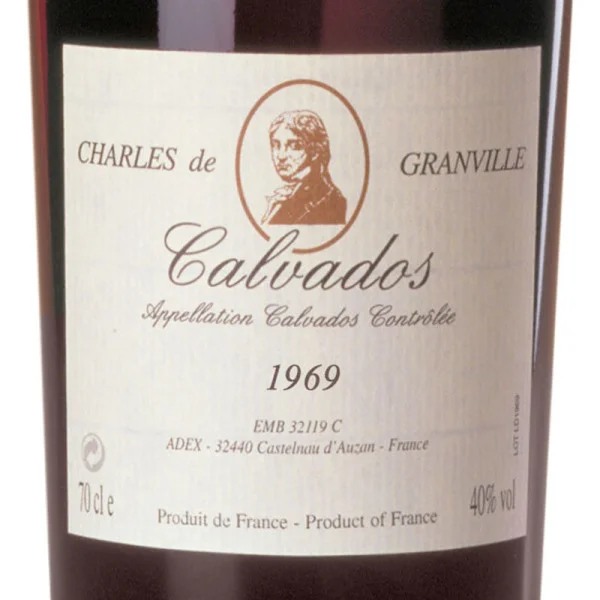
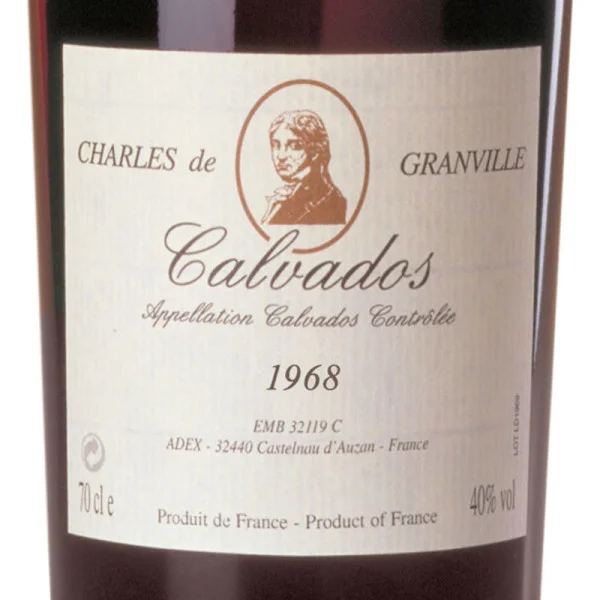
The Charles de Granville range starts with the Fine and the Hors d'âge, both at 45% ABV, moves on to the 25 and 30 year olds, and then offers a rare series of vintage calvados: 1963, 1968, 1969, 1972, 1976, 1983, 1984, 1985 and 1986. Ideal for finding a bottle from a birth year or a wedding year, just as with our vintage armagnacs.
How to enjoy calvados
- As a trou normand: tradition has it that a small glass of calvados is served in the middle of a festive meal, between two courses. A young calvados, such as the Réserve 3 year old or the Fine, is well suited;
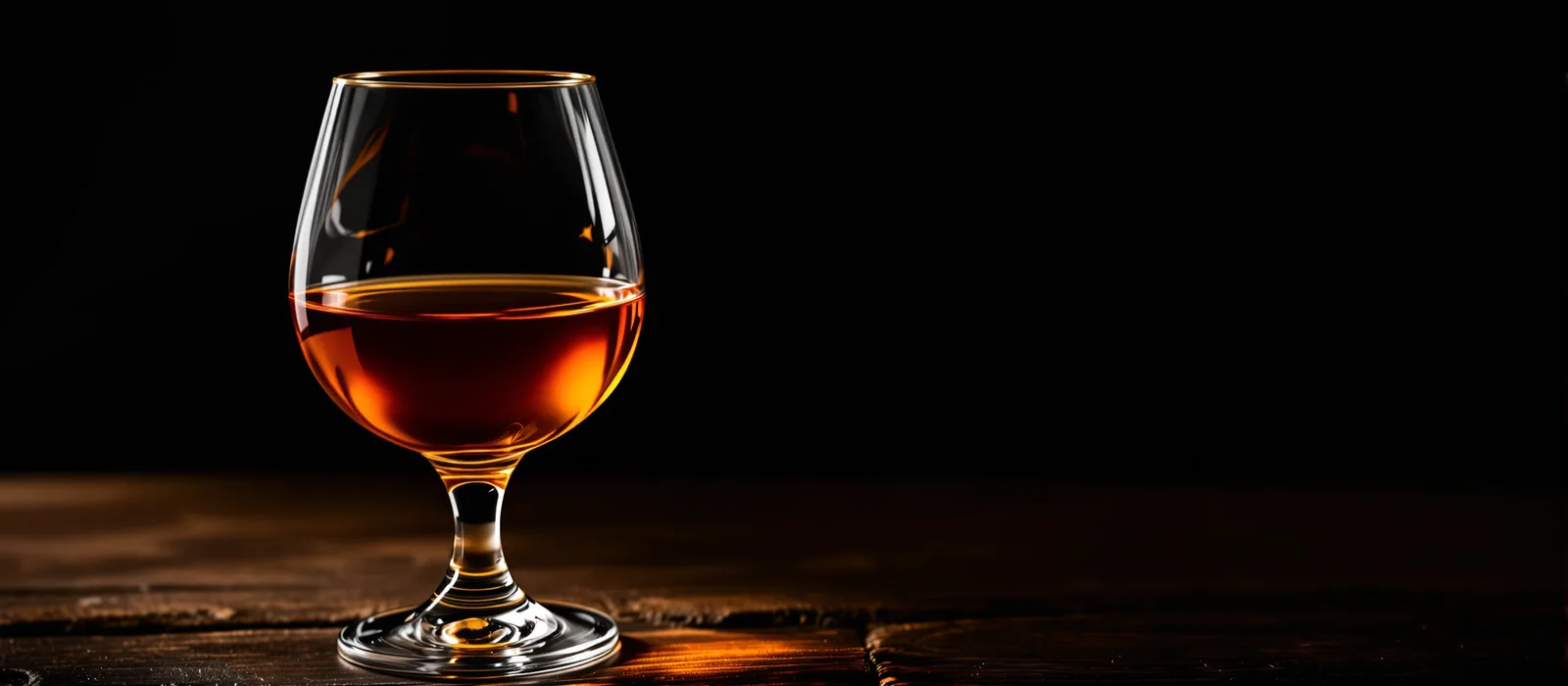
- As a digestif: the 12, 18, 25 or 30 year olds are enjoyed at room temperature, in a tulip glass, letting the calvados open up for a few minutes;
- In the kitchen: a young calvados adds flavour to an apple tart, flambés crêpes or lifts a cream sauce, as is done throughout Normandy;
- In a cocktail: topped up with tonic or a dry cider, it makes a refreshing aperitif.
Giving calvados as a gift
For a connoisseur, an old age statement such as Roger Groult's Vénérable or the Charles de Granville 30 year old makes a fine gift. For a date to celebrate, a vintage remains the most meaningful choice. And to introduce an armagnac lover to Normandy, an 8 or 12 year old Pays d'Auge is a lovely first bottle.
Frequently asked questions about calvados
What is the difference between calvados and calvados Pays d'Auge?
Calvados Pays d'Auge comes from a specific area around Lisieux, and must be double distilled in a repasse pot still. The AOC Calvados covers a wider area and also allows column stills.
Is calvados made only from apples?
No: it can also contain perry pears. Their share is limited in the Pays d'Auge and reaches at least 30% in the Domfrontais.
How long does an opened bottle keep?
Several months, stoppered, upright and away from light. Unlike wine, calvados no longer ages in the bottle.
How do I buy calvados online?
Choose your bottle on this page, add it to your basket and pay securely. We ship across France and Europe, in packaging designed for spirits. For lovers of wine brandies, our cognacs and our XO armagnacs complete the selection.
Please enjoy responsibly. Excessive alcohol consumption is harmful to health.



 Jean Cavé
113 bottles
Jean Cavé
113 bottles
 Armagnac Delord
92 bottles
Armagnac Delord
92 bottles
 Château de Millet
83 bottles
Château de Millet
83 bottles
 Dartigalongue
76 bottles
Dartigalongue
76 bottles
 Baron de Sigognac
69 bottles
Baron de Sigognac
69 bottles
 Armagnac Castarède
63 bottles
Armagnac Castarède
63 bottles
 Clés des Ducs
48 bottles
Clés des Ducs
48 bottles
 Château de Laubade
43 bottles
Château de Laubade
43 bottles
 Domaine de Pellehaut
28 bottles
Domaine de Pellehaut
28 bottles
 Château de Bordeneuve
17 bottles
Château de Bordeneuve
17 bottles
 Charles de Granville
13 bottles
Charles de Granville
13 bottles
 Roger Groult
7 bottles
Roger Groult
7 bottles